
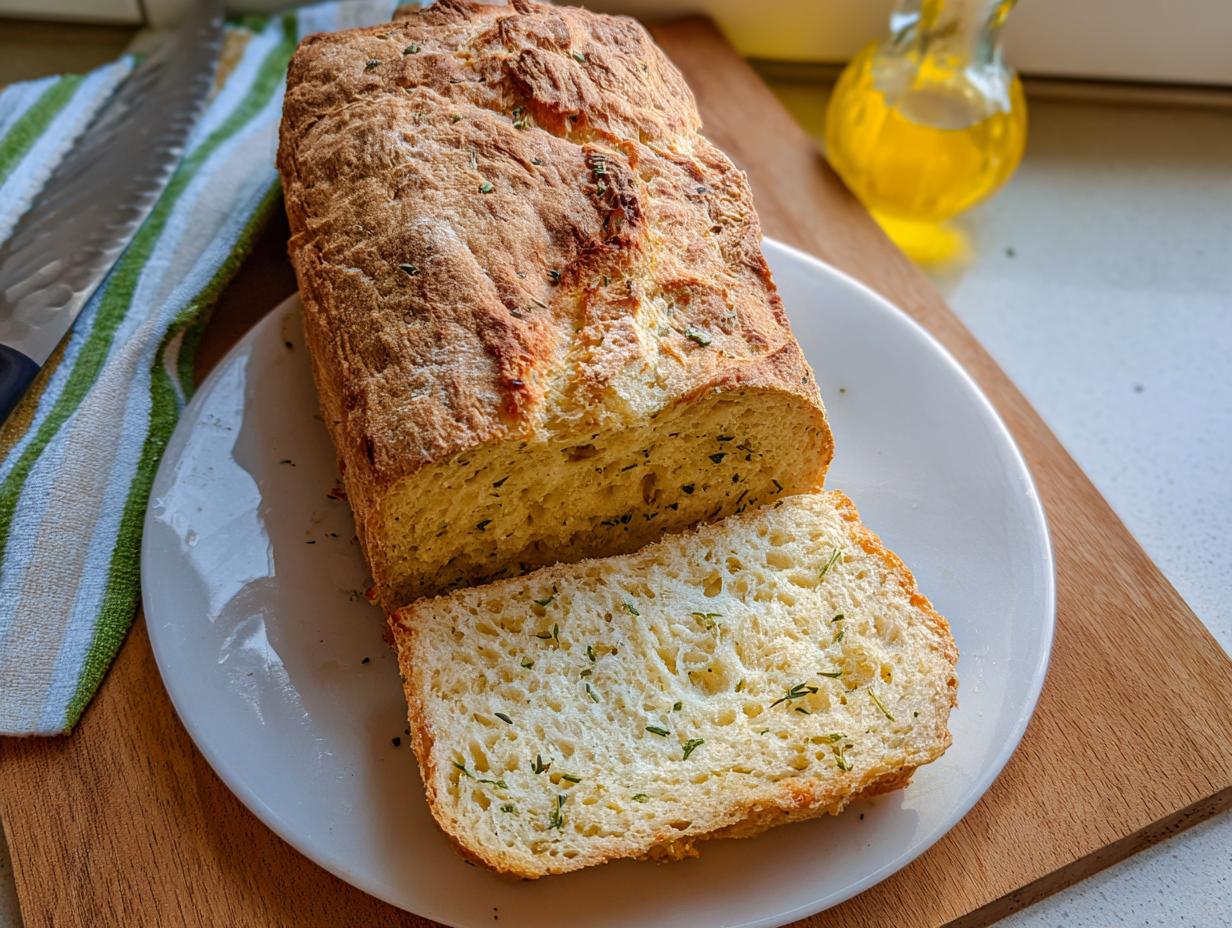
Oh, doesn’t that scent of fresh-from-the-oven bread just stop you in your tracks? I know it stops me! But let’s be completely honest—sometimes I just don’t have the patience for yeast to wake up and do its thing. That’s when I lean hard on my favorite quick trick. As a Dietitian, I love showing people that wholesome, satisfying food doesn’t require complicated steps, and that’s exactly what our No-Yeast Olive Oil Bread delivers. You can read more about my approach to balanced eating over on my About Page if you’re curious!
This recipe is pure Mediterranean simplicity brought into our modern, busy kitchens. It’s fantastic for those days when you want that warm, homemade bread experience without the three-hour commitment. We’re keeping things light, using great fat instead of yeast, and the result is a tender loaf that’s perfect alongside almost any meal. Trust me, you are going to fall in love with how easy this is.
Why This No-Yeast Olive Oil Bread Is Your New Favorite Simple Bread Recipes
When I set out to create this loaf, I wanted to ditch the fuss without ditching the flavor or the great texture. Seriously, who needs the waiting game when you can have fresh bread tonight? This instantly becomes one of your go-to Simple Bread Recipes because it’s dependable. It meets you where you are, whether you’re whipping up dinner for the family or just craving something warm and salty right now. Remember, easy doesn’t mean sacrificing quality; it just means smart cooking!
Quick Bread Recipes: Minimal Prep Time
This is where the magic happens! Because we are skipping yeast entirely, this falls squarely into the Quick Bread Recipes category. You’re looking at about ten minutes of actual hands-on time. Mix, pour, and bake! No more hovering over a bowl waiting for that dough to double in size. It’s perfect for those evenings when you realize at 6 PM that you really need some crusty bread for dipping into soup. Honestly, it’s almost faster than running to the store.
The Health Angle: Ingredient Choices in Your No-Yeast Olive Oil Bread
As someone who focuses on balanced eating, I love that this loaf is powered by quality ingredients. Instead of relying on commercial yeast, we use baking powder for the lift. But the real star is the extra virgin olive oil. It swaps out heavier fats and brings in those amazing unsaturated fats we all need. It keeps the crumb soft, moist, and just subtly flavored. It’s just good, honest food that makes you feel nourished, not stuffed. You can check out some other family-friendly easy recipes here!
Gathering Ingredients for Your No-Yeast Olive Oil Bread
I always tell people that fantastic baking starts long before the oven is on—it starts with quality ingredients sitting nicely on the counter. For this No-Yeast Olive Oil Bread, we keep the list super manageable, which is part of why it’s such a winner for Homemade Bread nights. Don’t stress about finding fancy flours here; the standard staples do all the heavy lifting. You just need two main groups: our dry seasonings and our core liquids.
I highly recommend having everything measured out before you even grab the bowl. It just makes the mixing process flow so much better, especially since we’re moving fast!
Dry Ingredients for Homemade Bread
First up, we’ve got our dry elements. We need two cups of all-purpose flour, which is about 256 grams if you’re weighing things out like I love to do. Then we add the lift—one teaspoon of baking powder (be sure it’s fresh!) and one teaspoon of sea salt. But here’s where the fun starts, the flavor team! We are adding a half-tablespoon each of dried thyme, dried rosemary, and dried parsley.
- 2 cups all-purpose flour (256 grams)
- 1 tsp baking powder (4 grams)
- 1 tsp sea salt (5.9 grams)
- 1/2 tbsp dried thyme (1.37 grams)
- 1/2 tbsp dried rosemary (1.67 grams)
- 1/2 tbsp dried parsley (.81 grams)
Make sure you mix these herbs in really well so every slice of that final loaf gets some savory goodness. It really defines this bread!
Wet Ingredients Essential for Texture
For the wet side, this is where that Mediterranean flair comes in! We are using one and a quarter cups of water (about 310 ml). The most important part here, though, is the fat. I insist on using two tablespoons of high-quality extra virgin olive oil (30 ml). Don’t skimp here! As a Flavor Strategist, I can promise you smelling and tasting that fruity, slightly peppery olive oil makes a huge difference in what you end up with. That good oil guarantees the softest texture for this Simple Bread Recipes favorite.
- 1 1/4 cups water (310 ml)
- 2 tbsp extra virgin olive oil (30 ml)
Step-by-Step Baking Instructions for Perfect No-Yeast Olive Oil Bread
Okay, now that our ingredients are calling out to each other, it’s time to actually make the bread! This is really where this loaf shines as one of the best Easy Baking Recipes you’ll ever try. I want you to preheat that oven right now to 375 degrees F (or 190 C). Getting the oven hot and ready is half the battle won! Then we move straight into mixing. When I first started on this as a Dietitian trying to simplify things, I’d forget to preheat, and the bread came out just… sad. Don’t let that happen to you! If you’re looking for other timesavers, you can see some great easy snack ideas over here.
Combining Dry Elements and Activating Flavor
The very first thing we do is welcome all our dry friends into a large bowl. That means the flour, the baking powder, the salt, and all those lovely dried herbs—thyme, rosemary, parsley. We’re just going to give that a good whisk together. Don’t rush this part! You want those herbs to be dispersed perfectly so you don’t get one slice that tastes like straight rosemary and the next that tastes like plain bread. We’re building the flavor foundation for our savory No-Yeast Olive Oil Bread right here.
Mixing Wet and Dry Components
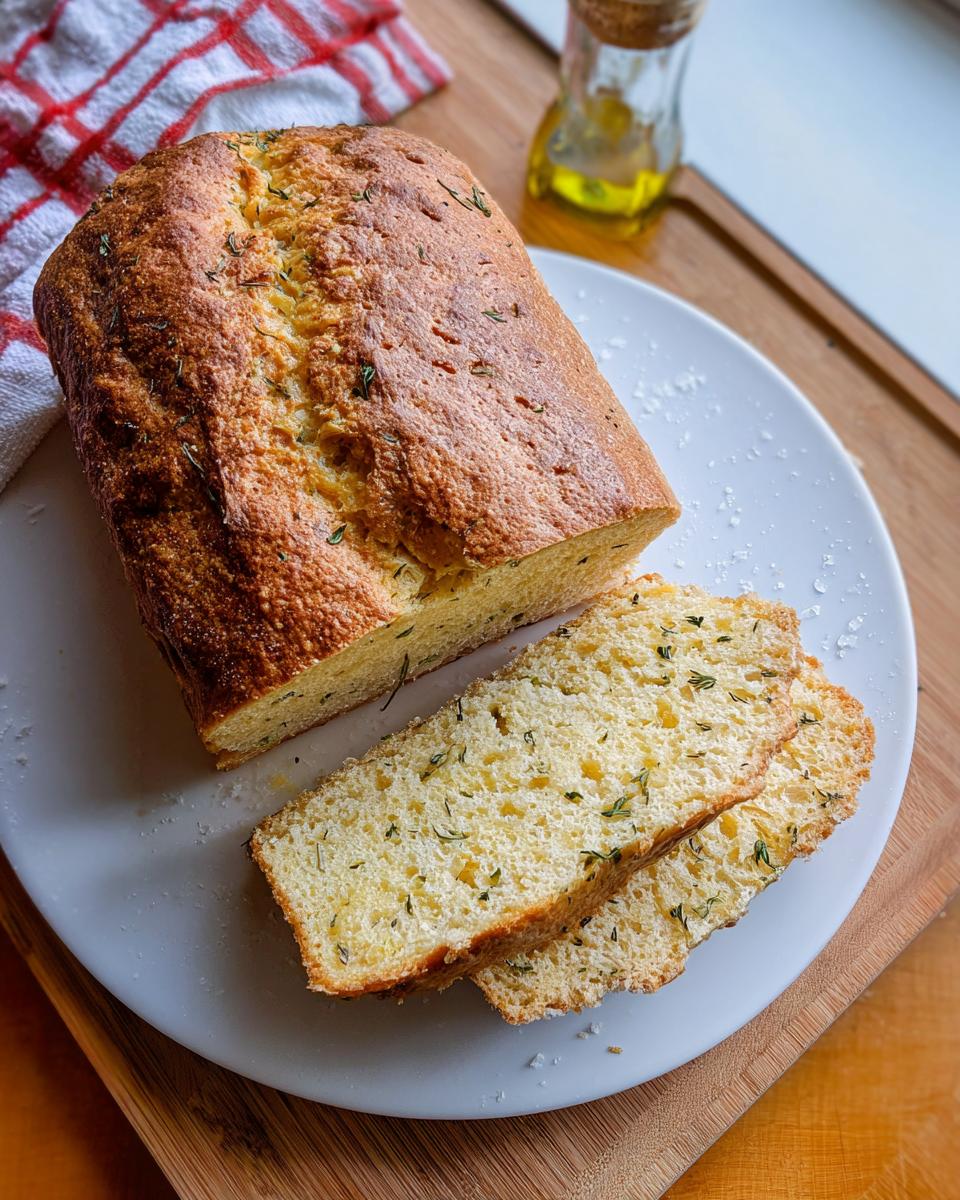
Next up, time for the liquids! Pour in your water and that gorgeous extra virgin olive oil. Start mixing everything until it just comes together. You’re aiming for something that looks like a very stiff batter, maybe borderline doughy. Now, here is my little expert kick—keep mixing for another minute or two after it looks combined. I know, I know, with quick breads you usually stop right away, but those extra seconds help develop just enough gluten to give this loaf a really satisfying, slightly chewy texture instead of it being too crumbly. It’s a little trick I learned to make sure we get that perfect structure!
Baking and Checking Doneness of Your No-Yeast Olive Oil Bread
Once you’ve mixed it up, grease your 9×5 inch baking pan generously—I usually add a little extra olive oil right to the pan for non-stick insurance. Scrape that beautiful batter in and smooth the top out evenly. Now, get it into that hot oven for about 50 to 60 minutes. How do you know when it’s done? The toothpick test is your friend! Insert a toothpick right into the center, and if it slides out clean, you’re golden. If you see wet batter clinging to it, give it five more minutes and test again. It’s really that simple to get that lovely, crusty top!
Tips for Success When Making No-Yeast Olive Oil Bread
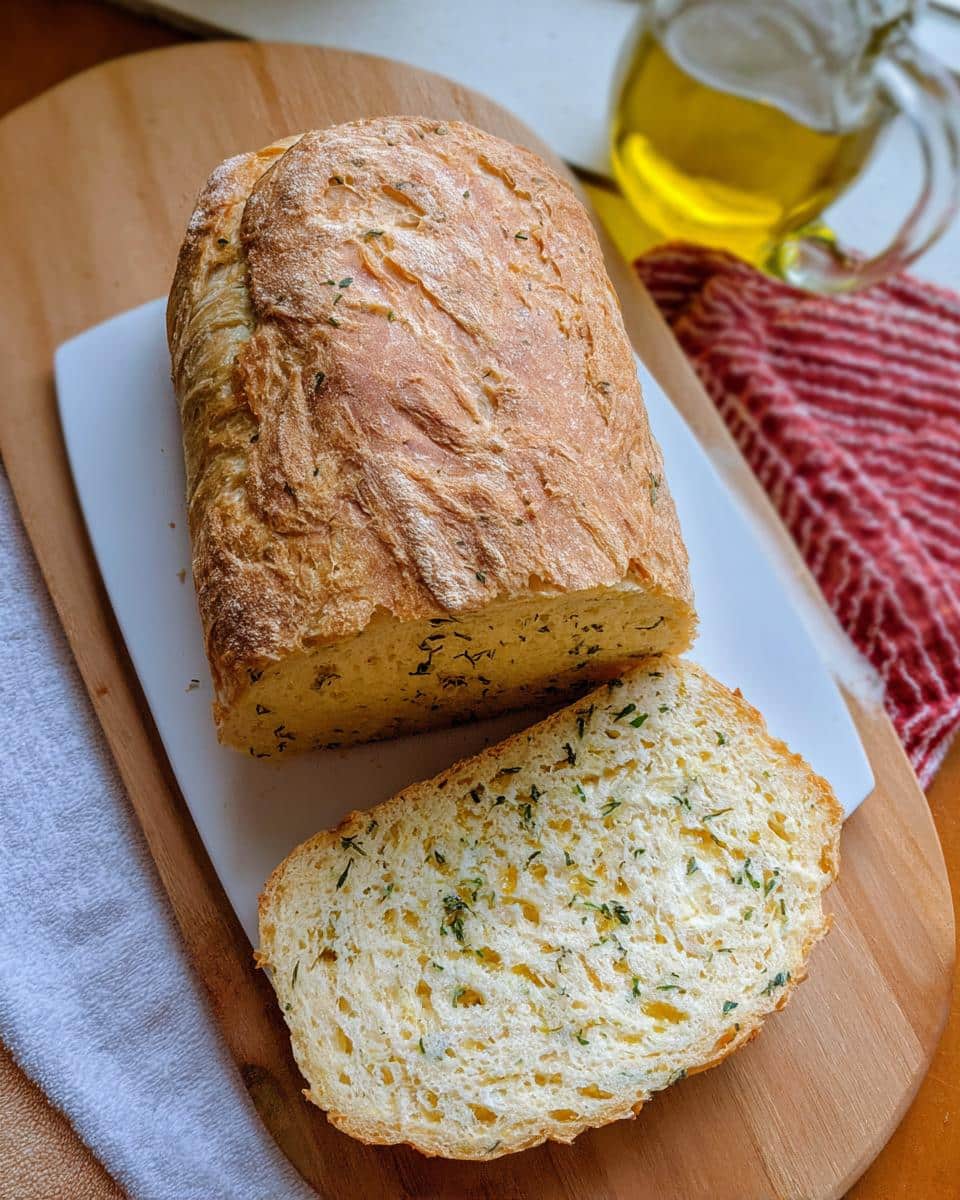
Even though this is such an easy recipe, there are tiny moments you can tweak to push it from “good” to “absolutely fantastic.” I learned these the hard way, naturally. One time, I tried making this loaf when I was rushing, used cold water straight from the fridge, and didn’t mix it quite long enough. The result? Kind of dense, a little gummy in spots. Yuck! That taught me that even chemical leaveners like baking powder need a little help from consistent temperatures and mixing.
Here are the three non-negotiable tips I swear by now for a perfect, crumbly, savory loaf every single time. These are my little gifts to you so you don’t waste a single batch!
- Grab Room Temperature Water: Seriously, don’t use ice-cold tap water. If your water is lukewarm or room temperature, it helps the baking powder activate much more evenly throughout the batter. Cold water slows everything down and you get inconsistent lift.
- Don’t Under-Mix the Batter: I know I mentioned mixing for an extra minute or two above, but I need to repeat it here! Because we don’t have yeast, we need an *little* gluten development to hold the shape. Mix past the point where you *think* it’s combined. You want the texture to be smooth and cohesive before you pour it into the pan. If it’s too shaggy, it will be crumbly in the oven.
- Know Your Herbs: The herbs sink if they aren’t ‘stuck’ in the flour paste first. Make sure you thoroughly whisk your thyme, rosemary, and parsley with the flour and baking powder *before* adding any liquid. If you just dump them in with the water, they tend to clumping up down in the bottom of the bowl.
Follow those three things, and you’ll have a gorgeous, savory No-Yeast Olive Oil Bread that tastes like you spent hours on it. It truly is forgiving, but these little steps make it flawless!
Ingredient Substitutions for Your No-Yeast Olive Oil Bread
I totally get it—sometimes you open the pantry expecting flour and find your supply is mysteriously low, or maybe you’re just trying to sneak in a little more whole grain goodness. Substitutions in quick breads can be tricky because the chemistry matters so much, but for this No-Yeast Olive Oil Bread, we have some great wiggle room!
The most important thing to remember is that since we are relying on baking powder for lift, we can’t introduce too much weight or density, or the bread just won’t rise properly. Keep that in mind as we look at swapping things out.
Flour Flexibility: Keeping the Structure
The recipe calls for all-purpose flour, which gives us that nice, familiar, slightly soft crumb. If you want to introduce some whole wheat flour—and I totally encourage adding fiber where you can—don’t substitute it 1:1. Whole wheat flour absorbs liquid differently and the bran interferes with gluten development, making things heavy really fast. My suggestion is to swap out up to half of the all-purpose flour for whole wheat flour. So, if you use one cup of whole wheat, use one cup of AP flour. That keeps the bread light enough while boosting the nutrient profile.
If you need to go gluten-free? That’s a much bigger conversation, honestly! Gluten-free blends can work, but you might need to add a binder like xanthan gum to mimic that gluten structure we developed by mixing a little longer. I haven’t perfected a GF version of this loaf yet, but if you try it, definitely let me know how it goes!
Oil Alternatives When Olive Oil Isn’t an Option
Olive oil is my absolute favorite here for the flavor and the healthy fats, but if you are out, you need an oil with a neutral taste so it doesn’t compete with our lovely herbs. Avocado oil is my top recommendation—it has a high smoke point and a very clean flavor profile. Canola oil works in a pinch if that’s what you have on hand.
Now, please, don’t try reverting to butter here! Butter brings in milk solids and changes the way this bread binds together since it’s not designed around creaming butter and sugar. We need the liquid fat of oil to keep this Homemade Bread tender and moist. Stick to a liquid oil!
Herb Swaps and Omissions
The trio of thyme, rosemary, and parsley really makes this savory loaf shine. But if you absolutely hate one, just leave it out! You can swap the total amount of herbs for something else, too. Maybe dried oregano for a more Italian feel, or even some dried dill if you plan to serve it with fish. Just make sure whatever you swap in is dried, not fresh, because the moisture levels are very different. If you use fresh, you’ll need to cut the amount way down, like to one tablespoon total, so you don’t overwhelm the batter.
Versatile Serving Suggestions for This Bread Without Oven Loaf
Now that you have this absolutely perfect, crusty, herbaceous No-Yeast Olive Oil Bread cooling on the rack—which, by the way, smells incredible—the real question is: what do we eat it with? Because this isn’t a sweet loaf, its applications are wonderfully broad. It truly elevates the simple dinner plate. Think Mediterranean simplicity; this bread is designed to soak up flavor!
I find that since we skipped the yeast rising time, the texture is slightly tighter than a standard sourdough, which makes it amazing for dipping and topping. It’s sturdy enough for hearty applications, yet soft enough to enjoy plain with a drizzle of good olive oil for breakfast. This is where my role as a Flavor Strategist really comes in handy—let’s talk pairings!
The Perfect Soup & Salad Companion
If you’re making soup, this bread is non-negotiable. Forget store-bought croutons! Tear off chunks and use them to scoop up every last drop of tomato soup, lentil stew, or creamy mushroom bisque. The contrast between the warm, savory herbs in the bread and a rich liquid is just heaven. It works beautifully as a side for light salads too, especially those dressed with vinaigrettes—it’s great for cleaning the plate!
If you are looking for some great cozy sides to pair with your loaf, I have some wonderful ideas over on my holiday recipe collection page that would match perfectly.
Breakfast Brushing: Skillet Bread Style
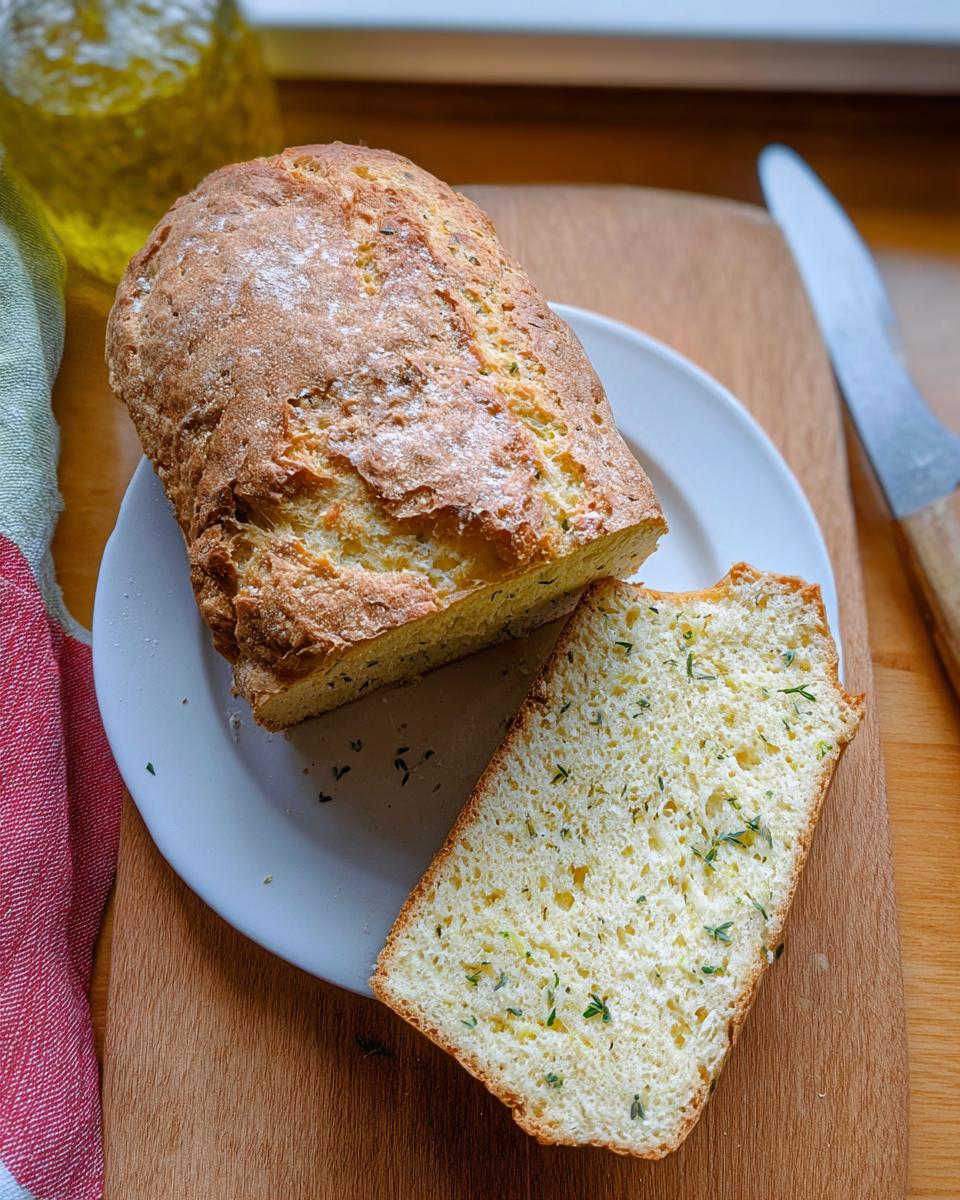
Don’t just save this for dinner! When I have leftover No-Yeast Olive Oil Bread, I often treat it like a quick breakfast flatbread. Slice it the next morning and, instead of toasting it in the toaster, give it a quick pan-fry. That’s right, treat it like a fast Skillet Bread! Heat a dry skillet over medium heat, toss in a slice or two, and let it crisp up for maybe 90 seconds per side. It gets this fantastic crunchy exterior while staying slightly soft inside.
Top that warm slice with a fried egg, a sprinkle of flaky salt, or some fresh avocado. It’s a hearty, balanced breakfast that takes less time than cooking bacon. See? Easy!
Cheese Board Hero and Appetizer Base
This savory loaf is completely ready for company. When I’m setting out a platter, this bread is always included. When it’s served slightly warm, it pairs incredibly well with salty cheeses like feta or artisanal goat cheese. The dried thyme and rosemary notes really sing next to creamy textures.
You can even use it as a base for a quick crostini! Just slice it thin (like maybe half an inch thick), brush *very* lightly with a touch more olive oil, and pop it under the broiler for just 2-3 minutes until golden. Top it with bruschetta mix, tapenade, or even just a schmear of good pesto. It’s an instant appetizer that always impresses!
Storage and Reheating Instructions for No-Yeast Olive Oil Bread
One of the best things about this No-Yeast Olive Oil Bread is that it sticks around longer than a yeasted loaf usually does! Because we used no yeast and relied on the baking powder reaction, the texture stays pretty reliable for a few days, provided you store it correctly. Yeast breads can get a little sticky or tough quickly, but this one holds up its integrity much better, which is great for meal prepping!
When I bake a loaf, I always plan on enjoying the fresh slices the first day, and then I rely on my storage method for the next two or three days. Remember, this recipe is about minimizing effort, not making things difficult, so storing it should be simple!
Keeping Your Loaf Fresh
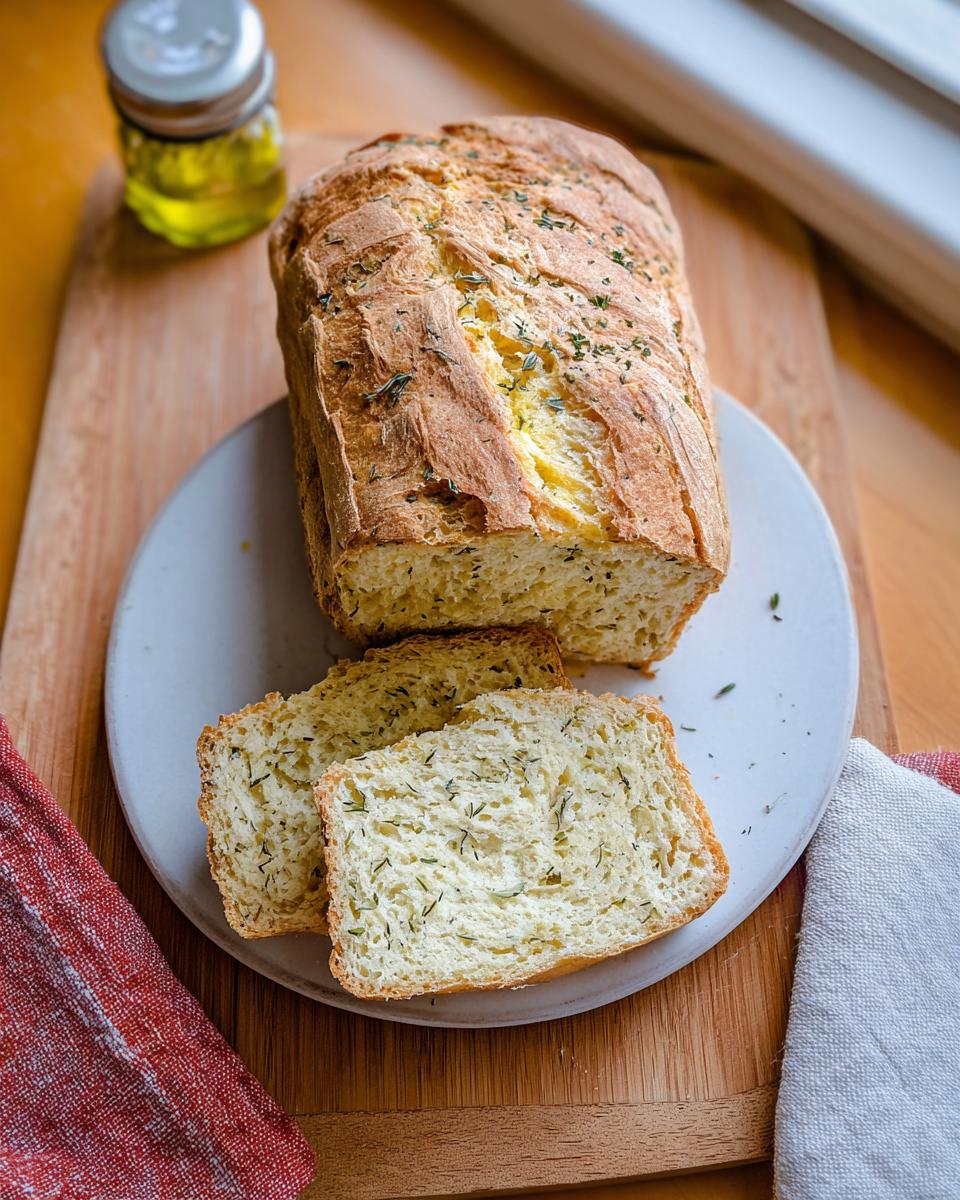
The key to keeping any bread fresh—especially one leaning on olive oil for moisture rather than large air pockets—is minimizing air exposure. As soon as the loaf is completely cooled down (and I mean completely, or you’ll end up with steam and sogginess!), wrap it up tightly. I really prefer using plastic wrap for the initial tight wrap. Wrap the entire loaf snugly. Then, if you want extra peace of mind or are keeping it out for more than two days, pop that wrapped loaf inside a large zip-top storage bag or an airtight container.
Store it at room temperature on your counter or in a bread box. Do not put this Simple Bread Recipes favorite in the refrigerator! I know, it seems logical, but refrigeration is the fastest way to stale bread because it speeds up that starchy retrogradation process. Keep it cozy on the counter.
Bringing Back That Warmth and Texture
When it comes time to eat the remaining slices, you want to bring back that beautiful, slightly crisp exterior that you got right after baking. You have two great options depending on how much time you have. For me, it’s all about the microwave when I’m desperate!
- The Quick Microwave Trick: If you just need one slice warmed up fast (say, for quick dipping into dressing), wrap the slice loosely in a paper towel. Microwave it for about 10 to 15 seconds. It softens the crumb nicely, though it won’t bring back the crust. This is perfect if you’re eating it immediately.
- The Oven Reheating Method (My Preference): If you have five minutes, this is the way to go. Preheat your oven or toaster oven to about 325 F (160 C). Place the slices directly on the rack, or if you want to save your clean-up time, place them on a small baking sheet. Heat for about 5 to 7 minutes. This warms the interior nicely and dries out that exterior just enough to restore a slight crust, making it taste almost freshly baked again.
If you do find your loaf gets slightly hard after day three, don’t toss it! That remaining Homemade Bread is absolutely perfect for making homemade croutons or breadcrumbs. Just cube it up, toss it with a little olive oil and salt, and toast it low and slow until it’s rock hard, then blend it up! Zero waste in my kitchen!
Frequently Asked Questions About Making No-Yeast Olive Oil Bread
It’s funny how even the simplest recipes prompt the most specific questions! I’ve gotten a few emails asking about texture, shelf life, and alternative cooking methods. Since this No-Yeast Olive Oil Bread is so reliable, I want to make sure you set yourself up for success, whether it’s your first time baking or your tenth. Here are the questions I hear most often from folks trying out this loaf.
Can I make this No-Yeast Olive Oil Bread in a skillet instead of the oven?
Yes, you absolutely can! This is a great way to get that rustic, crusty exterior, especially if you don’t want to heat up the whole oven. When adapting this to a cast-iron skillet, you’ll want to think thinner, almost like a thick Flatbread Recipes style. Grease your skillet well with oil and pour in *half* of the batter you usually make. Cook it on medium-low heat, keeping the lid tightly on (that traps the steam so it cooks through). It probably won’t take more than 20 to 25 minutes total. You’ll need to flip it carefully once the bottom is golden brown and the top looks set. It definitely won’t be a tall loaf, but it makes a fantastic, savory pan bread!
What makes this recipe a Quick Bread Recipes option?
That’s the best part for busy weeknights! This is categorized as a Quick Bread Recipes because we skip yeast entirely. Yeast is a living organism that needs time—sometimes hours—to proof and let the bread rise slowly. Our lift comes from baking powder, which is a chemical leavener. As soon as it gets wet and hits that hot oven, it reacts instantly, releasing carbon dioxide bubbles that make the bread puff up! So, you mix it, you bake it, and you’re done, usually within an hour of starting. No lengthy waiting periods required!
How long does this bread really last on the counter?
Because this recipe relies heavily on olive oil for moisture, it tends to stay softer than traditional yeasted loaves. If you store it properly—wrapped tightly at room temperature—it should stay perfectly good for 3 to 4 days. If you notice it getting slightly firm around day three, just use the oven reheating trick I mentioned earlier, or slice it up for those croutons I talked about! As a Dietitian, I recommend freezing any extra beyond day four; slice it first, then freeze it, and you have instant toast!
Is this No-Yeast Olive Oil Bread supposed to be dense?
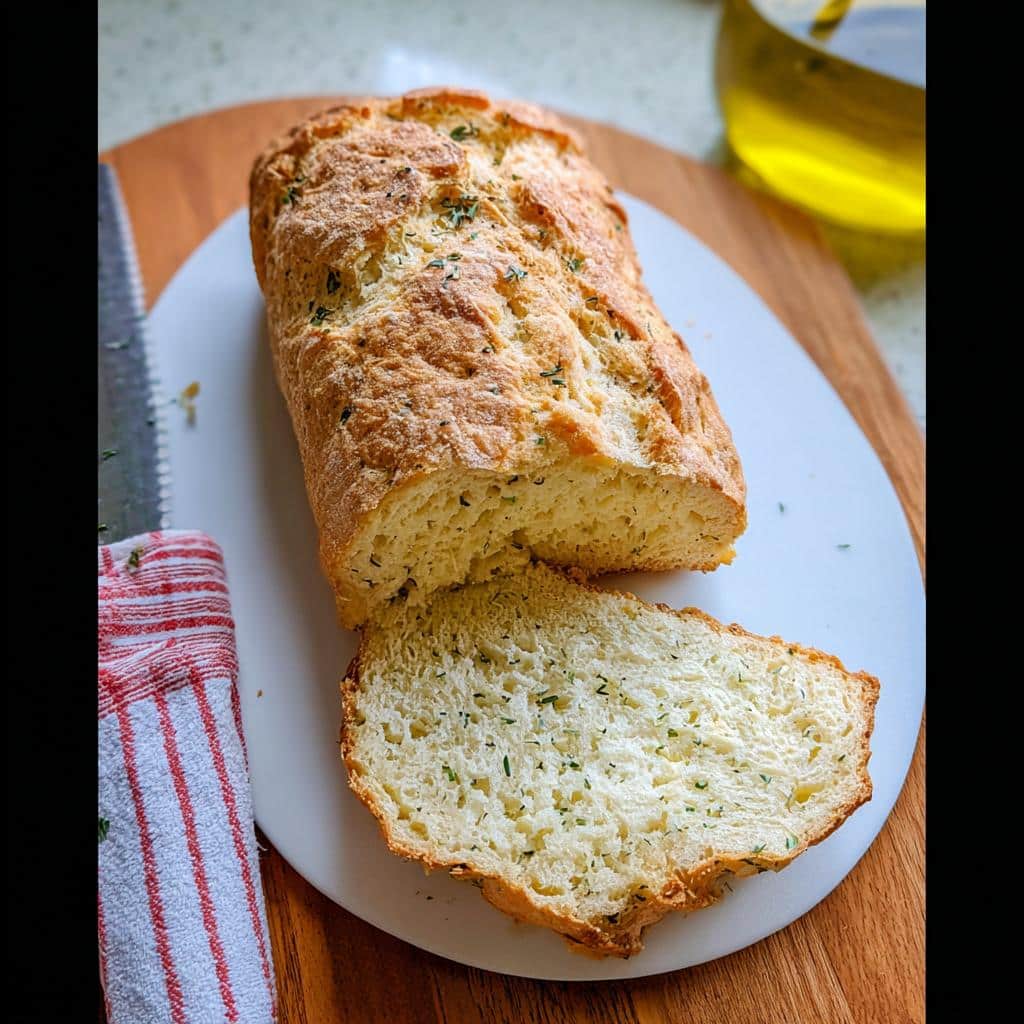
It *should* be denser than, say, a fluffy sandwich loaf, but it shouldn’t be heavy like a brick! Remember, we aren’t baking with yeast, so there aren’t huge, airy holes. Instead, you should have a lovely, slightly tighter crumb structure, almost like a sturdy scone or a rich cake. If yours feels gummy or really heavy, it usually means one of two things: you either under-mixed it slightly (so the baking powder couldn’t create enough structure) or you packed the flour down too hard when measuring. If you need more Dietitian-approved clarification on ingredient science, you can check out my legal and policy page—I promise I keep the technical stuff balanced!
Connecting with Emma Brooks: Dietitian Insights
Garnishing our bread with savory herbs and good olive oil is all about making smart choices that taste wonderful. As I wrap up this recipe, I want you to know a little bit more about where these balanced ideas come from!
I’m Emma Brooks, and I’m a Registered Dietitian and Flavor Strategist here at Top Chicken Eats. For me, baking like this—simple, reliable, and using great fats like olive oil—is the perfect example of how comfort food can support your well-being. My goal isn’t perfection in the kitchen; it’s about making choices that feel both nourishing and joyful. I truly believe that restrictive eating doesn’t last, but creative, balanced home cooking sticks around!
My background started in nutrition clinics, but I quickly found my passion was showing people how to bring delicious, evidence-based eating right to their weeknight tables. That’s why I focus on things like this No-Yeast Olive Oil Bread—it’s easy, it tastes phenomenal, and it uses high-quality ingredients without requiring fancy techniques or obscure items.
I love hiking around New England when I need a break from the kitchen, but mostly, I’m developing recipes that help you feel good about what you eat. If you ever want to send me a note about how your loaf turned out, want to chat about flavor pairing, or just have a nutrition question, please feel free to reach out through my contact page. Happy, balanced baking to you!
No-Yeast Olive Oil Bread
Ingredients
Equipment
Method
- Add 2 cups all-purpose flour, 1 teaspoon baking powder, 1 teaspoon sea salt, 1/2 tablespoon dried thyme, 1/2 tablespoon dried rosemary, and 1/2 tablespoon dried parsley into a large bowl. Mix all the dry ingredients until they combine well.
- Add 1 1/4 cups water and 2 tablespoons of extra virgin olive oil to the dry mixture. Mix all the ingredients together. The mixture should be between a stiff dough and a batter consistency. Once combined, continue mixing for another 1 to 2 minutes. This mixing helps develop gluten for a better bread texture.
- Grease a 9 x 5 inch baking pan with extra virgin olive oil. Add the dough mixture to the pan, spreading it evenly in a flat layer.
- Bake in a preheated oven at 190 C (375 F) for 50 to 60 minutes. Check for doneness by inserting a toothpick into the middle; it should come out cleanly when done.
- Remove the bread loaf from the oven and take it out of the pan. Transfer it to a wire rack and let it rest for 15 minutes before you slice and serve it.