
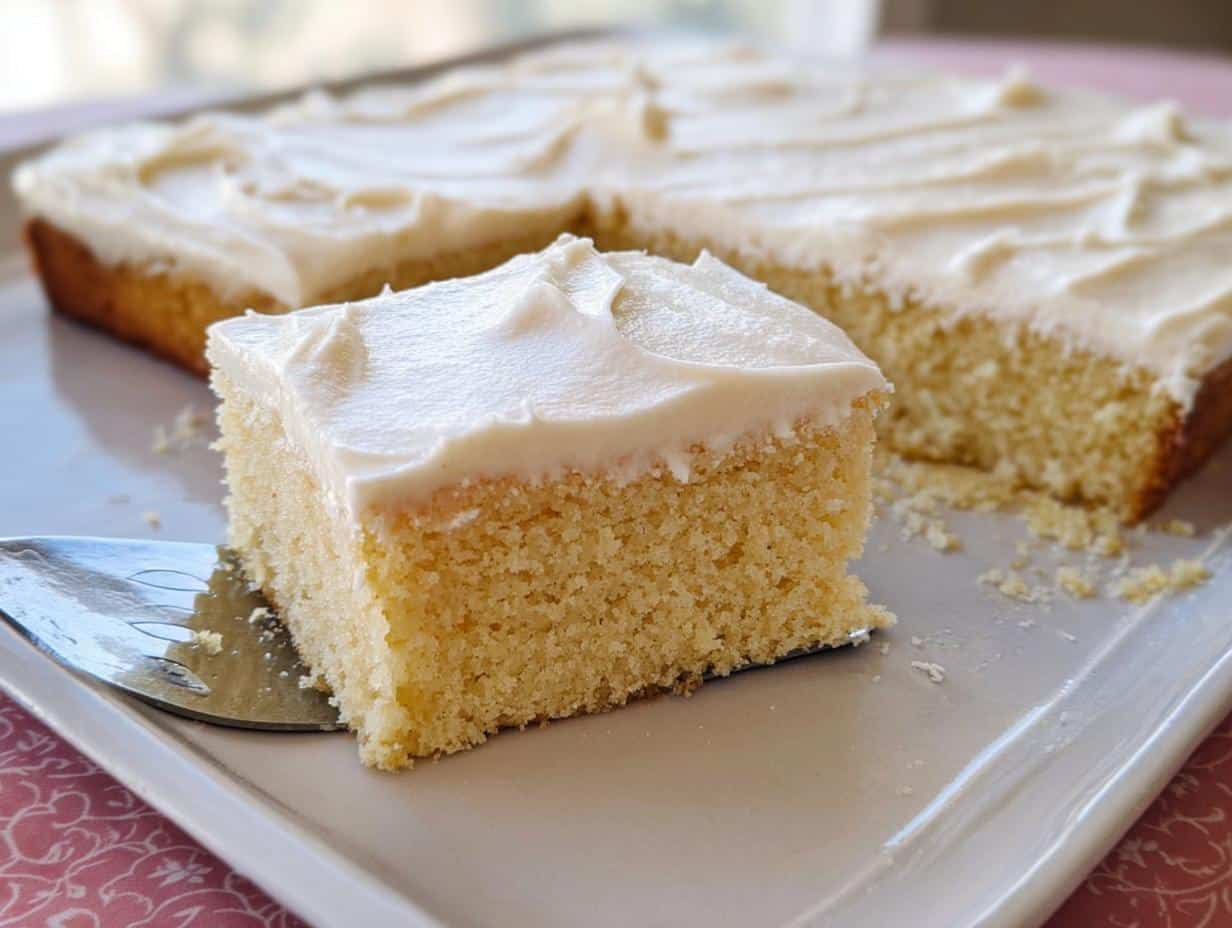
There are certain desserts that just define comfort, aren’t there? Like catching up with an old friend, the best flavors are often the ones that never change. As a Culinary Historian, I spend my days digging into why some recipes survive the decades, and trust me, the Easy Vanilla Sheet Cake is one of those champions. This isn’t some fancy, fussy creation; this is your go-to, reliable masterpiece designed for real life.
Forget complicated layering or delicate techniques. My version cuts right to the good stuff: a tender, bright vanilla crumb that bakes perfectly flat every single time in one pan. It’s the foundation of so many good memories, and I’m excited to share how I make this classic absolute perfection, easily and quickly, without any fuss.
Why This Easy Vanilla Sheet Cake Remains a Staple
If you’re looking for Simple Dessert Recipes that actually deliver without demanding your whole afternoon, this is it. I bake this cake constantly because it’s just so forgiving. Seriously, it comes together faster than most baking projects that take twice as long!
This is the definition of an Easy Dessert Idea because it handles a crowd like a dream. You aren’t wrestling with layer cakes; you just frost it right in the pan. Here’s why I keep coming back to this sheet cake template:
- It’s incredibly quick to prep—we’re talking 15 minutes, tops!
- It uses basic pantry stuff most of us always have on hand.
- It cuts into neat, sturdy slices perfect for school events or potlucks.
If you’re new to baking or just need a guaranteed win for a last-minute treat, you need this recipe in your rotation. We even have some fun ideas for decorating it geared towards fun family events over at easy baking projects for kids.
Gathering Ingredients for Your Easy Vanilla Sheet Cake
When we talk about making this Easy Vanilla Sheet Cake reliably perfect, it all comes down to treating your ingredients right. You’ll notice I’m strict about the temperature of a few items. That’s my history as a culinary researcher coming through—getting the foundation right means success!
We’re keeping things pure here. No weird fillers, just solid, simple flavor builders. Make sure you have your 13 x 18-inch half-sheet pan ready, because these quantities are portioned for that specific size.
For the Easy Vanilla Sheet Cake Batter
The key to that gorgeous, even rise is getting your fats and liquids right. Please, please make sure your butter, your eggs, and your whole milk have had time to get up to room temperature. It really helps everything emulsify beautifully.
- 1 cup of butter, softened only (not melted—we need structure!)
- 1.75 cups granulated sugar
- 4 large eggs, room temperature, added one by one
- 1 cup whole milk, room temperature
- 1 tablespoon pure vanilla extract
- 3 cups cake flour (this makes the crumb so tender!)
- 1 tablespoon baking powder
- 0.75 teaspoon salt
For the Vanilla Buttercream Frosting
For the frosting, I skip the fiddling and go straight to the source. You don’t want to waste time messing with a mediocre frosting when you’ve got this incredible cake base. I rely on my tried-and-true, classic Vanilla Buttercream recipe. Just whip up a full batch of that; it spreads like a dream over the cooled cake, making this one of the simplest, most impressive Homemade Desserts you can offer.
Step-by-Step Guide to the Easy Vanilla Sheet Cake Instructions
Okay, let’s get this show on the road! Since this is a sheet cake, we can move fast. Grab that big 13 x 18-inch half-sheet pan you prepped earlier, and we’ll use the stand mixer—its paddle attachment is perfect for getting this type of batter just right.
Preparing the Pan and Oven for Easy Vanilla Sheet Cake
First things first: Get that oven warming up to 350°F (180°C). While it heats, make sure your 13 x 18-inch pan is thoroughly buttered and floured. Seriously, don’t skimp here; we want a clean release when this beauty is done baking. Just a quick, even coat works wonderfully.
Mixing the Cake Batter Components
Time to mix! In your mixer bowl, you’re going to beat that softened butter and the granulated sugar together on medium-high speed. You need to cream these until they look light and fluffy—that usually takes about three minutes. This is where we build air, so don’t rush it!
Next, add those room-temperature eggs one at a time. Make sure the first one is totally incorporated before adding the next. After the eggs, pour in your milk and vanilla. Now, here’s my expert tip: Whisk your cake flour, baking powder, and salt in a separate medium bowl. Fold that dry mixture gently into the wet. Stop mixing the second the flour disappears. Overmixing leads to tough cake, and we want tender perfection!
Baking and Cooling the Sheet Cake
Level that batter carefully in your prepared pan. It should bake for about 20 minutes. You know it’s done when a toothpick slid into the center comes out clean or maybe with just a few moist crumbs clinging to it. If you want to see some advanced techniques, check out how others handle things like complex mixing methods, but for this cake, simple is best.
This is the hardest part: Let it cool *completely* in the pan on a wire rack. Do not be tempted to frost it while it’s even slightly warm. If you frost a warm sheet cake, your beautiful buttercream will melt right off into a sugary puddle. Patience pays off here!
Tips for Baking the Perfect Easy Vanilla Sheet Cake
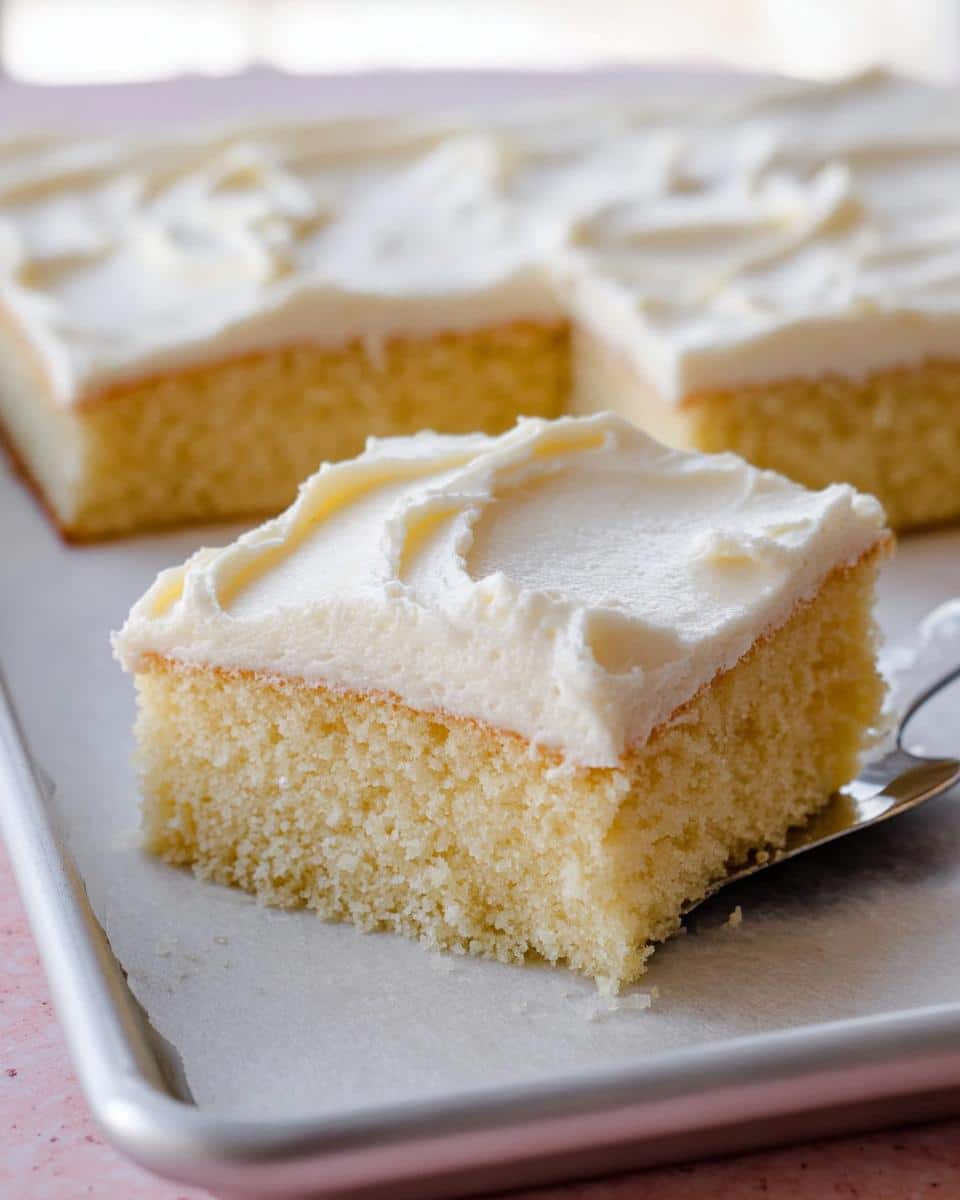
If you want this Easy Vanilla Sheet Cake to really sing, you’ve got to honor two non-negotiable rules I learned documenting classic American baking traditions. The first is my temperature obsession. Room temperature butter, milk, and eggs aren’t just suggestions; they guarantee a smooth, high-rising batter. Cold ingredients just won’t combine correctly with the creamed butter, leading to a denser, sometimes uneven bake.
The second big tip concerns your flour. Since we are using cake flour, which has less protein, it needs careful handling. I always use the ‘spoon and level’ method when measuring it out for the dry ingredients. Don’t scoop directly from the bag! Spoon the flour lightly into your measuring cup until it overflows, then use a flat knife to level the top. Packing it in is essentially adding an extra half-cup of flour, and that guarantees a dry cake.
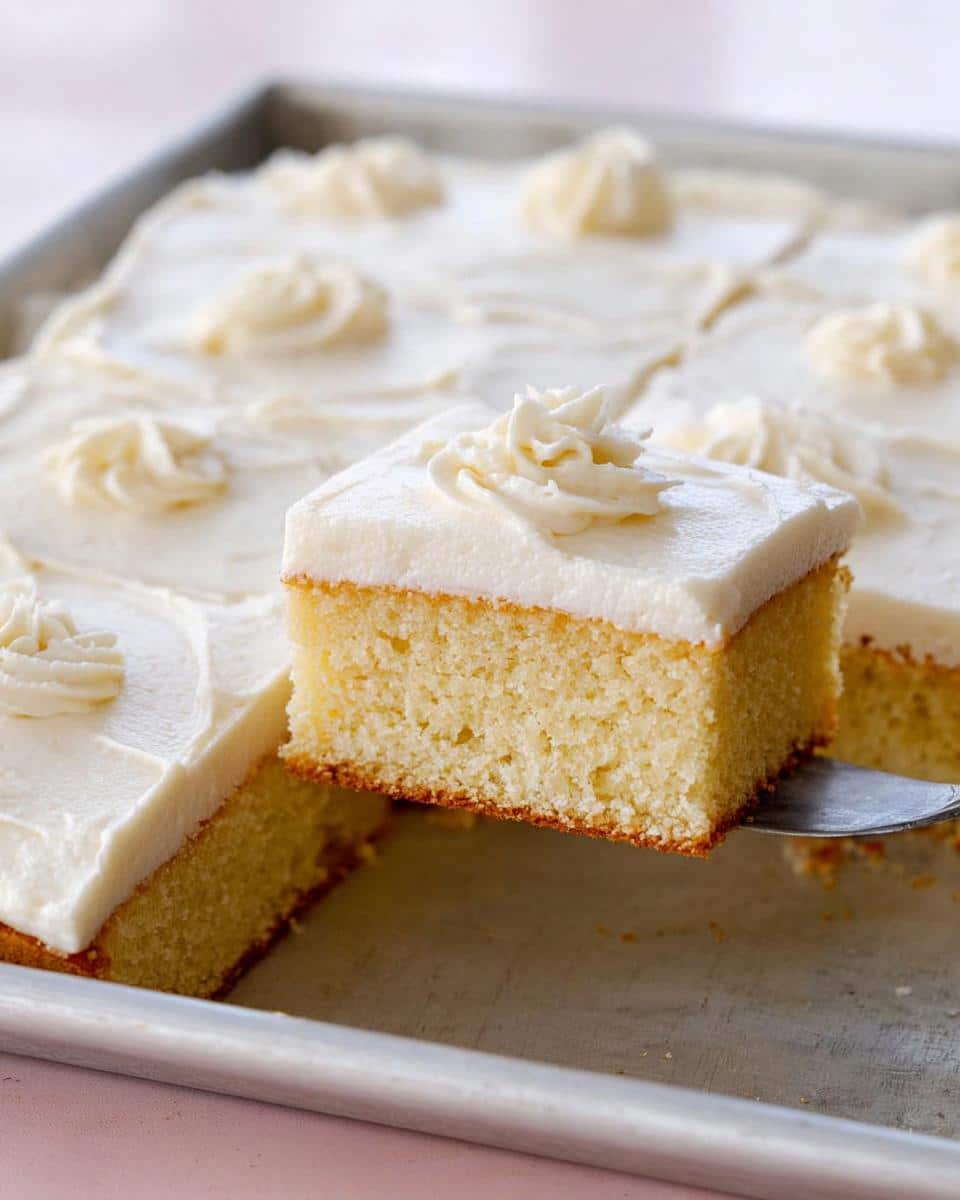
Follow these tricks, and you’ll have a cake so reliable and delicious, it will instantly become one of your go-to Easy Desserts For A Crowd. It’s the simplicity that makes it so enduring! For transparency about recipe sources and testing methods, you can always check out our full site disclaimer.
Ingredient Notes and Substitutions for Your Cake
Now, I know sometimes you open the pantry and realize you are missing that one, specific ingredient we listed. Don’t panic! That’s the beauty of understanding how baking chemistry works—you can make smart swaps.
The biggest question I always get is about the flour. We call for cake flour because its lower protein level gives us that super fine, delicate crumb we want in a nice vanilla cake. But if you only have regular all-purpose flour on hand, don’t worry. You can swap it in—just be slightly gentler with your mixing.
If you’re subbing all-purpose for the three cups of cake flour, try removing about 6 tablespoons of the all-purpose flour and replacing those tablespoons with cornstarch. Then, whisk it all up well. The cornstarch helps mimic that lower-protein structure of cake flour. It’s a little trick that saves the day when you’re planning Easy Desserts With Few Ingredients!
Milk Matters (And How to Change It)
We specify whole milk because the fat content helps carry the vanilla flavor and keeps the crumb rich. If whole milk isn’t available, 2% milk will work fine, but the cake might be *slightly* less tender. Avoid skim milk if you can, since the fat is really important for this texture.
If you’re dairy-free or just out of milk? You can substitute it one-for-one with a plain, unsweetened dairy alternative like soy milk or oat milk. The result will be great, though sometimes the vanilla flavor is a touch muted with alternatives, so maybe lean into that teaspoon of vanilla extract a little heavier next time. These little adjustments help keep your Homemade Desserts plan on track!
What About That Vanilla Extract?
Listen, 1 tablespoon sounds like a lot, but this is vanilla cake, so we need that pure, beautiful flavor to shine through everything else. I use pure vanilla extract, always. Don’t swap to imitation vanilla if you can avoid it; it has a harsh, artificial echo to it that ruins the subtlety of a fresh, simple cake like this one. Trust me on this one—spend the extra dollar on the good stuff for this recipe.
Storing and Serving Your Easy Vanilla Sheet Cake
The great thing about a sheet cake is that it’s designed to be eaten over a few days, which makes it perfect for households that like immediate gratification! According to my notes, this Easy Vanilla Sheet Cake will happily sit on your counter, covered tightly, at room temperature for up to two full days. Because the frosting is a basic buttercream, you don’t need to worry about refrigeration unless your kitchen is scorching hot.
If you do have leftovers past day two, you can actually wrap a slice tightly in plastic wrap and freeze it for a month or so. When you pull it out, let it thaw on the counter for an hour. It’s still delicious, even if it loses a tiny bit of that fresh-from-the-oven springiness.
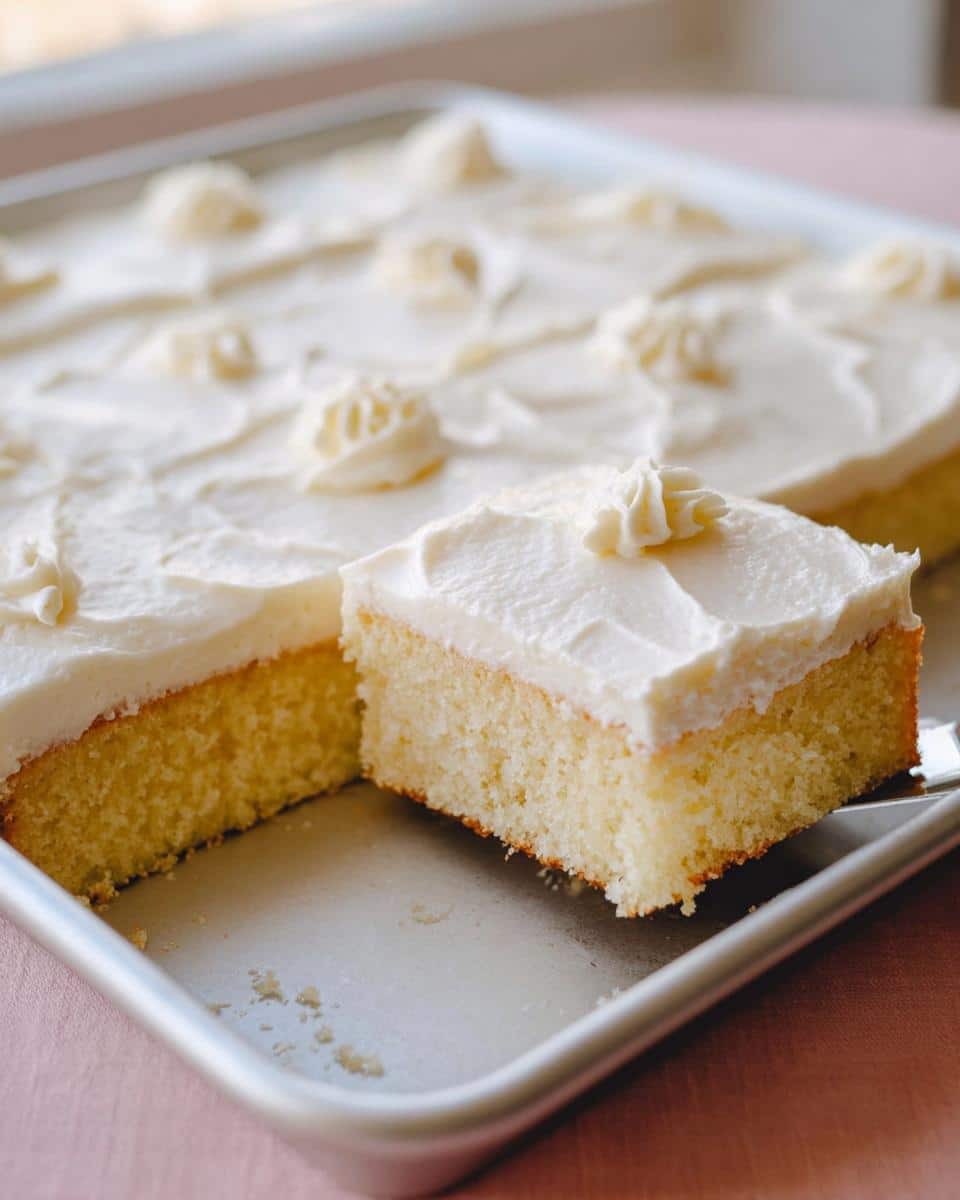
This cake is truly one of my favorite Quick Dessert Recipes because you can dress it up so easily. Serve it plain for a nostalgic lunch treat, or top slices with fresh berries for a slightly lighter feel. It’s so versatile!
For more inspiration on quick bakes and reliable sweets, you can always browse the latest easy baking ideas we post on the site!
Frequently Asked Questions About This Simple Dessert Recipe
I love getting questions about this cake because it means you’re excited to bake it! Since this Easy Vanilla Sheet Cake is built on such simple elements, the answers usually come down to technique. It’s proof that you don’t need fussy ingredients to create some of the Best Dessert Recipes out there.
Can I use a smaller pan for this Easy Vanilla Sheet Cake?
That’s a great question for anyone adjusting ratios for smaller gatherings. Yes, you absolutely can use a smaller pan, like a 9×13 inch pan, but you must adjust your expectations for baking time. Since the cake batter will be deeper in a smaller pan, it’s going to take longer to bake all the way through—maybe an extra 10 to 15 minutes. Always start checking with your toothpick test around the 25-minute mark. If you go too long, you risk drying out an otherwise perfect scratch cake!
What makes this recipe one of the best dessert recipes?
In my historian’s view, what elevates this to one of the Best Dessert Recipes is the crumb structure we achieve using proper technique. It’s the combination of carefully creamed butter and the use of cake flour that makes the texture superior to many basic recipes. When you use room-temperature ingredients, you create tiny, stable air pockets that puff up beautifully, locking in tenderness. It’s the structure, my friends, that makes it a winner for reliable Homemade Desserts.
Is this recipe cheap to make?
When you look at the list, you’ll see it relies on staples like flour, butter, sugar, and eggs, which means it falls squarely into the category of Easy Desserts With Few Ingredients. You aren’t buying specialty items or extracts! If you already keep flour and sugar handy, the cost per serving is wonderfully low, making it a budget-friendly choice for feeding a crowd.
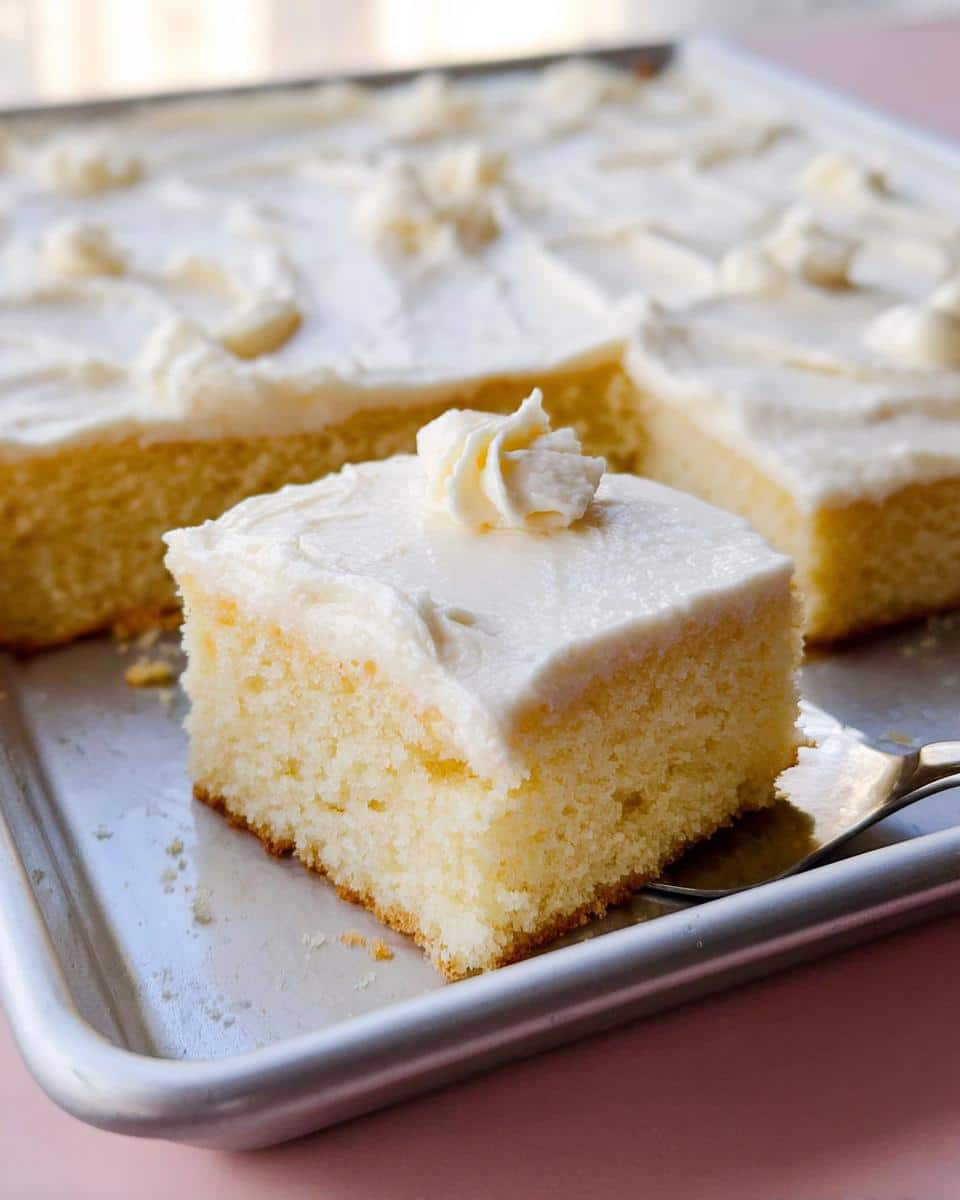
If you want to see more of my thoughts on historical baking and why simple ingredients always endure, you can read a little bit about my background on our About Page. Happy baking!
A Note on Nutritional Estimates for This Recipe
Now, I always get asked for the numbers—breakdown of calories, fats, all that good stuff. As a historian, I focus more on the tradition than the tracking, but I absolutely want to offer you transparency here. Since every oven, every brand of flour, and certainly every dollop of frosting we put on top can change the final count, what I’m giving you is a solid estimate based on the ingredients listed for the cake itself, before we slather it in frosting.
Think of these figures as a helpful guideline, not an absolute mandate. If you’re cutting slices for a huge party, they might be smaller than the 1/24th serving I calculate here, and that’s fine by me! We’re aiming for joy here, not calorie counting, but details matter.
For context, per slice (assuming 24 slices and using the general buttercream recipe mentioned previously), you’re looking in the ballpark of:
- Calories: Approximately 320–350
- Fat: Around 18g (This reflects the butter and full-fat milk, which are crucial for flavor!)
- Protein: About 4g
- Carbohydrates: Roughly 40g
Please remember, the beauty of a Homemade Dessert like this Easy Vanilla Sheet Cake is that you control the finish. If you skip the heavy buttercream and just use a light dusting of powdered sugar, those numbers drop significantly. When dealing with recipe details and data, we always follow our own site’s established guidelines.
Share Your Experience Baking This Easy Vanilla Sheet Cake
Now that you’ve got the recipe for what I consider the most dependable Easy Vanilla Sheet Cake out there, the final, and frankly, the most fun step is sharing it!
I truly want to know how it turned out for you. Did you stick to the classic look, or did you get creative? I love seeing the different ways you all make this simple dessert your own—maybe you switched the frosting flavor or added some fun sprinkles for a birthday party. Those shared Baking Ideas are what keep these old recipes alive and exciting for everyone.
Please take a minute to leave a rating right here on the page. If you have photos, tag us on social media! If you have specific feedback on the process or a great substitution you tried, drop a comment below. Hearing from you helps me know that this recipe is still doing its job as a reliable go-to for Easy Desserts For A Crowd.
If you run into any issues or have questions about a step, don’t hesitate to reach out through the contact form. I read every single note. Go bake something wonderful, and let me know if this vanilla sheet cake made your day!
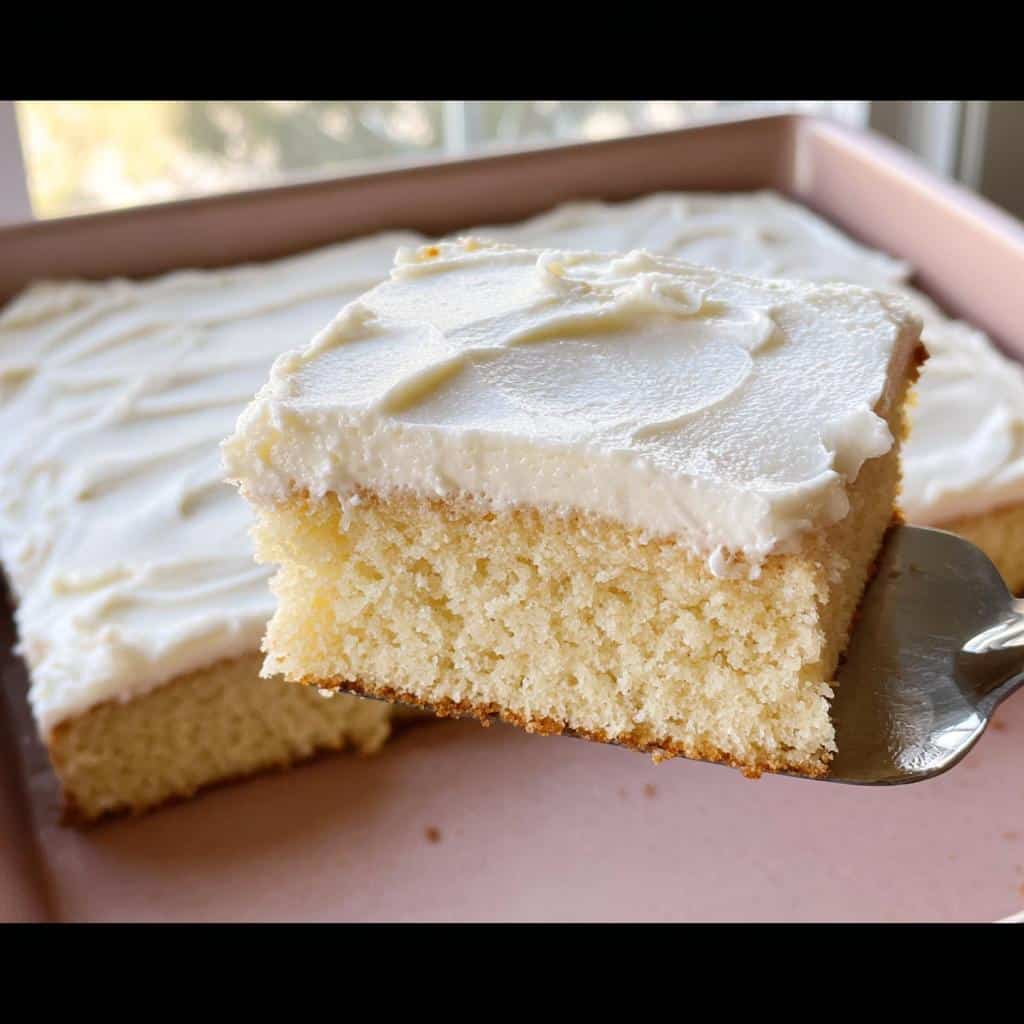
Easy Vanilla Sheet Cake
Ingredients
Equipment
Method
- Preheat your oven to 350°F (180°C). Butter and flour a 13 x 18-inch (33 x 46-cm) half-sheet pan. Set the pan aside.
- In the bowl of a stand mixer fitted with a paddle attachment or in a medium bowl with a handheld electric mixer, beat the butter and sugar together on medium-high speed for 3 minutes, until the mixture is fluffy.
- Add the eggs one at a time, scraping down the bowl after each addition. Beat in the milk and vanilla extract.
- In a medium bowl, whisk the flour, baking powder, and salt together. Fold this dry mixture into the butter mixture until it is evenly combined.
- Spread the batter evenly in the prepared pan. Bake for 20 minutes or until a toothpick inserted in the center comes out clean.
- Let the cake cool completely before you frost it with Vanilla Buttercream. Store the finished cake in an airtight container at room temperature for up to 2 days.