
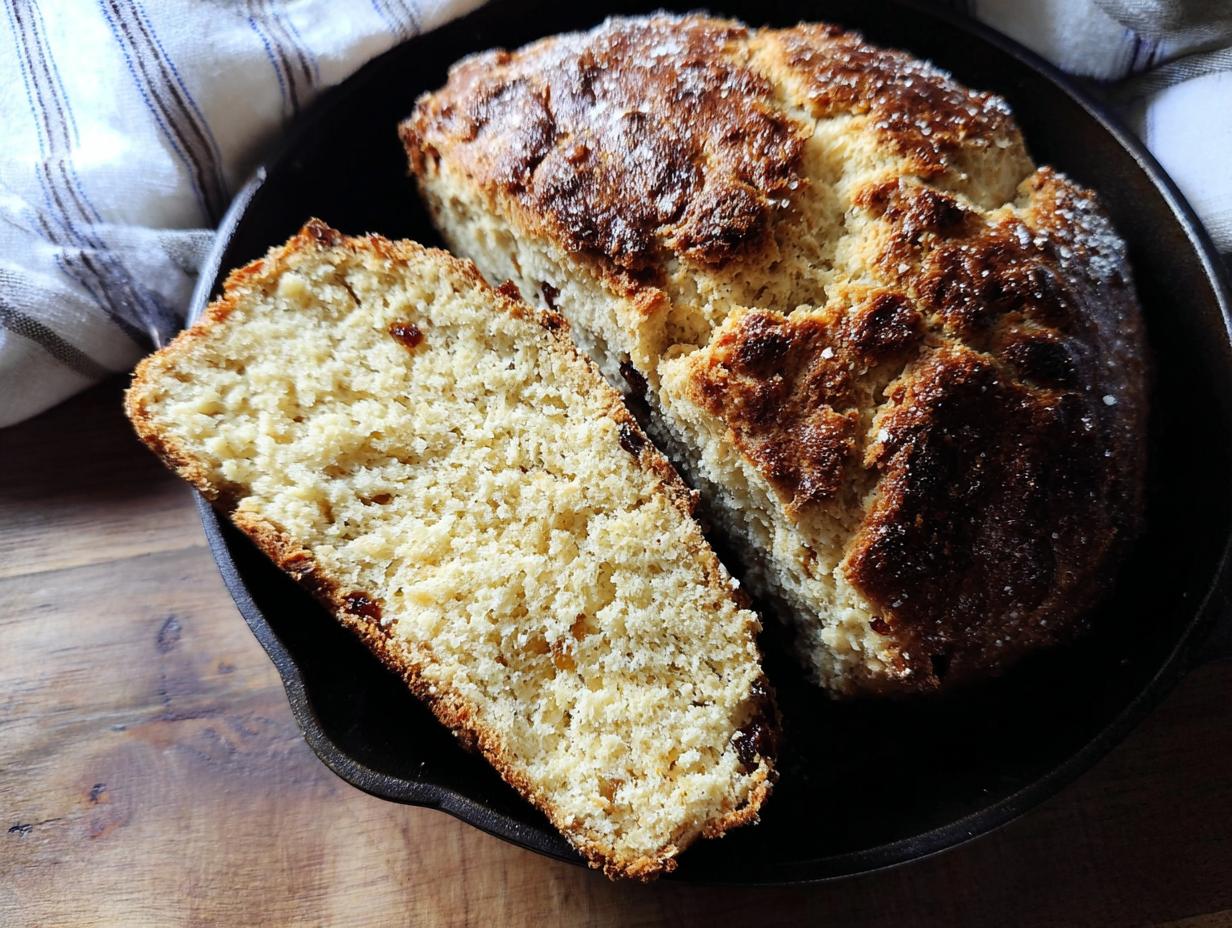
When I think about food that truly tells a story, I immediately go back to the bare necessities of home baking. Forget those complicated loaves that require hours of waiting for yeast to wake up! We’re going straight to history with this Irish Soda Bread recipe. It’s the workhorse of the Irish kitchen—simple ingredients, zero fuss, and it comes together faster than you can decide what to read on the internet. As a food historian, I can tell you this bread instantly connects us to centuries of tradition, folks baking with what they had on hand. If you want to know more about how we explore heritage recipes here at Top Chicken Eats, check out my About Me page! It’s hearty, it’s satisfying, and trust me, it’s absolutely authentic. This is the quick bread that built community.
The History Behind Authentic Irish Soda Bread
This bread isn’t just a recipe; it’s a beautiful snapshot of necessity meeting ingenuity! When you’re baking something this honest, you’re tapping right into history. Back in the day, especially during challenging times in Ireland, readily available yeast for leavening was often hard to come by, or just expensive.
So, what did people do? They turned to baking soda—or what they called ‘pearl barley’ in the early days—and buttermilk. The acid in the buttermilk reacted instantly with the soda, giving you that satisfying lift without waiting for yeast to rise. It saves time, which meant less time away from the fields or the fire!
This quick reaction is why we call it soda bread. It became the go-to loaf, baked daily in cast-iron pots right on the hearth. It’s sturdy enough for a hearty meal but soft inside. When I look at the few ingredients, I see generations of resilience. It keeps the tradition alive every time we mix up a batch.
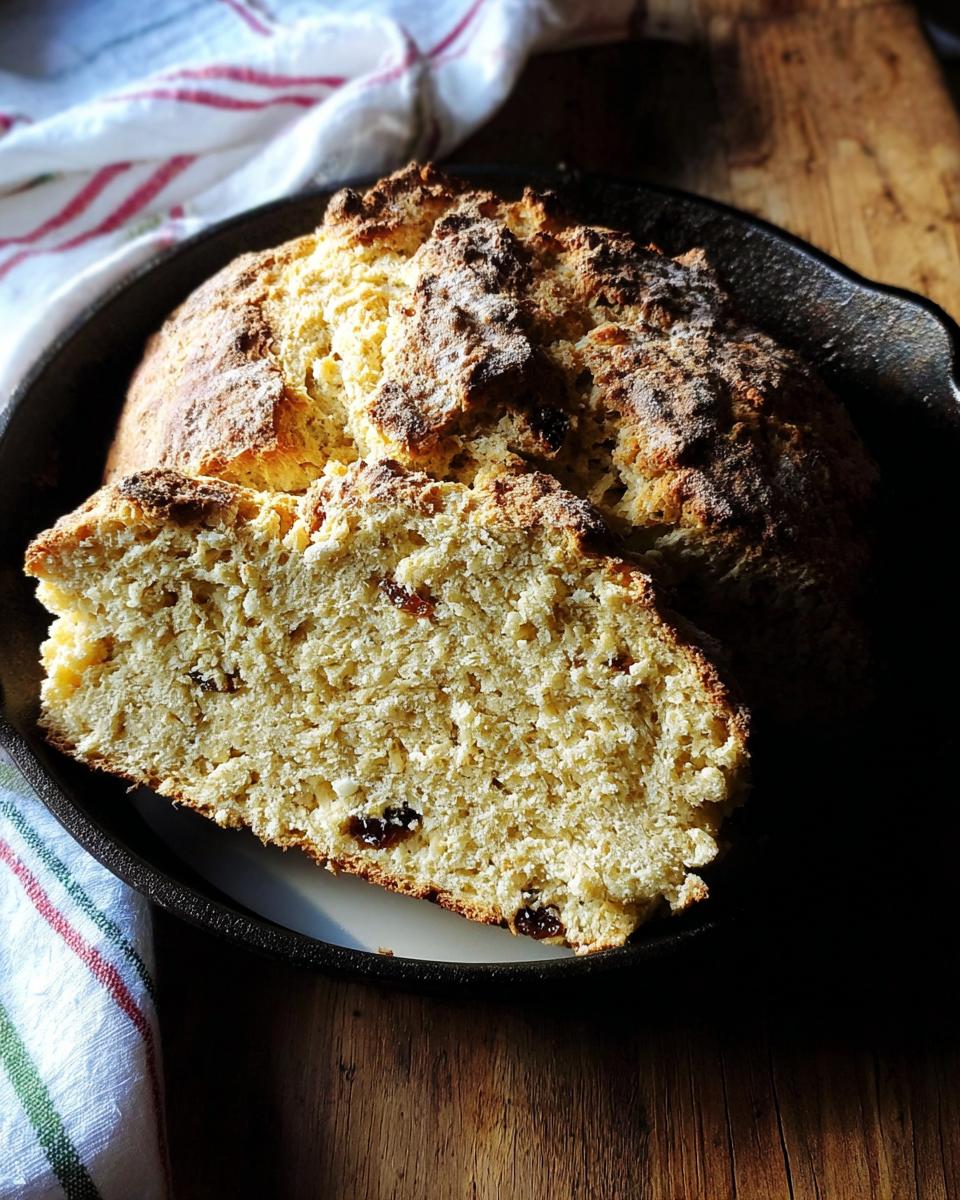
Gathering Ingredients for Your Irish Soda Bread
Okay, now for the best part—gathering the simple treasures you need! This recipe is fantastic because it doesn’t require a specialty trip to the store; most of this stuff is already in your pantry. Seriously, the magic is in the quality of these few items.
Here’s what you need to grab before we start mixing:
- For the Irish Soda Bread:
- 4 cups all-purpose flour (that’s about 510 grams, you can see my notes on whole wheat if you peek ahead!)
- 2 teaspoons Diamond Crystal kosher salt (12 grams)
- 1 tablespoon sugar (13 grams)
- 1 teaspoon baking soda (5 grams—this is our magic leavener!)
- 1 cup dried currants, optional—these give a lovely little burst of flavor!
- 1 egg, beaten
- 1.75 cups buttermilk (about 410 grams, it needs to be cold!)
- 2 tablespoons melted butter, plus extra for greasing
- For Finishing:
- Room temperature butter for spreading
- A little flour for dusting
Ingredient Notes and Substitutions for Irish Soda Bread
If you want to switch this up, you totally can! If you’re aiming for a whole wheat version, I detailed the substitution ratios right in the notes section of this post. If you run out of buttermilk? Don’t panic! Just take regular milk and stir in one tablespoon of white vinegar or lemon juice per cup. Let it sit for five minutes until it looks slightly curdled—that acidic kick does the same job!
And don’t skip those currants if you like a little texture; they’re so great, especially if you’re planning on serving this as part of some fun finger foods for younger guests!
Step-by-Step Instructions for Perfect Irish Soda Bread
This is where the real magic happens, and honestly, it’s so quick you’ll be amazed. The key thing you must remember throughout this whole process is to be gentle! We aren’t building gluten here; we’re just mixing enough to bring the dough together. Make sure your oven is cranked up to 400ºF before you even touch the bowl, because this bread wants to start baking right away!
First up, when you whisk your dry ingredients—flour, salt, sugar, soda—make sure everything is beautifully distributed. Then, when you add the liquid—the egg/buttermilk mix and that lovely melted butter—just stir it until you can’t see any more dry flour streaks. If you want some fun, savory ideas for serving this great bread later, think about how it pairs with soup!
Mixing and Shaping the Irish Soda Bread Dough
When you pour the wet into the dry, grab your rubber spatula and stir just until it clumps together. It’s supposed to be sticky—don’t try to knead it like yeast dough! Lightly flour your hands and gently pull that shaggy mass into a single ball in the bowl. Then, transfer it right over to your buttered cast iron skillet. Don’t fuss with it! Just flatten it slightly into a round, and then use a sharp knife to cut that iconic ‘X’ three-quarters of the way through the top. That cut lets the steam escape and helps the middle bake evenly.
Baking Time and Checking for Doneness in Your Irish Soda Bread
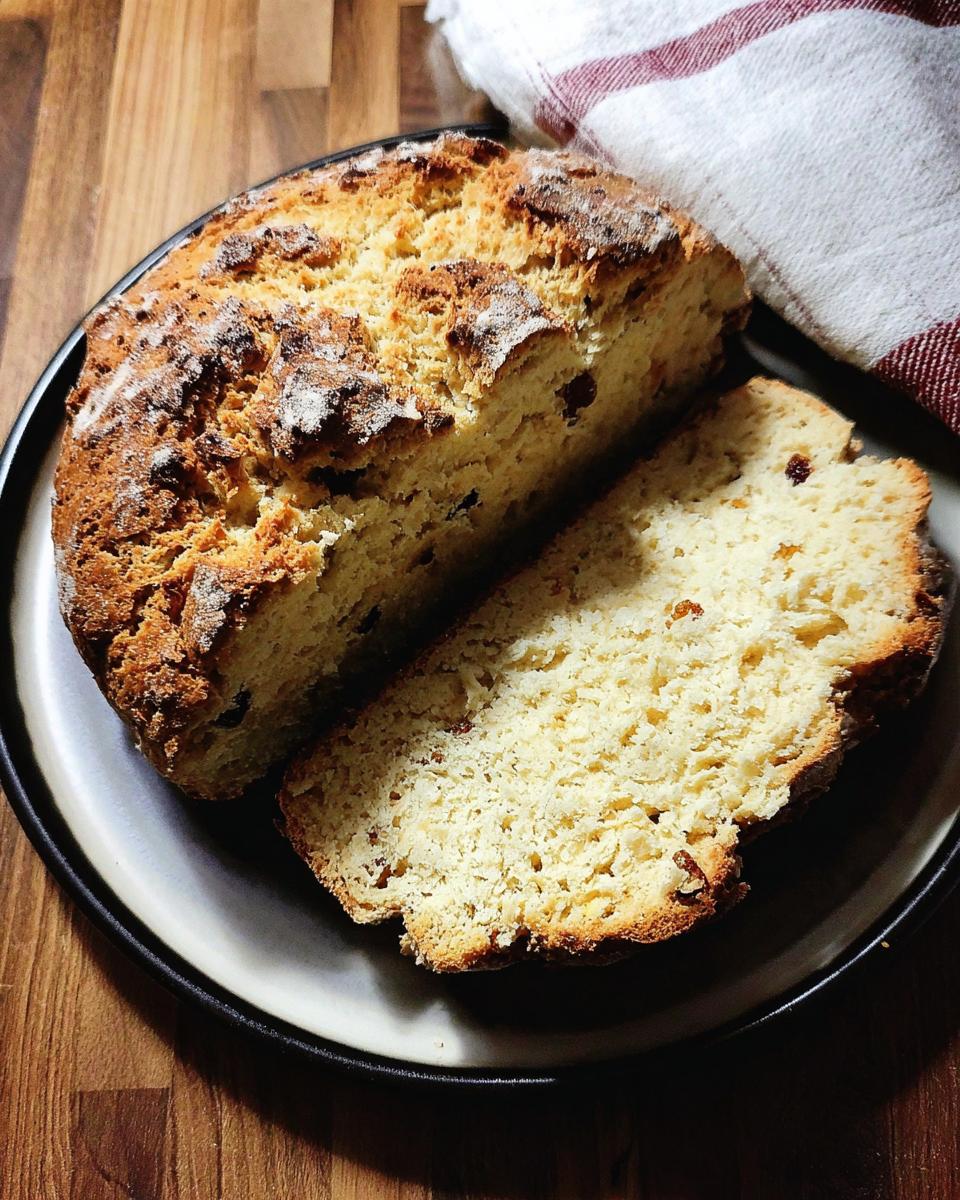
Pop that skillet right into your hot 400ºF oven. It needs about 35 to 40 minutes to bake through. You’ll see it turn a nice, light golden brown. Now, here’s the historian’s trick: when you take it out, carefully lift the loaf (maybe use an oven mitt!) and tap the bottom. If it sounds genuinely hollow, like knocking on a rustic wooden door, it’s done! If it sounds dense, give it five more minutes. When it’s ready, move it straight to a cooling rack.
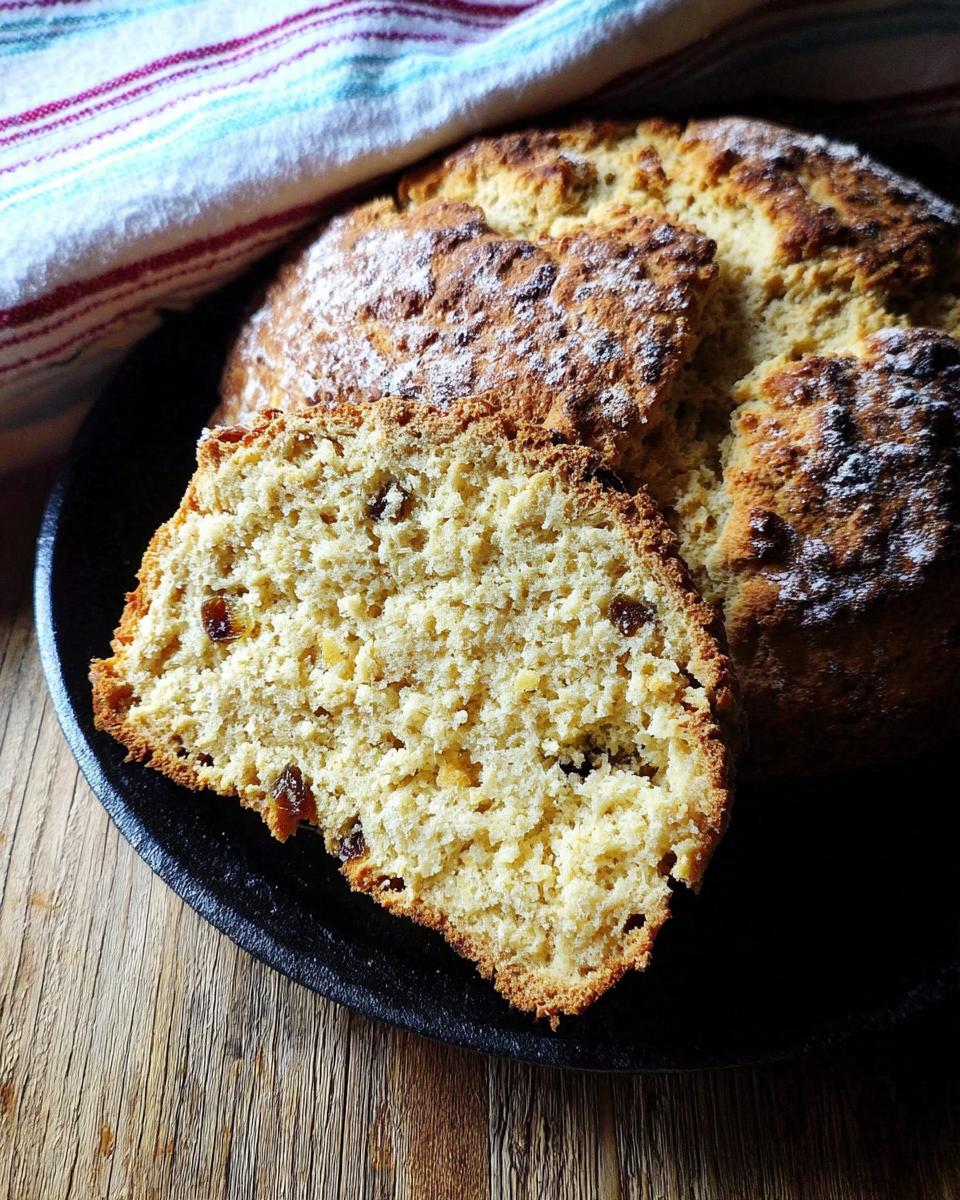
Tips for Success When Making Irish Soda Bread
I’ve made this bread so many times that I know all the little pitfalls you might run into, so let me give you my best advice for a perfect loaf every single time. Seriously, follow these tips, and you’ll look like a seasoned baker, whether you’re putting out easy snacks or making this for a big dinner.
First thing: Measure your flour correctly! Don’t scoop the cup straight into the flour bag, or you’ll end up with way too much, which leads to a dry, craggy loaf. Spoon the flour into your measuring cup and level it off—that’s crucial for the right texture.
Second tip tackles the buttermilk. Make sure it is cold, but not ice-cold—maybe let it sit on the counter for just ten minutes while you gather everything else. And please, please, please, don’t overwork the dough! As soon as the liquid is incorporated, stop stirring. Overmixing is the number one enemy of soda bread, giving you a dense brick instead of a tender crumb.
Finally, make sure your oven is hot when it goes in! That immediate blast of heat helps activate that baking soda right away. Don’t open the door until at least 30 minutes have passed, or you’ll deflate your beautiful creation.
Serving Suggestions for Traditional Irish Soda Bread
This bread is so versatile, you won’t believe it! While it’s just as happy sitting on the table next to a hearty stew any time of year, it really shines when you treat it right because it’s amazing warm. Seriously, slice it thick when it’s just cooled down a bit and slather it with a big slab of room temperature butter. That’s the real deal.
But if you’re getting ready for a larger gathering—maybe you’re putting out some Irish Party Food—slice it thin! It makes beautiful little toasts that work perfectly as the base for savory toppings, almost like little open-faced Irish Appetizers. It pairs beautifully with smoked salmon or sharp cheddar cheese.
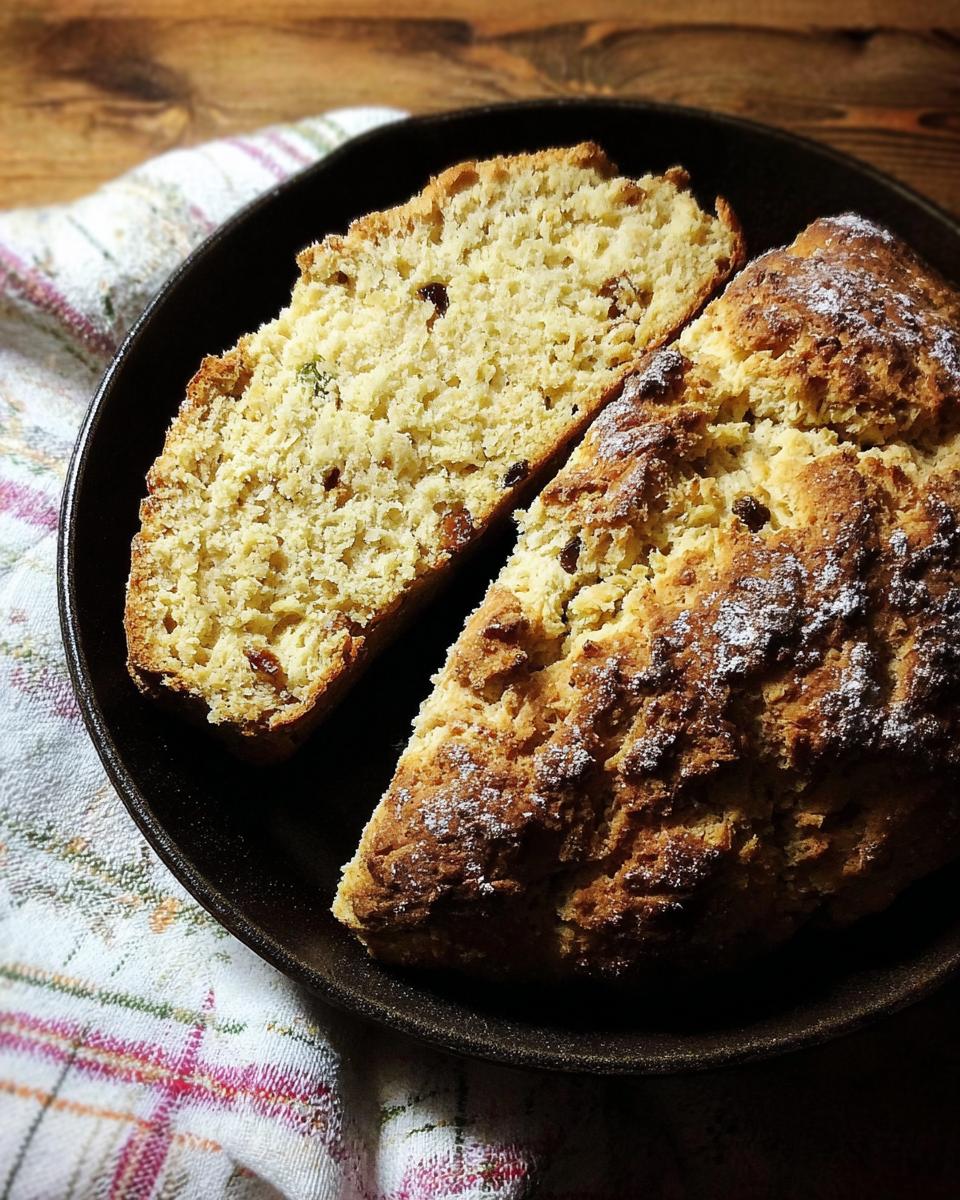
For breakfast, just toast up a slice and drizzle it with honey. Honestly, it’s just perfect any way you serve it!
Storing and Reheating Your Homemade Irish Soda Bread
One of the great things about soda bread is that it actually keeps pretty well, which is a huge win for busy home cooks like us! You want to keep your loaf in an airtight bag or container. If you leave it sitting out on the counter, it should stay perfectly good for about three to four days.
If you made a huge batch and know you won’t get to it all, pop the rest in the freezer! It freezes beautifully for up to two or three months. When you want to bring it back to life, just let it thaw on the counter, and then stick those slices in a low oven—say, 300ºF—for about five minutes to warm them up and bring back that fresh-from-the-oven texture.
Frequently Asked Questions About Irish Soda Bread
I know when you try a new traditional recipe, you always have a few lingering questions! Don’t worry, I’ve heard them all, and I’m happy to clear things up so you can bake this perfect loaf with total confidence. I want everyone to feel like they can nail this quick bread recipe.
Can I make a sweeter Irish Soda Bread?
The base recipe is naturally savory, designed to be slathered with butter, but it’s definitely adaptable! If you’re looking for something less for the dinner table and more for a treat during the holidays, you can certainly add more currants or even toss in some candied orange peel along with the dry ingredients. This makes it feel instantly festive for celebrations, and they turn into wonderful little treats for St Patrick’s Day For Kids Treats!
What is the best way to serve this quick bread recipe?
Honestly? Warm, with butter, right out of the oven. That’s the classic way! But if you’re making it for a party spread, slice it thin and serve it alongside cheese and cured meats. It’s a wonderful, rustic base for appetizers, and it stops your whole St Patrick Party Food table from feeling too heavy. It acts almost like a cracker backdrop for creamy dips too!
Do I really need buttermilk for this quick bread recipe?
Yes, you absolutely do! The acidity in the buttermilk is what reacts chemically with the baking soda to make the bread rise. If you don’t have any on hand, remember my tip above about curdling regular milk with vinegar or lemon juice—that substitution works like a charm for getting that essential reaction needed to make this St Patrick Day Food tradition happen!
Estimated Nutritional Data for Irish Soda Bread
When you’re baking historical, old-world recipes like this, exact measurements can lean a little toward the generous side! The nutritional information for this Irish Soda Bread is an estimate and varies depending on which exact brands of flour or how much butter you used. For the full scoop on how we handle recipe estimations, please refer to our official disclaimer page here: Disclaimer Notice.
Share Your Experience Baking Irish Soda Bread
Alright, now that you’ve broken bread the Irish way, I want to hear all about it! Did your loaf come out beautifully golden? Were the currants distributed just right? Please take a minute to rate this recipe below and tell me about your experience in the comments. Don’t be shy!
If you snapped a picture of your rustic bake, I’d love to see it! You can always reach out to me directly through the Contact Us page—I treasure connecting with everyone who tries these heritage bakes.
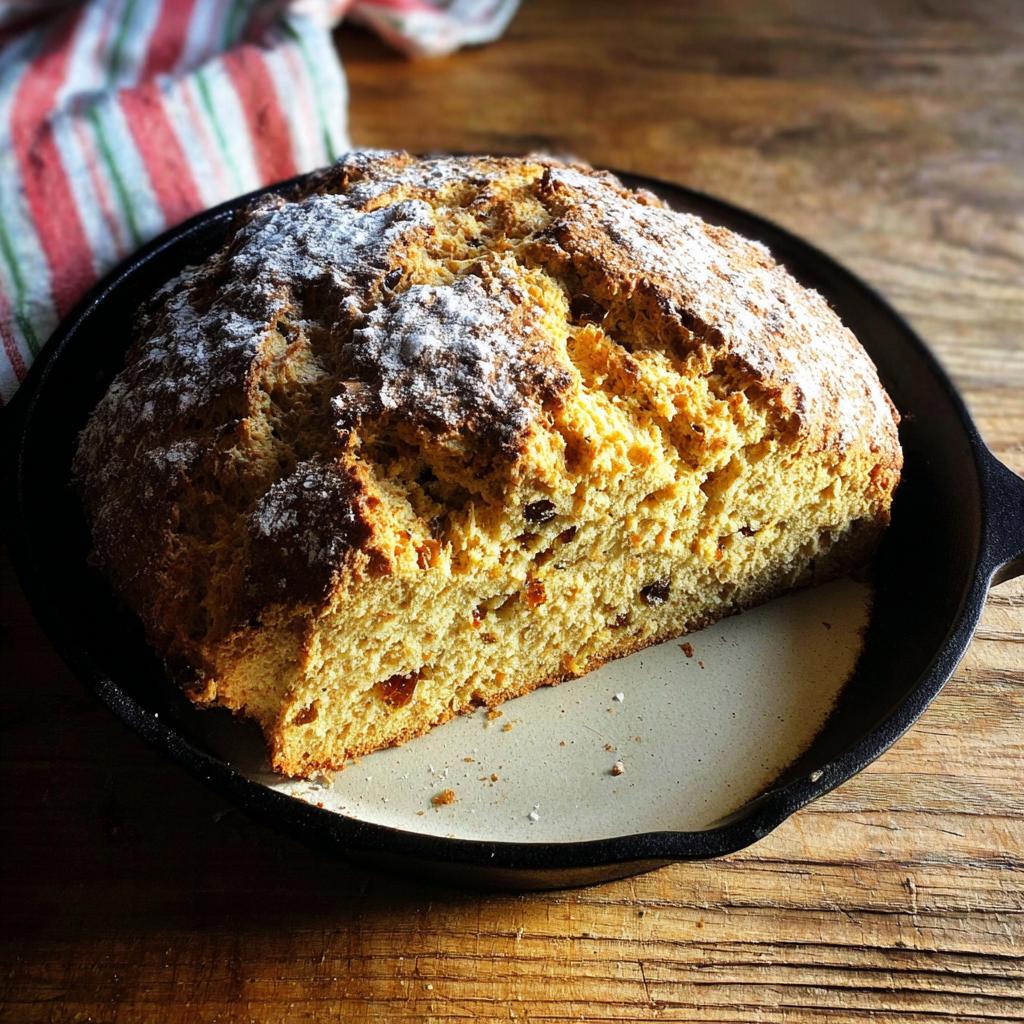
Irish Soda Bread
Ingredients
Equipment
Method
- Preheat the oven to 400ºF. Whisk together the flour, salt, sugar, baking soda, and currants (if using).
- In a medium bowl, beat the egg and buttermilk. Add the melted butter and stir to combine. Add the liquid ingredients to the dry ingredients and stir with a rubber spatula until combined. The mixture will be sticky. Grease a 9- or 10-inch cast iron skillet (or other similarly sized vessel) with softened butter. Set aside.
- Lightly flour your hands and sprinkle a little flour over the sticky dough ball. Use your hands to scrape the dough from the sides of the bowl and to quickly shape the mass into a ball, kneading lightly if necessary. Transfer to the prepared skillet. Sprinkle with a little more flour. Use a sharp knife to make an X across the top of the dough ball.
- Place in the oven and bake for 35 to 40 minutes or until lightly golden and the bottom sounds hollow when tapped. Remove from the oven, transfer to a cooling rack, and let cool for 15 minutes before slicing.