
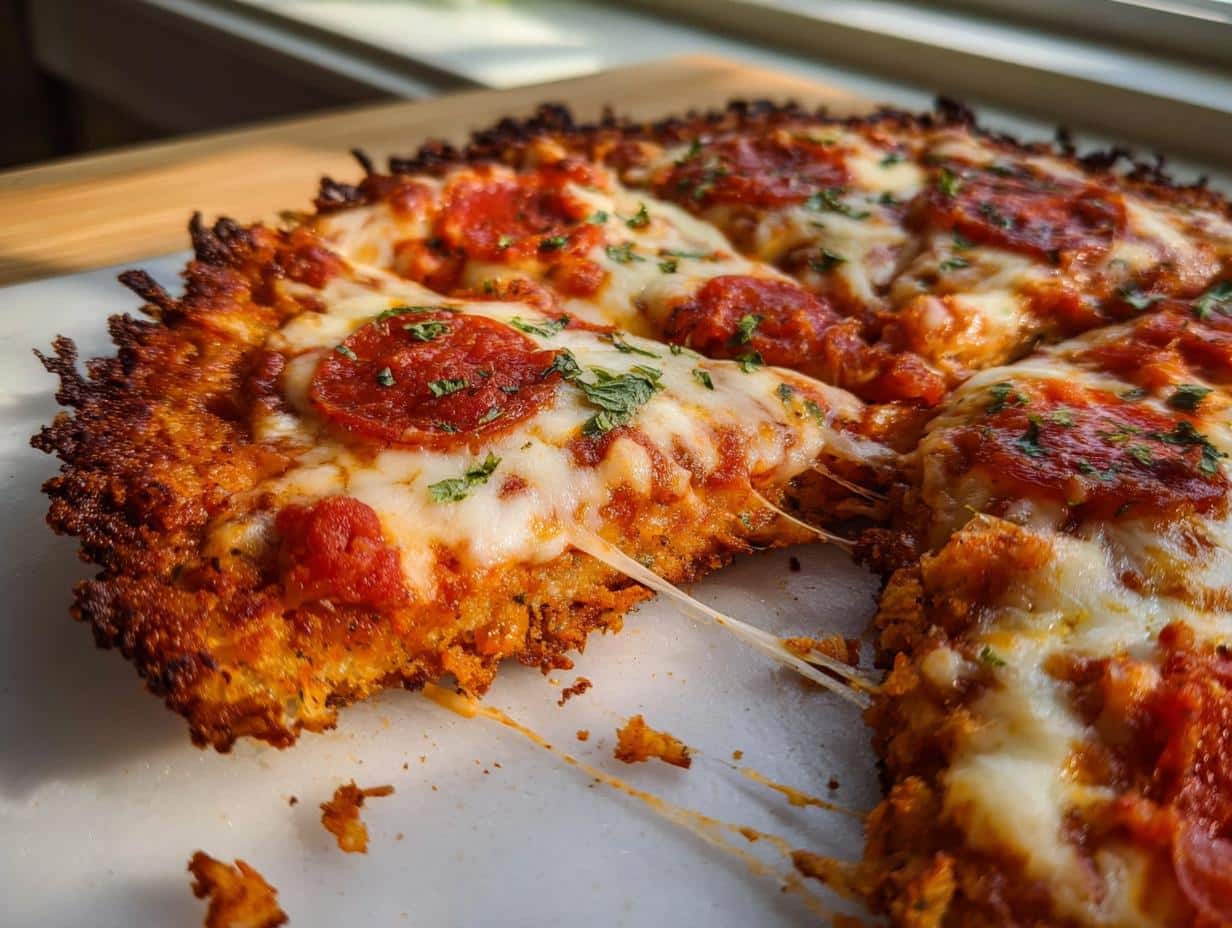
It’s funny how food refuses to stay the same, isn’t it? Comfort food, especially, has this incredible way of bending to meet us right where we are. As a historian, I get excited watching these evolutions happen right in our own kitchens. We all love pizza—the crispy edge, the salty cheese, the joy of a slice—but sometimes our lifestyle demands a change in the foundation.
That’s where this creation steps in, and trust me, it feels revolutionary. We are completely throwing out the rulebook on what a crust has to be. This Chicken Crust Pizza (Zero Carb) is proof that you can build a satisfying, structurally sound pizza using only protein. It’s not just a trend; it’s culinary adaptation in action, much like cooks throughout history who substituted ingredients when necessity called for it. I share a bit more about my approach to these culinary shifts over on the About Us page. You’re going to get that savory, satisfying meal without needing a single grain of wheat in sight. Stick with me; this is going to surprise you!
The Evolution of Pizza: Why We Make Chicken Crust Pizza (Zero Carb)
For centuries, cooks have faced ingredient limitations, and what did we do? We adapted! Think about that. When you look at the history of Italian Food, people weren’t worried about gluten waivers; they used what was available. This zero-carb option is just the latest fascinating step in that long journey. My job as a historian reviewing these recipes is seeing that lineage—the way people keep the *idea* of something delicious alive even when the pantry changes. You can see more of my thoughts on why food history matters over at our Trend Recipes section.
We need alternatives now, whether it’s for managing energy levels or sticking to a strict low-carb intake. This method, taking simple canned chicken and turning it into a sturdy base, isn’t weird; it’s resourceful. It appeals to the huge collection of home cooks looking for great Homemade Pizza Ideas that don’t derail their health goals. It’s about making that aesthetic slice—that perfect Pizzas Aesthetic—work for your diet, not against it.
Understanding the Health Benefits of Chicken Crust Pizza (Zero Carb)
Let’s talk straight about why this iteration of Pizza Food is so sought after. If you are managing carbs, this base is a superhero. It’s pure protein, which means it’s incredibly satisfying—you won’t hit that starchy wall after eating two slices. It’s naturally grain-free, which is a huge win for anyone avoiding gluten or wheat.
When you look at the sheer protein content in this Chicken Crust Pizza (Zero Carb) base, it completely reframes pizza night. This lets you pile on your favorite fats and veggies without the heavy foundation of traditional dough. It’s about making that savory, satisfying meal work for your diet, not against it.
Essential Ingredients for Your Chicken Crust Pizza (Zero Carb)
When you strip pizza down to its building blocks, the original crust ingredients seem almost mystical. But for our Chicken Crust Pizza (Zero Carb), the magic is in the minimalism! We are dealing with just three core items to build structure, bind everything, and provide that savory base. Seriously, stocking up for this recipe is ridiculously easy—we’re relying on pantry staples that deliver big results.
You won’t need a ton of fancy tools or exotic things. Just grab your can opener, your shredder, and maybe a sturdy mixing bowl. The success of this zero-carb base hinges entirely on how you handle these components, especially getting that chicken dry enough before we start mixing!
Ingredient Notes and Substitutions for the Chicken Crust
Let’s get specific about these three heavy hitters: chicken, egg, and cheese. The quality here really impacts the final texture, so pay attention to the details.
- For the chicken, canned is king here, but you absolutely *must* drain it thoroughly. I mean, blot it dry with paper towels if you have to! If you don’t have canned, you can definitely use about 10 ounces of cooked chicken breast meat—just shred it finely and make sure it’s completely cool and dry before you begin mixing everything else in.
- The egg is your binder, so don’t try to skip it. It’s what magically holds the chicken fibers together as it cooks.
- For the Parmesan cheese, grab the real stuff if you can—the pre-grated bags sometimes have anti-caking agents that make the dough crumbly. You want that dry, finely grated Parmesan to help absorb any last bit of moisture and give the crust a good, sharp flavor. Trust me, this one little ingredient makes a difference in the final flavor profile.
Step-by-Step Instructions for Perfect Chicken Crust Pizza (Zero Carb)
Okay, now that we have our game plan and our perfectly dry ingredients, we get to the fun part: building this amazing base! Moisture control is the absolute key here. If the chicken is wet, your crust will weep, and we definitely don’t want a soggy mess on our hands. This whole process is really just two important baking stages, and following them exactly is how you guarantee success with your Chicken Crust Pizza (Zero Carb).
Pre-Baking the Chicken Crust for Structure
First things first: you must get rid of any residual liquid clinging to that chicken. After you’ve thoroughly drained it—and done whatever blotting routine you feel is necessary—spread that chicken thinly and evenly onto your silicon mat-lined baking sheet. Don’t pile it up! Think flat.
We’re going to send this lonely chicken layer into a moderate oven first, 350 degrees Fahrenheit, for about 10 minutes. This initial drying bake is critical. It pulls out all the sneaky moisture we couldn’t squeeze out by hand. It might look a little strange coming out, but it’s exactly what we need for structural integrity.
Once those 10 minutes are up, pull it out. Go ahead and increase your oven heat now, way up to 500 degrees Fahrenheit. We need some serious heat for that final crisp. If you ever have questions or just need a fast answer when things go sideways in the kitchen, don’t hesitate to reach out to us here!
Assembling and Final Bake of the Chicken Crust Pizza
Take the dried chicken and dump it into your mixing bowl. Now, add your single egg and that grated Parmesan cheese. You mix this thoroughly until it forms a cohesive, sticky mass. It’s going to be different than dough—more like a thick, slightly crumbly paste!
Transfer this chicken mixture back onto your silicon mat. This is where my favorite trick comes in: place a sheet of parchment paper right on top of the chicken mixture. Grab your rolling pin and gently roll right over that parchment. This makes spreading it into a perfect, thin circle so much cleaner and ensures an even thickness. If you’re making this for the little ones, this is a great, non-messy step to teach them, which you can read more about in our simple recipe guides.
Use a spatula to push the edges inward slightly to form a natural crust rim. Bake this bare crust at that high 500°F heat for about 8 to 10 minutes until it looks set and is just beginning to brown on those edges. Then, pull it out, load up your toppings quickly, and slide it back in for the final 6 to 10 minutes until everything is bubbly and perfect!
Expert Tips for Making the Best Chicken Crust Pizza (Zero Carb)
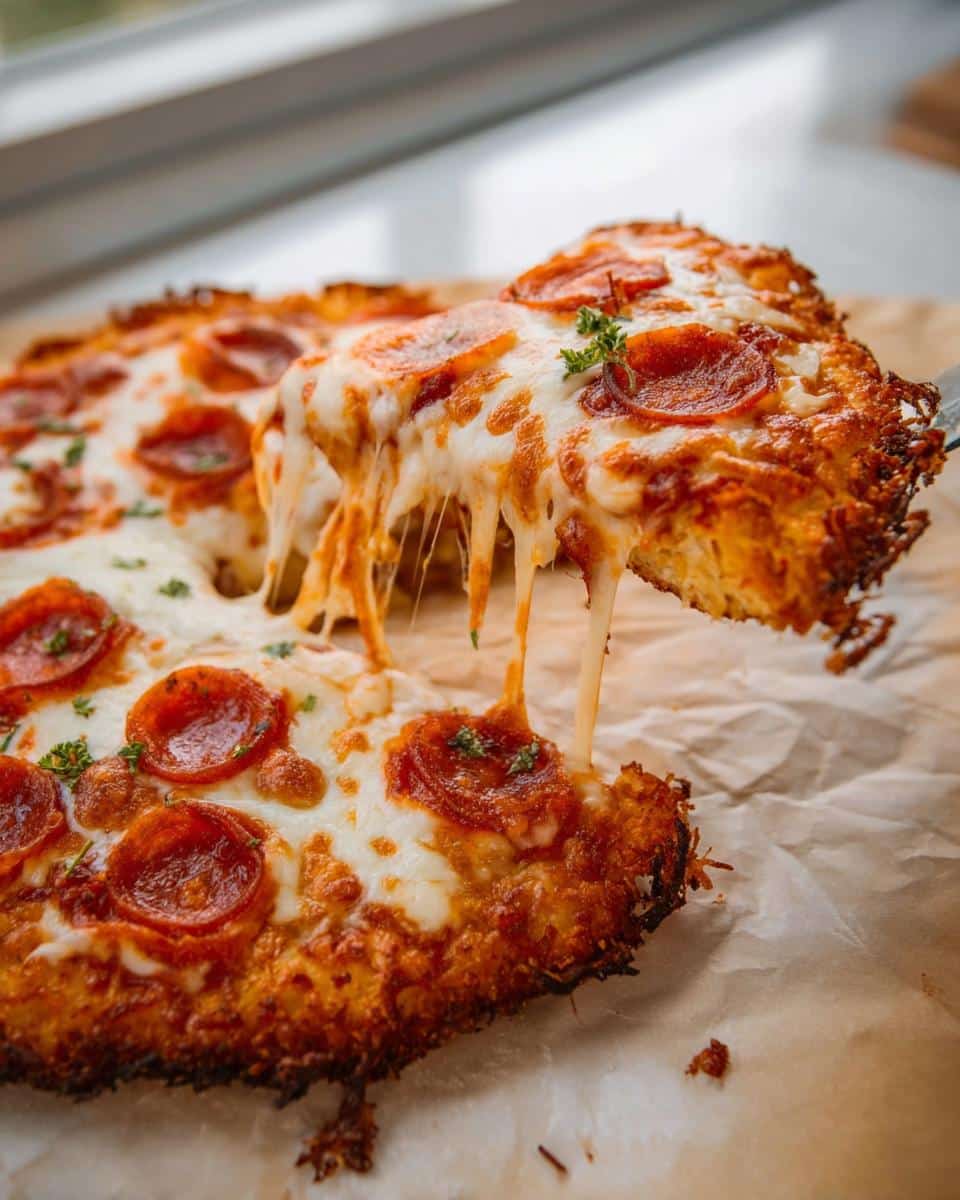
Look, I’ve seen people ruin this recipe, and it’s almost always because they skip the foundational drying steps. When you think about achieving that satisfying crisp, that’s what separates an okay base from truly great Chicken Crust Pizza (Zero Carb). So, here are the little secrets I’ve picked up testing this method over the years to make sure your crust holds up like a champion.
First, if you’re trying to save time, I get it—we’re always busy! But if you absolutely must use the air fryer instead of the oven for the initial dry bake (check out some of our air fryer methods), keep the temperature lower than 350°F and watch it closely. You want dryness, not browning, in that first 10 minutes.
Second, temperature control during the final bake is everything. 500°F gets you that authentic slightly charred underside that mimics a proper pizza oven experience. Don’t try to sneak it in at 400°F; you’ll end up steaming the chicken rather than crisping the crust. High heat, fast cook time, that’s the mantra!
Finally, about those edges I mentioned earlier—don’t just stop at making a ridge. Once your base is baked once (that 8 to 10 minutes at 500°F), use a small spatula or the back of a spoon to gently press down on the very outer edge again before adding toppings. This firms it up one last time and prevents delicate toppings from sliding off when you move the pizza!
Creative Pizza Topping Ideas for Your Chicken Crust Pizza (Zero Carb)
This is my favorite part of the whole process! After all that work ensuring your crust is dry, firm, and ready to go, it deserves the best toppings you can throw at it. Because the base for this Chicken Crust Pizza (Zero Carb) is so neutral—just savory chicken, salt, and cheese—it acts like a perfect blank canvas. You really can go in any direction you want, which opens up so many possibilities beyond the usual keto standbys.
Remember, we aren’t adding a massive amount of heavy sauce, which is often a carb culprit anyway. We’re building flavor through high-quality fats, cheeses, and seasoned meats. Think about what you love about that perfect slice of takeout Pizza Food, and then adapt it for high protein. I find that bolder flavors really shine here because they contrast beautifully with the mild chicken base.
Classic and Italian Pizza Flavor Combinations
If you’re just dipping your toe into the world of zero-carb pizza, start with something familiar. A simple, beautiful Cheese Pizza setup works incredibly well. Remember, though, tradition matters. When thinking about classic Italian Pizza, less is often more. You want the quality of the ingredients to come through.
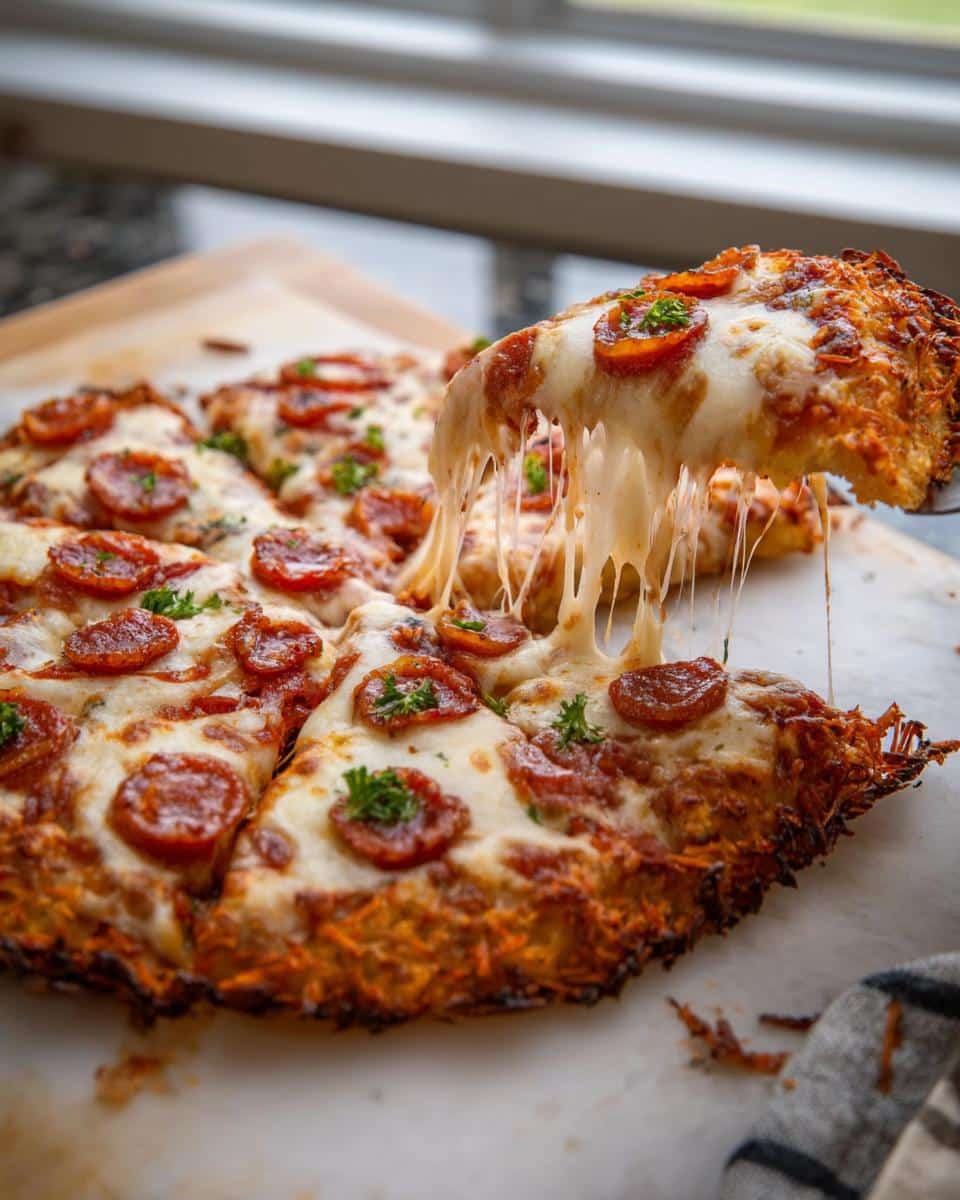
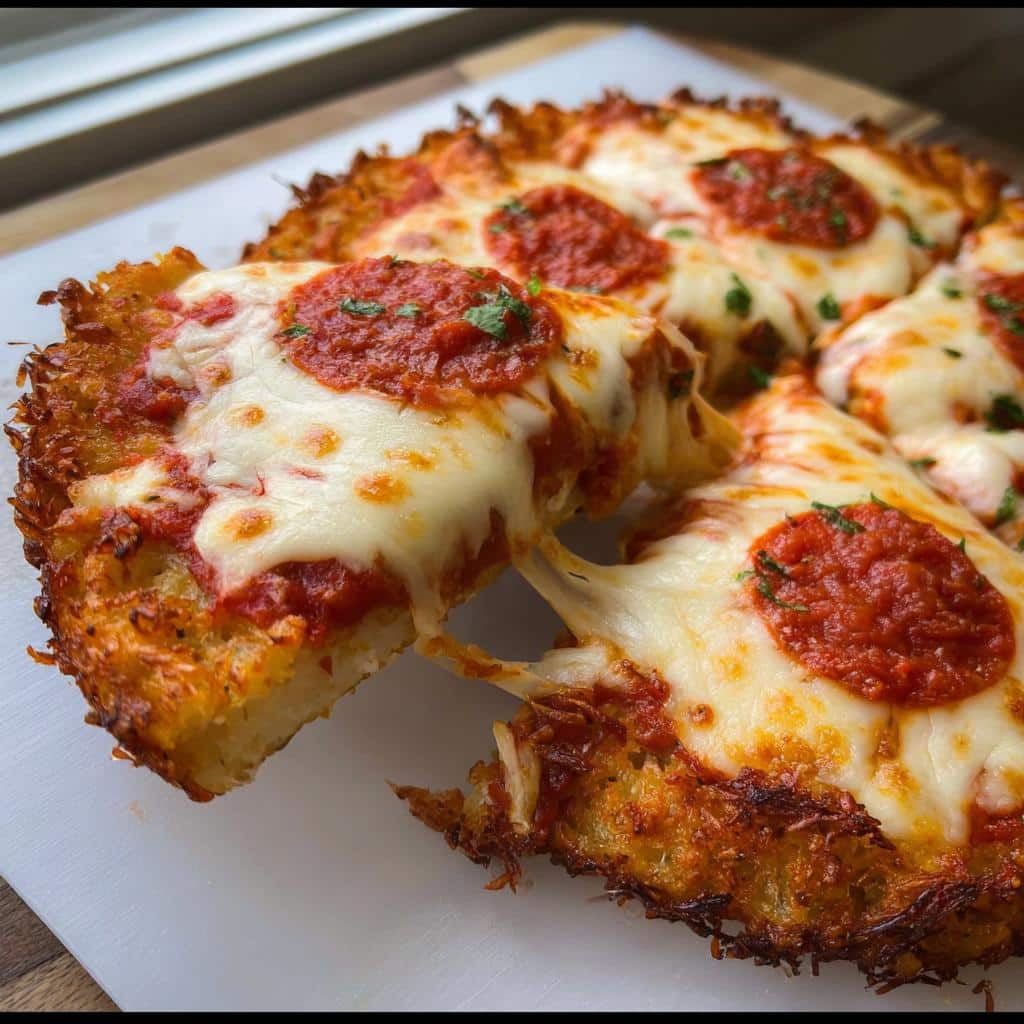
Try this: Brush the baked crust lightly with garlic-infused olive oil instead of tomato sauce. Then pile on mozzarella and perhaps some grated Pecorino Romano. For a classic Meat Lover’s spin, add some crumbled Italian sausage (check the label for fillers!) and pepperoni. The high-heat bake guarantees that the pepperoni edges crisp up just like they do on a proper pie.
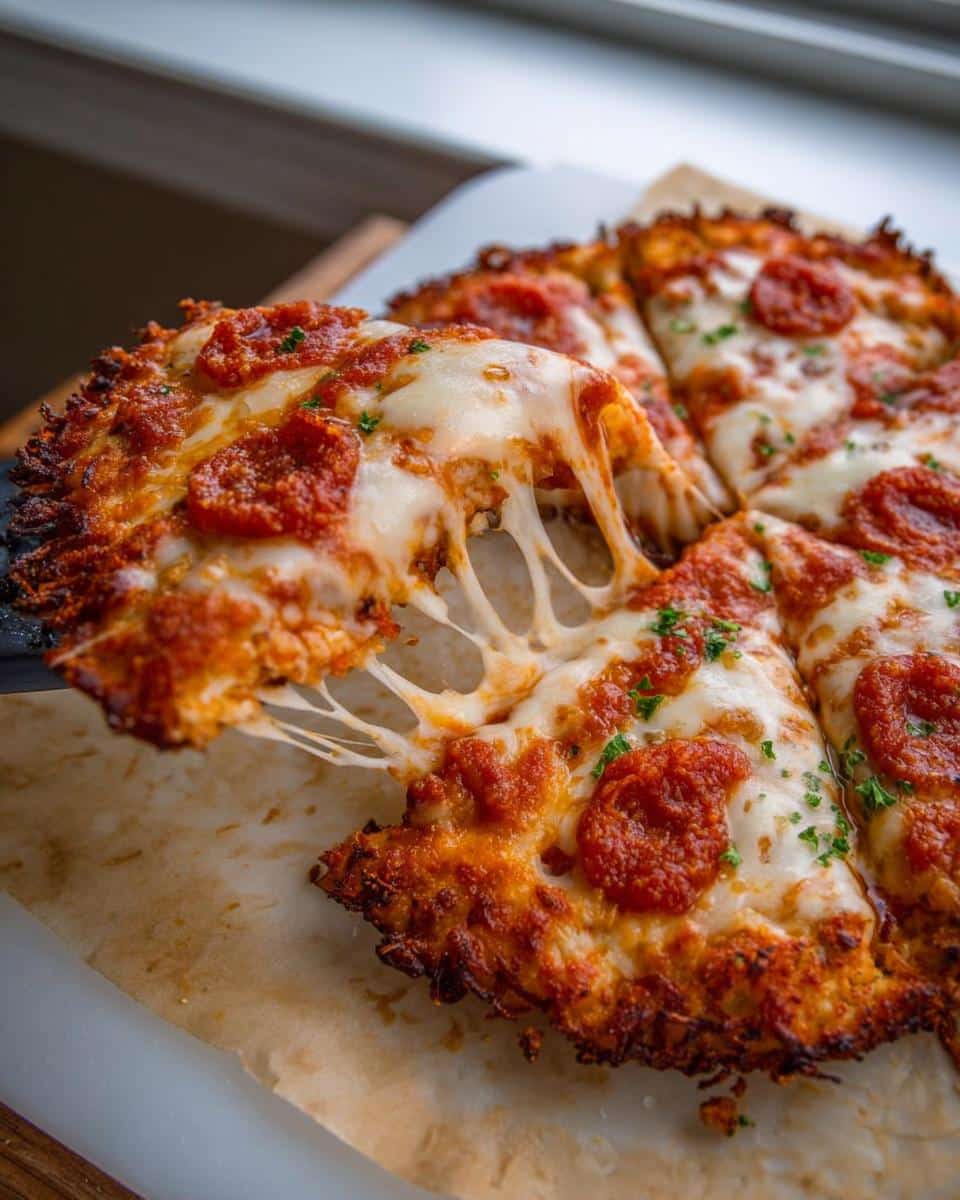
Another winner that feels very authentic involves vibrant colors: sliced roasted red peppers, chopped fresh basil added right after it comes out of the oven, and perhaps some salty olives. If you need more dinner inspiration that fits this dietary style, check out what we are serving up in our Dinner category. This crust is sturdy enough for almost anything!
Storage and Reheating for Your Homemade Pizza Ideas
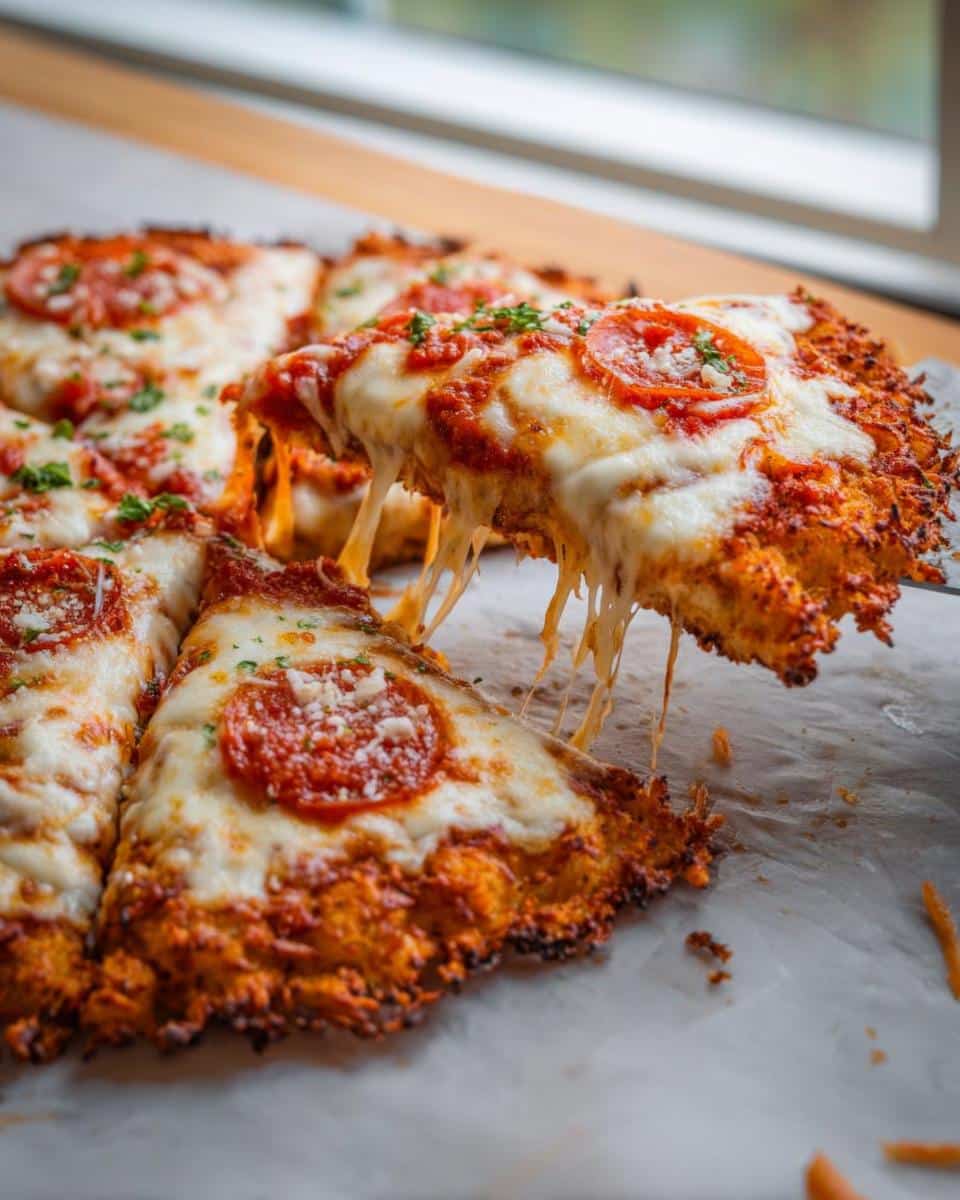
It’s rare that a pizza this good lasts long enough to worry about leftovers, but if you manage to keep some of this amazing crust around, you need to treat it right! Since this isn’t a traditional flour-based crust, the rules change a bit. We want to preserve that slightly crispy, protein-packed texture we worked so hard to achieve, not turn it into something soft and rubbery.
The best way to store any leftover slices is to cool them completely first. Once cool, stack them with parchment paper squares in between each slice. Don’t seal them airtight in plastic wrap right away—let them breathe a little bit! Store this assembled pizza in the refrigerator for up to three days. While it’s best enjoyed fresh, a properly stored slice holds its shape really well.
When it comes time to reheat, the microwave is your enemy. It’s going to steam the crust and turn it mushy in seconds. The oven or a skillet are your best friends!
The Best Way to Reheat Your Chicken Crust Pizza
For the absolute best results, mimicking that initial bake is the way to go. Pop those slices directly onto a baking sheet—no need to add extra pizza—and bake them in a moderately hot oven, around 375 degrees Fahrenheit, for about 5 to 8 minutes. This gives the crust just enough dry, direct heat to firm up again and get that pleasant chew back without overcooking your toppings.
If you’re in a real hurry and only reheating one slice, try the skillet method. Place the slice in a dry, non-stick pan over medium heat. Cover the pan for about three minutes until the bottom is crisping up again, and the cheese on top melts nicely. This two-minute trick brings back almost all the magic from that first bake!
Frequently Asked Questions About Chicken Crust Pizza (Zero Carb)
I know when you venture into zero-carb territory, questions pop up right away. It’s natural to wonder about those small details that can make or break a recipe, especially one that feels this unconventional! I’ve gathered the most common things readers ask me after trying their first Homemade Pizza Ideas using this protein base. We want your experience to be perfect, every time.
Can I use fresh chicken instead of canned for the Chicken Crust Pizza (Zero Carb)?
That’s a question I heard right off the bat! Yes, you absolutely can, but understand that canned chicken really does make this streamlined process easier because it’s cooked and already shredded finely. If you use fresh chicken breast, you’ll need to plan ahead.
You’ll need to bake or boil three small chicken breasts until fully cooked. Then, you must shred them finely—a food processor works wonders here if you pulse it carefully. The critical difference is the drying step. Canned chicken retains a specific, easy-to-manage residual moisture. With fresh chicken, you might need to bake that shredded meat on the sheet pan empty for an extra 5 to 7 minutes at 350°F just to ensure you pull out all the water before you add the egg and cheese. It’s more work finding that balance, but the texture ends up phenomenal!
What is the best way to achieve a crispy crust?
Crispiness is achieved in the oven, period. You cannot get a truly crisp crust by using a low temperature. Think about what you want: you want the outside to dry out and set, and the inside to bind tightly! This is where that two-stage baking process in the recipe comes into play.
The first bake at 350°F is mandatory to drive out the initial moisture from the chicken. But the *real* crisp happens during the second bake. You must preheat your oven to the full 500 degrees Fahrenheit before that crust goes in for its final cook. That high, blistering heat quickly sets the protein structure, evaporates surface moisture, and gives you that wonderful texture that holds up perfectly to your favorite toppings. Don’t try to bake it at 400°F, or you just won’t get the result you’re looking for!
I’m trying to keep my pizza strictly keto. Does the Parmesan cheese add carbs?
That’s a smart question, especially if you’re aiming for the strictest interpretation of the diet. Pure Parmesan cheese, like the hard variety we suggest, is extremely low in carbohydrates—usually less than 1 gram per serving for the amount we use in the crust recipe. It’s essential because it acts like a dry binder.
However, you must check your labels, as some cheaper, pre-grated options sneak in starches or powdered cellulose to keep them from clumping. If you are ultra-strict, you can substitute that 1 ounce of Parmesan with 1 ounce of dry, finely ground pork rinds (Pork Rinds are fantastic for texture!). That way, you know you are sticking 100% to zero carbs, just like the recipe promises for this amazing Chicken Crust Pizza (Zero Carb). If you need to check our standards on ingredient transparency and disclaimers, you can find them right here on our disclaimer page.
Nutritional Estimates for Chicken Crust Pizza (Zero Carb)
Now, I’m a food historian, not a registered dietitian, so please take these numbers with a grain of salt—or in our case, zero grains! These estimates are just for the base crust: the 10 ounces of chicken, one egg, and one ounce of Parmesan cheese. As soon as you add your sauce, your cheese, or any extra toppings, those numbers are going to shift pretty quickly!
But for the pure crust, this is what we are looking at for our single-serving pizza:
- Calories: Roughly 400–450 kcal (This is based on standard canned chicken breast and Parmesan)
- Protein: Over 70 grams (Yes, you read that right! This is what makes the crust so filling.)
- Fat: Around 12–15 grams (Mostly coming from the Parmesan binder)
- Net Carbohydrates: Less than 2 grams (This is the beauty of a truly zero-carb base!)
See? It’s almost pure protein power! This makes it incredibly easy to personalize your final meal. If you load up on fatty pepperoni and extra mozzarella, you’ll be bumping up the fat content significantly, which is fantastic for a stricter keto approach. If you keep your toppings light—a little sauce and some vegetables—you’ve got a wonderfully lean, high-protein dinner option. It all depends on what your dietary history demands. I enjoy tracking these numbers, but mostly I just enjoy the taste of guilt-free pizza!
Share Your Zero Carb Pizza Creations
Now that you’ve conquered the baking process and built a truly incredible, grain-free base, I genuinely want to know what you decided to put on top! This recipe is so versatile, and seeing how everyone creatively tackles their Homemade Pizza Ideas is half the fun for me.
Did you stick to the simple, elegant classic Cheese Pizza structure? Or did you get adventurous with some bold, spicy meat toppings? Seriously, jump down into the comments below and tell me your topping choices! Your feedback helps me continue exploring these culinary adaptations and inspires the next person who might be nervous about trying a chicken crust for the very first time.
And please, if you took a great picture of your final slice—that crispy, sturdy base holding up beautifully—I hope you shared it! We love seeing those perfect angles and textures, and sharing your Pizza Photography really helps others visualize how successful this recipe can be. We promise to keep all your personal details secure, as outlined in our privacy policy, so feel free to share your culinary triumphs!
If you loved how easy this was, a rating really helps others find this recipe. Don’t let this discovery stop here; let’s keep building this library of amazing, history-informed, yet completely modern chicken dishes together!
Chicken Crust Pizza (Zero Carb)
Ingredients
Equipment
Method
- Drain the canned chicken well to remove as much moisture as possible.
- Spread the chicken on a baking sheet lined with a silicon mat. Bake at 350 degrees Fahrenheit for 10 minutes to dry the chicken further.
- Remove the chicken from the oven after 10 minutes and place it in a mixing bowl. Increase the oven temperature to 500 degrees Fahrenheit.
- Add the cheese and egg to the bowl with the chicken and mix everything together.
- Pour the mixture onto a baking sheet lined with a silicon mat and spread it thinly. Placing parchment paper on top and using a rolling pin can help spread the mixture evenly.
- Optionally, use a spatula to press the edges of the crust inward to create a ridge.
- Bake the crust for 8 to 10 minutes at 500 degrees Fahrenheit.
- Remove the crust from the oven. Add your desired toppings and bake for an additional 6 to 10 minutes at 500 degrees Fahrenheit. The final cooking time depends on your toppings.
- Remove the pizza from the oven and let it cool for a few minutes before serving.