
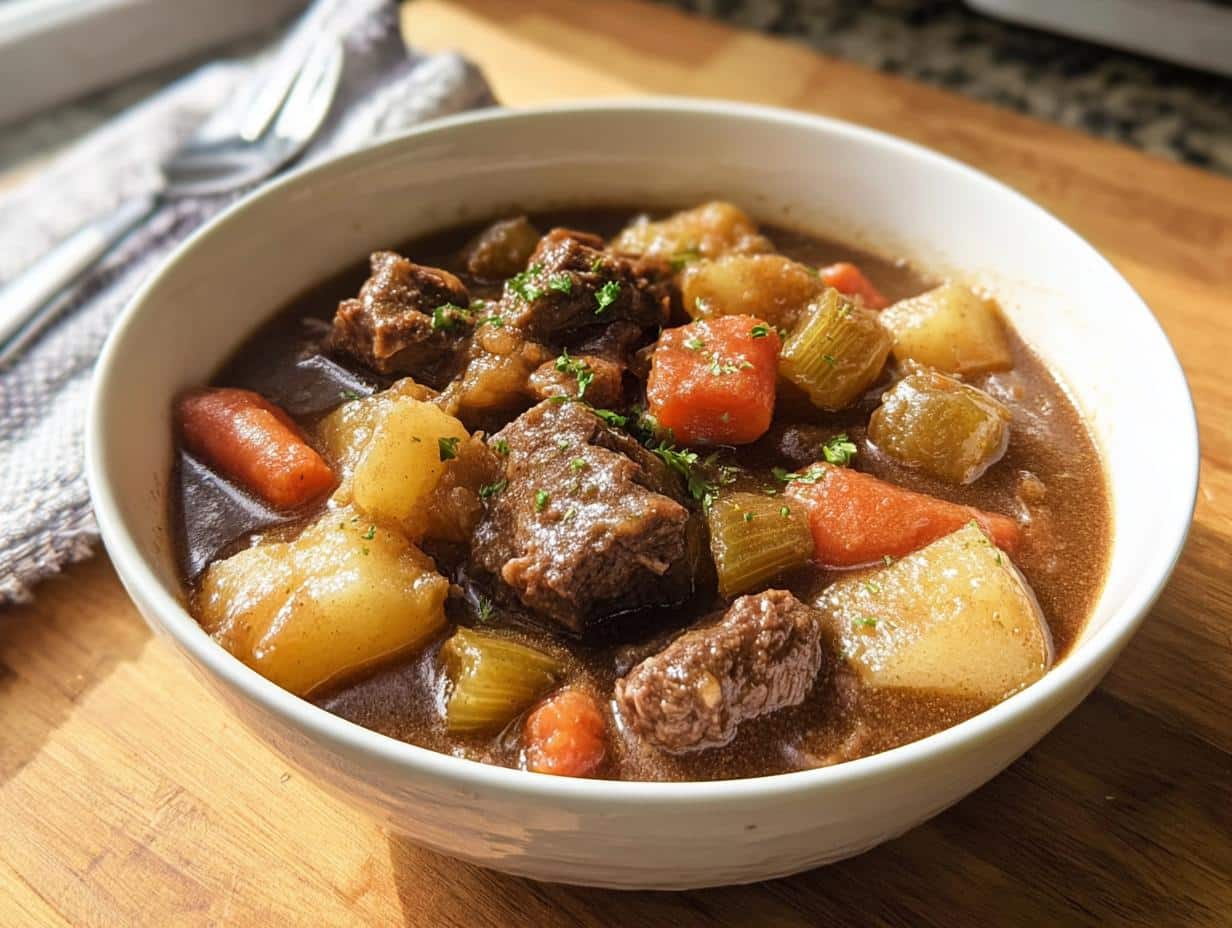
If there’s one thing that signals true home and warmth on a chilly evening, it’s the rich, slow-simmered scent of beef stew filling the house. Honestly, nothing beats that smell! I’ve tried fancy cooking methods and complicated spice blends before, but when the wind is howling outside, I always come back to this—my absolute favorite, most comforting Easy Beef Stew recipe.
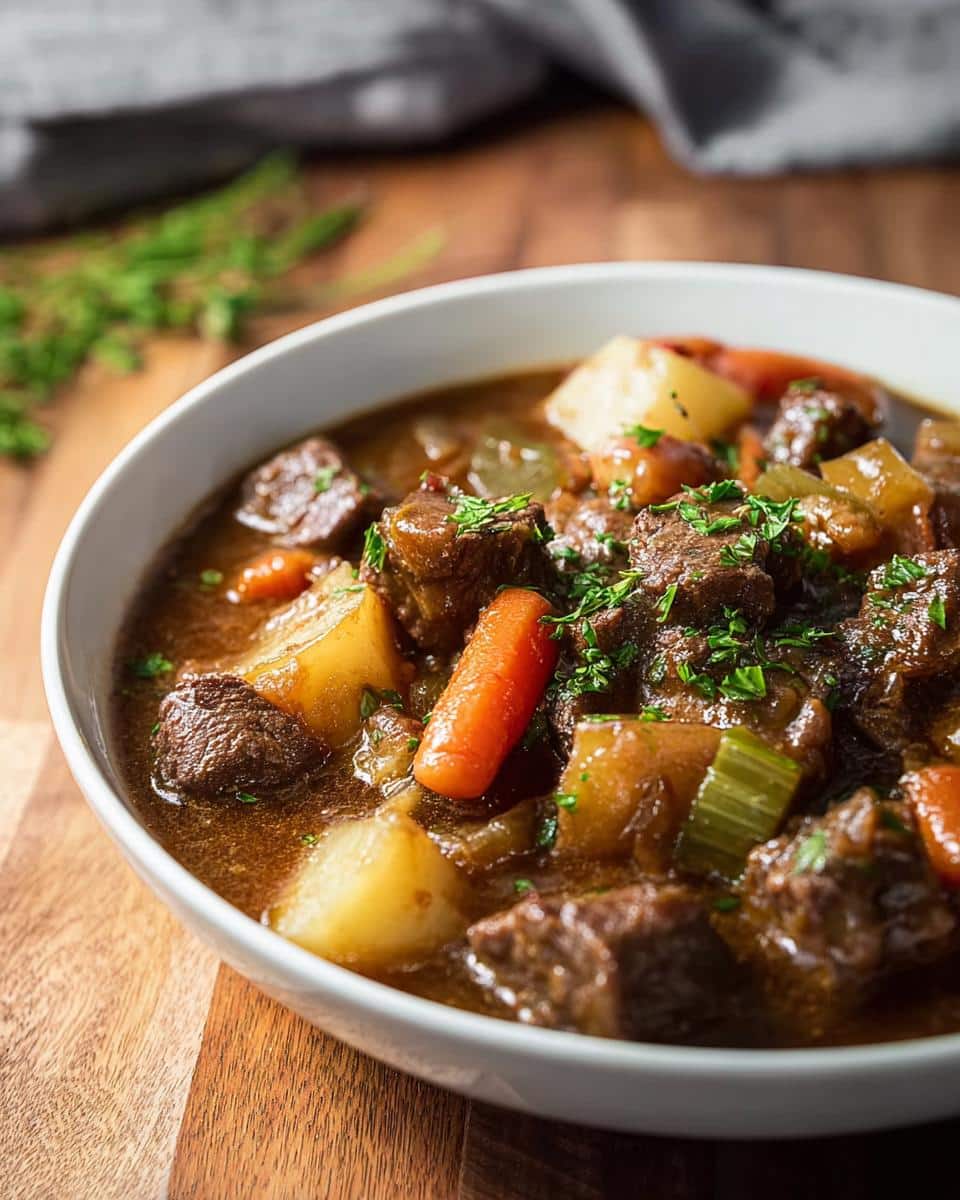
This isn’t one of those fussy recipes that takes all day and demands twelve different pots. No way. This stew is made entirely in one pot, designed to be simple, forgiving, and incredibly satisfying for the whole family.
I learned about comfort cooking from my grandmother. Her kitchen was the heart of our home, and every time the pot simmered on the stove for hours, I knew we were gathering for something truly special. This stew carries that exact feeling for me. It’s that dependable, hearty meal that asks for patience but gives back tenfold in flavor. Trust me, you are going to love how simple it is to make something this soulful!
Why This Easy Beef Stew Recipe Works for Weeknights
When you’re looking for dinner after a long day, you don’t want to spend hours doing dishes, right? That’s why this Easy Beef Stew is my go-to recipe for busy nights. It cuts out so much heavy lifting while still delivering that deep, slow-cooked flavor we all crave. Seriously, it’s magic how few steps are involved!
Here are the main reasons this stew is perfect, even when time is tight:
- It’s a true one-pot meal! Everything gets tenderized right there in the same heavy pot.
- The beef chuck, bless its heart, practically melts after about an hour and a half of simmering—no tough bites here.
- We use pantry staples and familiar veggies like carrots and potatoes, so you don’t need a special grocery run.
This recipe is so reliable, even my college-age nephew can pull it off perfectly. If you’re looking for other quick options that are kid-friendly, you should check out my list on easy recipes for kids!
Gathering Ingredients for Your Easy Beef Stew
Okay, let’s talk ingredients because this is where the foundation of our hearty flavor is set! For this Easy Beef Stew, you don’t need a massive shopping list, but a couple of choices matter a lot. The most important thing, seriously, is the beef. Don’t skimp here!
You absolutely need well-marbled beef chuck stew meat. That marbling—the little lines of fat you see in the meat—that’s what melts down during that long simmer time and gives you that fall-apart, tender texture. If the beef isn’t good quality, the stew won’t be either. I always look for 1-inch pieces, just like the recipe calls for.
The rest are simple vegetables that cook right down into that rich broth. But before we dive into the list, I want to share a little about where this cooking philosophy comes from. I’m Lilya Lawson, and I’ve spent years working with my grandmother’s recipes in Asheville, North Carolina. My goal with Top Chicken Eats is to show everyone that traditional comfort food, like this stew, is achievable and worth the time. Find out more about my journey here!
For the Stew: Essential Components of Easy Beef Stew
Here is everything you need to grab before we even think about turning on the heat. Measure everything out first—it makes the cooking part so smooth!
- 3 pounds well-marbled beef chuck stew meat, cut into 1-inch pieces
- 1 tablespoon plus 1 teaspoon kosher salt, divided (plus more to taste)
- 3 tablespoons olive oil
- 5 ribs celery, cut into 1-inch pieces (about 2 cups)
- 1 medium onion, chopped (about 1 cup)
- 4 medium carrots, peeled and cut into 1-inch pieces (about 2 cups)
- 2 medium parsnips, peeled and cut into 1-inch pieces (about 1 cup)
- 1/2 teaspoon freshly ground black pepper
- 1 tablespoon finely chopped fresh thyme leaves
- 1 tablespoon all-purpose flour
- 4 cups beef broth
- 2 cups water
- 1 tablespoon balsamic vinegar
- 1 tablespoon Worcestershire sauce
- 1 1/2 pounds russet potatoes, peeled, cut into 1-inch pieces (about 3 cups)
- 1/4 cup chopped fresh parsley leaves (for garnish)
Step-by-Step Guide to Perfect Easy Beef Stew
This is it—the fun part where the waiting begins! Making a truly great Easy Beef Stew hinges on a few key moments where you can’t rush things. Remember, the total time is about 115 minutes, but most of that is passive simmering time while you go relax! The first part, however, needs your full attention to set up that deep, savory flavor.
Browning the Beef and Sautéing Vegetables for Easy Beef Stew
We start hot! Get that big, thick-bottomed pot over high heat and get that olive oil shimmering. Now, you’ll add your seasoned beef. Don’t overcrowd the pot—if you have to do this in two batches, please do it! Overcrowding drops the temperature too fast, and you end up *steaming* the beef instead of browning it. That beautiful, dark crust you get from searing (that’s where all the amazing flavor, the beefy foundation, actually comes from!) won’t happen if the heat sinks. It takes about 10 minutes for the meat to lose its pink color and start getting brown spots.
Once the beef is browned, turn the heat down to medium-high and toss in your veggies—the celery, onion, carrots, and parsnips. We cook these down for another 10 minutes until they soften a little and most of the liquid evaporates. This step concentrates their sweetness beautifully.
Building the Rich Broth Base
Okay, now for the trick that thickens your stew perfectly without needing cornstarch slurry later on! Sprinkle the thyme and the tablespoon of flour right over the softened vegetables and beef. Stir it all around and let it cook for just 30 seconds—we need to cook out that raw flour taste so we don’t end up with something pasty.
Next, slowly pour in all your liquids: the beef broth, the water, the balsamic vinegar, and the Worcestershire sauce. Bring that whole amazing mixture to a boil. Once it’s bubbling happily, reduce the heat right down to medium-low. Pop the lid on, but leave it slightly ajar. This first simmering stage, where the beef starts its long, slow transformation, should last about 1 hour. Stir it every so often just to make sure nothing is sticking to the bottom. If you’re interested in leveraging modern tools to speed up the process without sacrificing flavor, you might check out my collection on Thermomix dinner recipes, though nothing beats that old pot!
Simmering to Tenderness: Finishing the Easy Beef Stew
After that first big hour of simmering, your broth should look darker and feel a tiny bit thicker. Now it’s time for the potatoes! Add them in, stir them gently so they get nestled into the warm liquid, and put that lid back on snugly.
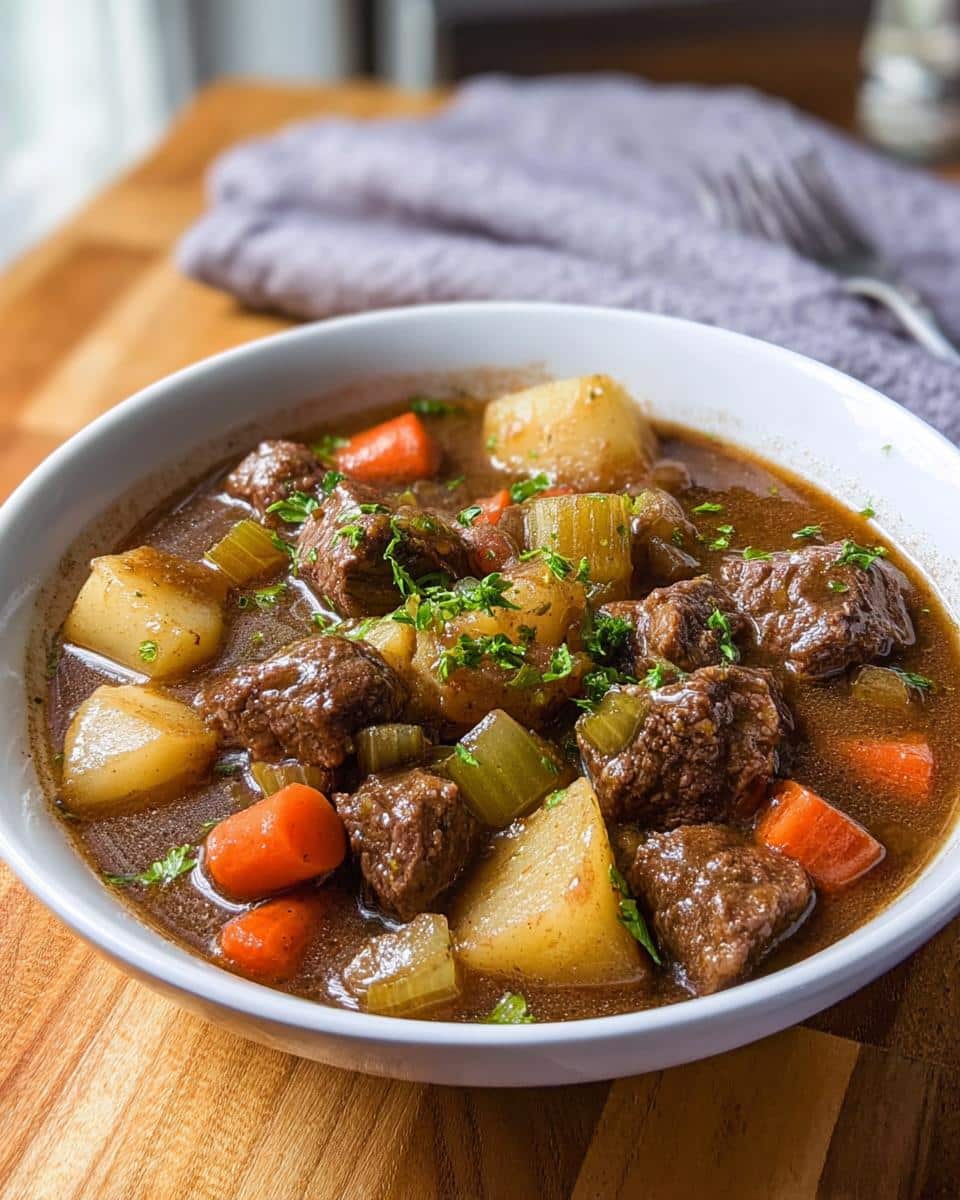
We let this go for another 30 minutes, or until those potatoes are buttery soft and the beef gives way easily when you poke it. Remember that total time commitment is around 115 minutes for the best result. Don’t forget to taste it right at the end and add more salt or pepper if it needs a little kick! This is a forgiving dish, so don’t stress if it takes 5 or 10 extra minutes—the goal is tenderness above all else.
If you’re looking for super quick things to make while dinner is simmering away, I put together a list of amazing quick appetizers you can whip up in minutes!
Essential Equipment for Making Easy Beef Stew
Part of keeping this Easy Beef Stew truly easy is making sure you have the right tools ready to go before you start chopping. When you cook a stew, you need something sturdy where those flavors can really concentrate over time, so your cookware choice matters more than you think!
Using the right pot ensures even heating and fewer scorching incidents. You don’t want to be fighting your equipment while you’re trying to enjoy the cooking process. Here are the two main things you’ll need for this recipe:
- A Large bowl: For seasoning your beef before it hits the heat. I use my largest one so I can toss everything without it spilling over the sides!
- A Large (6 to 8 quart), thick-bottomed pot: This is non-negotiable for a good stew. The thick bottom prevents scorching when you’re searing the meat and helps distribute that low simmering heat evenly. If the base burns, the whole pot tastes off, so use your best Dutch oven or heavy stockpot here!
That’s it! No fancy blender, no specialized gadget needed. Just good old, reliable kitchen basics for this comforting meal.
Tips for Success When Making Easy Beef Stew
Even though this is the simplest Easy Beef Stew recipe you’ll find, there are three little secrets I picked up from years of making big pots of stew that just make everything better. Think of these as the shortcuts to making your stew taste like it simmered all day long, even if you’re on a tighter schedule!
First, let’s talk about that searing we did. I know I went on about it, but I need to stress this one more time: don’t rush the brown crust! If you see liquid start pooling in the pot *before* the meat is nicely browned on all sides, turn the heat up and let it evaporate. That brown stuff stuck to the bottom—that’s called fond, and it is pure, deep flavor waiting to be unlocked when you add the broth. A pale stew is a sad stew!
Second, keep your vegetable cuts consistent. The recipe calls for 1-inch pieces. If you chop your carrots or potatoes too small, they will completely dissolve into mush during that hour and a half cook time. We want them tender, yes, but we want to still see them! They add texture and substance to the broth. If you’re having trouble keeping up with chopping while dinner is simmering, maybe make some of those easy lunch ideas earlier in the week so you have time to focus on dinner prep.
Finally, season in stages! We put some salt on the beef, some on the veggies, but the real magic happens at the very end. Taste the stew right before you serve it. Because the liquid reduces (sort of evaporates), the flavors intensify. If you salt it perfectly at the beginning, it will likely be way too salty by the end. A final check ensures your Easy Beef Stew is seasoned exactly right for your taste buds.
Storage and Reheating Your Easy Beef Stew
One of the best things about making a big batch of Easy Beef Stew is that it’s even better the next day! Trust me on this one. All those beef flavors and vegetable juices have more time to mingle and marry together overnight. It’s like the stew is saying, “Thank you for waiting!”
When you’re done eating, let the stew cool down just slightly on the counter. Then, transfer the leftovers into airtight containers. You can refrigerate this beautiful stew for up to five days. I often make a double batch just so I have easy lunches ready for the rest of the week. It looks a little different as it cools—the broth thickens up right near the top—but don’t worry, that’s totally normal!
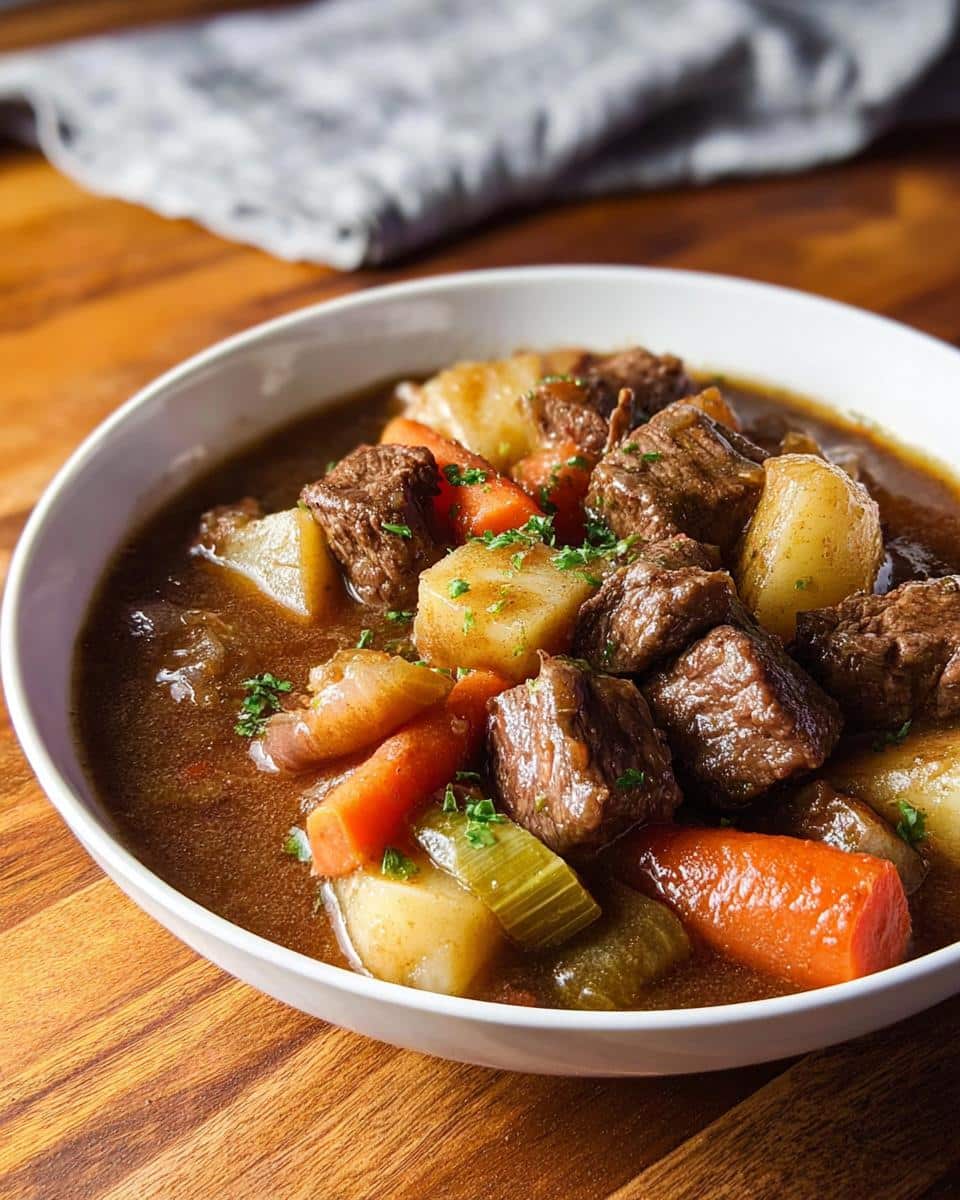
When it comes time to reheat, I strongly suggest using the stovetop whenever possible. This gives you the most control. Pour the amount you want into a medium saucepan over medium-low heat. Stir it every few minutes until it’s warmed through right to the center. Since the starches from the potatoes and the flour thickener make the broth really clingy, gentle, slow heat prevents that edge from scorching, which can happen easily in the microwave if you’re rushing.
If you must use the microwave, cover your bowl loosely—a paper towel works great—and reheat in short 60-second bursts, stirring well between each one. That way, you avoid those hot spots that burn your mouth! A little sprinkle of fresh parsley when you serve it the second time always brightens it up again too!
Variations on This Easy Beef Stew
I love that this Easy Beef Stew is so darn dependable, but hey, even the classics can use a little flair now and then! Since the temperature or the mood strikes differently every time I make it, I always keep a few simple swaps up my sleeve that don’t ask for a complicated extra shopping trip. These little tweaks keep things exciting without sacrificing that wonderful, cozy comfort factor we built into the base recipe.
The best part about these kinds of rustic recipes is their flexibility. If you have something in the fridge that needs using up, odds are it’ll work beautifully in the bottom of a hearty stew pot. If you’re looking for more big-batch ideas, you should definitely peek at my thoughts on Christmas recipes—many of those are great for adjusting into big, slow-simmering meals!
Adding Earthiness with Mushrooms
If you’re looking for an extra punch of savory, earthy flavor that complements the beef perfectly, you absolutely have to throw in some mushrooms. This is my number one go-to variation when I want to bulk up the stew without adding more meat or root vegetables. You don’t need fancy wild mushrooms either; standard white or cremini buttons work wonderfully.
When should you add them? Right along with your carrots and parsnips during that second sauté step—you know, after the beef has browned. Mushrooms release a ton of water, so letting them sauté alongside the other vegetables not only softens them up but allows that water to cook off, which concentrates their flavor instead of watering down your broth later on. Don’t slice them too thin—I like a chunky half-inch slice so they hold their shape!
Swapping Herbs for a Different Vibe
We used fresh thyme in the main recipe because it’s classic and pairs perfectly with beef and root vegetables, but what if you’re craving something a little more robust or woody? This is where you can totally customize your Easy Beef Stew!
If you have some rosemary lying around, try swapping out that tablespoon of thyme for just one teaspoon of freshly chopped rosemary. Rosemary is much stronger than thyme, so you need to use less of it, or it can start tasting a little piney! Another great option, especially if you are serving this in the fall, is to use a splash of red wine vinegar instead of—or along with—the balsamic. Just a small splash right before you add the broth really brightens everything up and gives the stew a deeper, restaurant-quality richness. Always remember to taste as you go, though!
Frequently Asked Questions About Easy Beef Stew
I get so many questions about this stew because everyone wants their own version to taste just like that perfect, cozy bowl! Stews are surprisingly high-maintenance when you try to rush them, so let’s clear up a few things so you can feel completely confident when you step into the kitchen.
This recipe is designed to be straightforward, but sometimes life throws us curveballs, and we need to know how to adjust! We want that tender beef without spending all day hovering over the stove, right?
Can I make this Easy Beef Stew in a Slow Cooker?
Oh, absolutely! The slow cooker is your best friend when you need to set dinner and forget it. Now, since we are skipping that initial high-heat sear on the stove (yep, that means you lose a tiny bit of that deep flavor foundation, but convenience wins sometimes!), you can combine almost everything right into the slow cooker insert. Load in the beef, the veggies, the broth, the sauces, and all those seasonings.
Instead of the 100 minutes cook time, you’ll want to set it to LOW for 6 to 8 hours, or until that beef is unbelievably tender. You might want to thicken it very slightly at the end with a little slurry if it seems too thin, but usually, the long simmer does a great job naturally!
What are some Quick Appetizers to pair with this dinner?
That’s a great question! Since stew is such a hearty, complete meal—it has the protein, the starch, and veggies all in one—you don’t want an appetizer that’s too heavy or that competes with it. You want something light that whets the appetite but doesn’t fill anyone up before the main event even hits the table.
For truly simple options that qualify as quick appetizers, I always default to bread! You can’t go wrong with crusty French bread or dinner rolls for dipping into that amazing broth once the stew is served. If you want something a little more constructed, try some simple cheese and crackers. Speaking of simple munchies, if you are planning a party or just need something to tide you over while this stew simmers, you should certainly check out my ideas for easy snack recipes!
Can I use pre-cut stew meat from the store?
You certainly can, and it saves about ten minutes of chopping prep time! However, make sure it’s labeled “chuck” or “stew meat.” Sometimes the store packages tougher cuts together. If the pieces look very lean, try to trim off any big chunks of silverskin or gristle you see. The fat is your flavor and tenderness provider here, so look for the beautiful white flecks throughout the meat rather than big blobs of hard white fat!
How do I make sure my potatoes don’t turn to mush?
This is all about timing! As you saw in the instructions, we add the potatoes quite late in the game—only about 30 minutes before serving. This keeps them from breaking down entirely. Also, cutting them uniformly into 1-inch chunks helps. If you have smaller baby potatoes, you might even get away with cooking them for only 20 minutes! Always taste one right before you turn off the heat to check its texture.
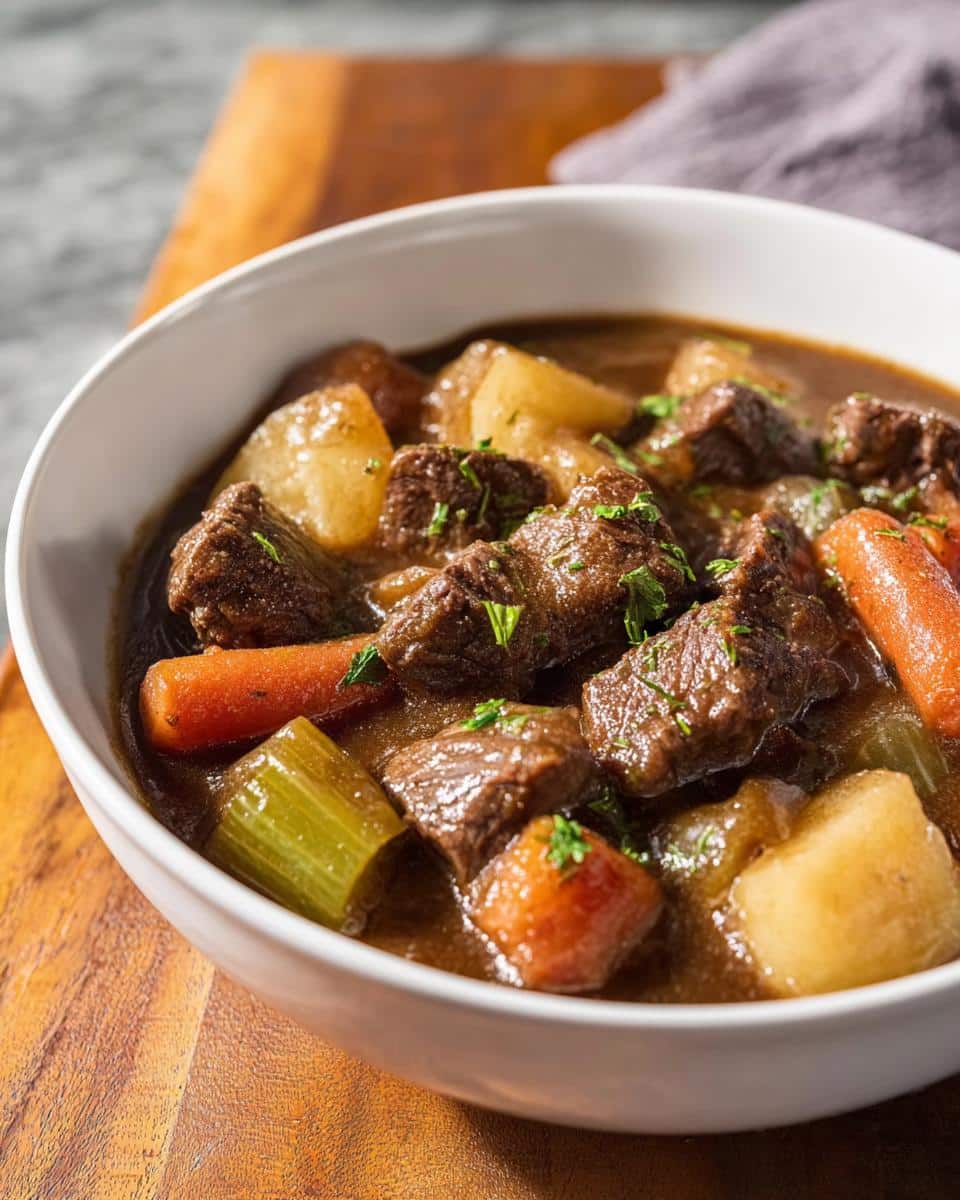
Understanding the Nutrition of Easy Beef Stew
Look, if you’re making a classic, hearty dish like this Easy Beef Stew, you aren’t typically worried about counting every single calorie, right? This is comfort food! It’s supposed to be warming, filling, and deeply satisfying after a long day chopping vegetables and tending the stove. That said, I always feel it’s responsible to give a general idea of what you’re digging into, especially since this recipe feeds a crowd of six!
Because we are using a good amount of beef chuck and root vegetables cooked slowly in broth, this stew is packed with protein and fiber. It’s a wonderful, nourishing meal that really sticks to your ribs. But please, take these numbers with a grain of salt—literally! Since every cut of beef chuck chucks out differently, and the amount of broth absorbed varies by pot and simmer time, these are estimates designed to give you a ballpark idea, not a scientific reading.
For more detailed information on disclaimers regarding health and nutrition on my site, you can always check out my official disclosures page right here.
Based on the ingredients listed for 6 servings, here is the estimated breakdown:
- Estimated Calories: 400–450 per serving
- Estimated Fat Content: Moderate, thanks to the marbling in the chuck beef
- Estimated Protein: High, coming mostly from the beef
- Estimated Carbohydrates: Moderate (from potatoes, carrots, and parsnips)
The best way to keep this recipe feeling lighter, if that’s a concern, is simply by adjusting those vegetable ratios. You could easily add more celery and carrots and perhaps use slightly leaner stew meat if you wanted to shave off a few fat grams without sacrificing too much of that legendary tenderness this Easy Beef Stew is known for!
Share Your Thoughts on This Comforting Dish
Now that your kitchen smells incredible and you’ve scraped the very last spoonful of that rich, savory broth, I genuinely want to hear all about it! This Easy Beef Stew feels like a hug in a bowl to me, and seeing how it warms up *your* family gatherings is the best reward for sharing these deeply personal recipes.
Did the beef turn out perfectly tender? Did you add an extra pinch of pepper like I sometimes do when the weather really turns cold? Don’t keep your experience to yourself!
Please, come back here and leave a rating for the recipe—a simple 1 to 5 stars helps other cooks see just how dependable this classic dish is. I read every single comment that comes through, so let me know if you stuck strictly to the recipe or if you made any creative tweaks of your own!
And please! If you snapped a picture of that beautiful, steamy bowl of stew, tag me on social media! Sharing photos of your cozy results is truly what keeps this whole comfort food community inspired. If you have any last-minute questions that weren’t covered above, feel free to send them through my contact page here—I’m always happy to chat about the art of the perfect simmer!
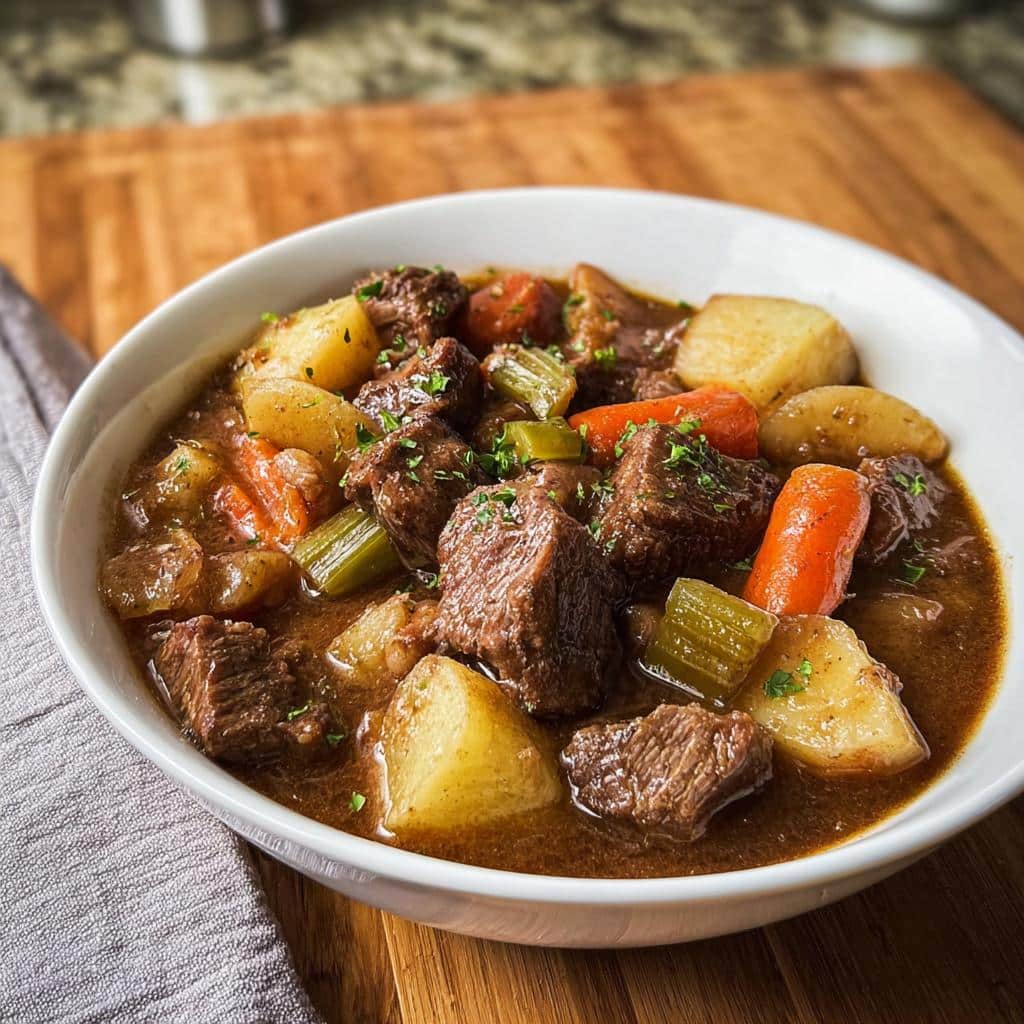
Easy Beef Stew
Ingredients
Equipment
Method
- In a large bowl, season the beef pieces with 1 tablespoon of the salt. Heat the olive oil in a large, thick-bottomed pot over high heat.
- Add the beef all at once and cook, stirring occasionally, until the meat is no longer pink and some liquid has accumulated at the bottom of the pot, about 10 minutes.
- Add the celery, onion, carrots, and parsnips. Reduce heat to medium-high. Season with the remaining teaspoon of salt and 1/2 teaspoon pepper. Cook, stirring occasionally, until most of the liquid has evaporated and vegetables are slightly softened, about 10 minutes more.
- Add the thyme and flour, stir, and cook until raw flour is no longer visible, about 30 seconds.
- Add the beef broth, water, balsamic vinegar, and Worcestershire sauce. Bring the mixture to a boil, then reduce heat to medium-low and cook, partially covered and stirring every 20 minutes or so, until the stew has darkened and thickened slightly, about 1 hour.
- Add the potatoes to the stew, stir well, and continue to simmer until the potatoes and beef are tender, about 30 minutes. Season to taste, transfer to serving bowls, sprinkle with parsley, and serve.