
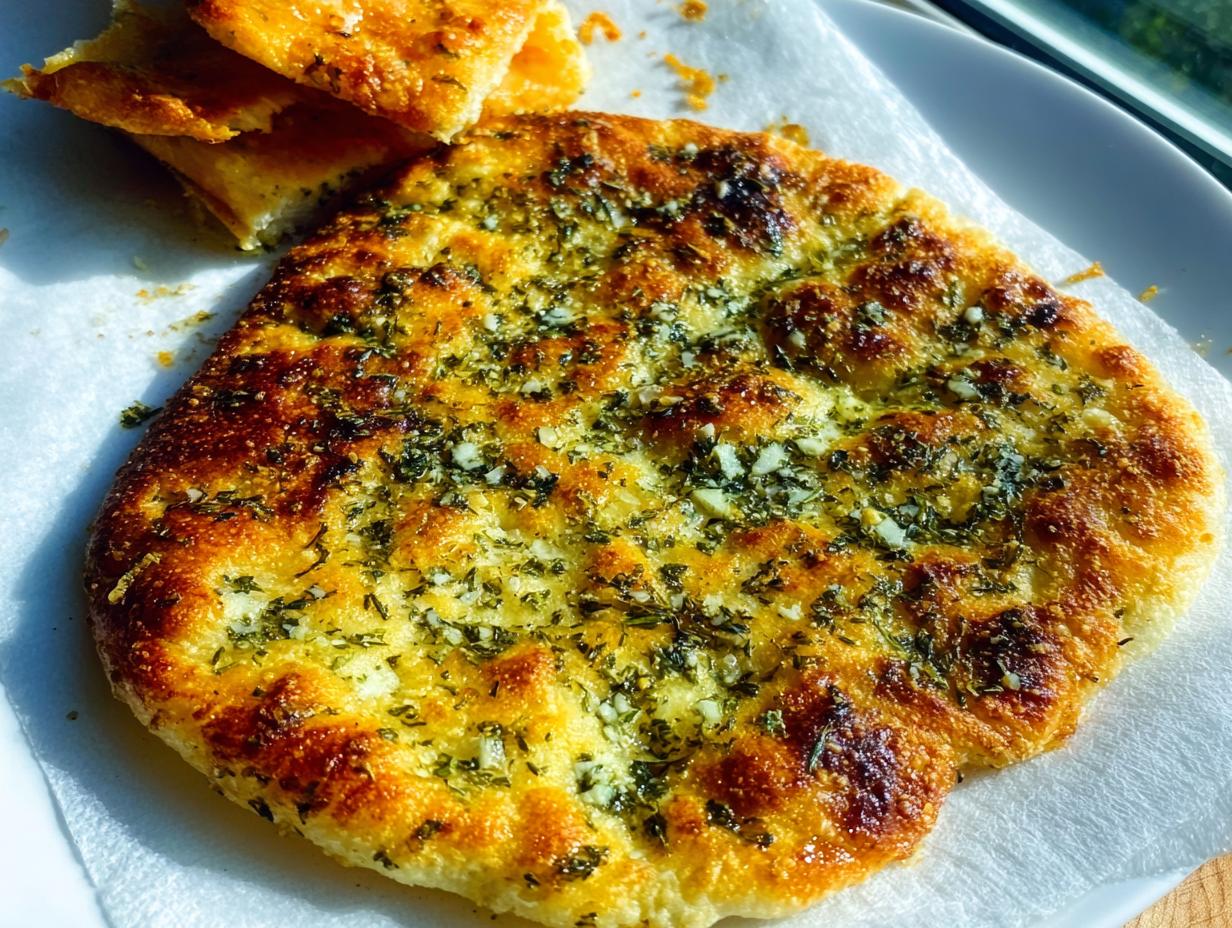
There is a quiet magic in the oldest forms of bread, the ones made before yeast was even a thought—simple doughs slapped onto hot stones or into pans. This connection to ancient kitchens really speaks to me as a culinary historian; you can read more about my approach right here.
I want to share what has become one of my absolute favorite Homemade Bread companions: the No-Yeast Garlic Flatbread. This recipe is ridiculously quick, relying on the magic of Greek yogurt and self-rising flour to give us that fantastic, pliable texture almost instantly. It’s the kind of flavorful accompaniment that elevates a simple weeknight meal without demanding your whole afternoon. Trust me, you need this easy baking recipe in your rotation!
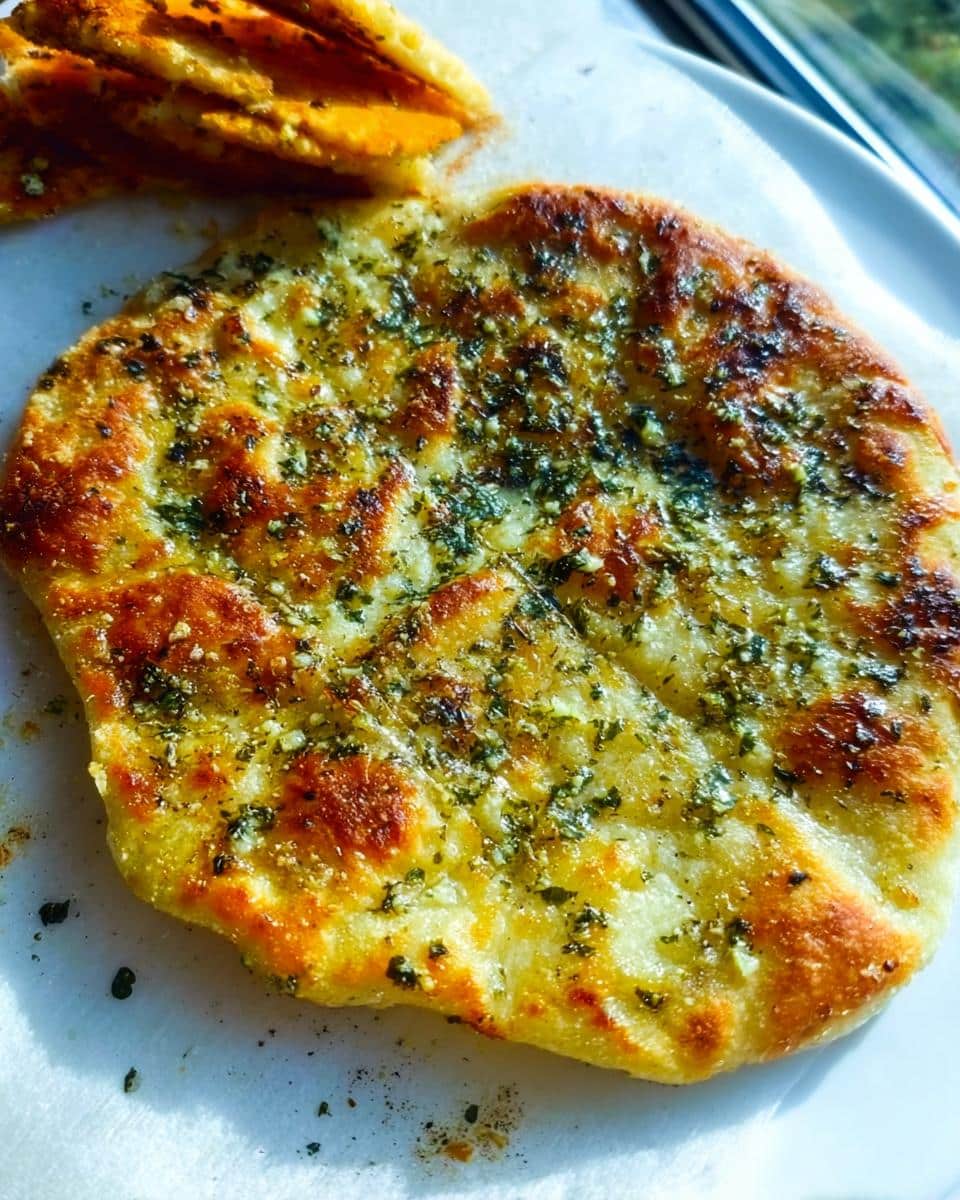
Why This No-Yeast Garlic Flatbread Recipe Works (E-E-A-T)
When you skip the yeast, you skip the rising time, which is the ultimate shortcut for easy baking recipes. But how do we get that beautiful, soft texture without the lift? It all comes down to the Greek yogurt.
This flatbread is deeply rooted in tradition; you’re essentially making a quick bread that people have done for millennia. The yogurt isn’t just for flavor, though it certainly adds that rich tang we love. It’s the primary binder and a key tenderizer here, making sure that dough comes together beautifully and cooks up soft, not tough.
The Role of Yogurt in No-Yeast Garlic Flatbread
The beauty of Greek yogurt is its natural acidity. When you mix it with self-rising flour—which already contains its leavening agents—you get an immediate, gentle reaction. This reaction creates tiny air pockets instantly, giving us lift without waiting hours for yeast to wake up.
This process creates a tender crumb that’s sturdy enough to hold up to that decadent garlic butter we’re about to make. This is absolutely one of the best alternatives to yeast in flatbread recipes because it gives instant satisfaction!
Ingredients for Your No-Yeast Garlic Flatbread
When we talk about simple bread recipes, it starts with high-quality components. Don’t substitute here; these core ingredients are what make this flatbread taste amazing without needing any yeast to help it along. Everything breaks down into two simple parts: the dough itself and that incredible, herbaceous butter topping we are aiming for.
Keeping these ingredients ready is half the battle for any quick bread recipe. You’ll notice we aren’t listing yeast—that’s the beauty of this quick bread!
For the Dough Components
- 3 cups self-rising flour
- 3 cups Greek yogurt
- As needed olive oil (just for greasing the surface)
For the Flavorful Garlic Butter Topping
Remember, we are going to roast the garlic first, which transforms its flavor completely. Don’t just chop it raw; the roasting is essential for that depth!
- 1 stick softened butter
- 2 knobs garlic (for roasting)
- 1 tsp Italian seasoning
- 1/4 tsp salt
- 1 tbsp fresh minced parsley (if you want that pop of green!)
Roasting the Garlic for the Best No-Yeast Garlic Flatbread Flavor
Okay, people, listen up! If you skip this step, you are making an ordinary garlic bread substitute. We aren’t doing ordinary here. Roasting the garlic is what takes this from a simple side dish to the incredible No-Yeast Garlic Flatbread everyone will ask about. It’s easy, but it takes time, so get it started first!
First things first, crank that oven up to 400 degrees. You need to slice off just about a half-inch from the top of your garlic knob—that’s where we expose the cloves beneath. Be careful not to hack the whole thing off! Next, lay those knobs right onto a piece of foil, cut-side facing up, and drizzle a good splash of olive oil right over that exposed part.
Wrap the foil up tight around the garlic to create a little oven pocket. It bakes for about 45 to 50 minutes. You’ll know it’s ready when the whole thing looks browned and, more importantly, if you poke it gently, the cloves feel totally soft, almost mushy. That roasted tenderness is key to spreading that amazing flavor later!
Making the Dough for Simple Bread Recipes
Now that our garlic is working hard in the oven, we can turn our attention to the actual dough. This is where the speed of these Simple Bread Recipes really shines! We’re talking about mixing the self-rising flour and the Greek yogurt together until it just forms a ball. Grab your mixing bowl and your cleanest hand for this part.
You mix it at first with a spoon, but honestly, you need to feel it. Dump it out—or just stick your hand right in the bowl—and bring it together. It will feel a little sticky, maybe a bit shaggy at first, but keep folding it gently until it stops looking like a pile of crumbs and starts looking like cohesive dough. That’s the moment I love; you can feel the acidity working its magic even before it ever hits the skillet.
Once she’s a single, soft mass, you just divide her right down the middle for two flatbreads. If you’re looking for more super-quick solutions for the kitchen, I’ve gathered some great ideas over here. Set one ball aside, drizzle a tiny bit of olive oil over the top of the dough ball you’re starting with, and get ready to flatten!
Cooking Your No-Yeast Garlic Flatbread in a Skillet Bread Style
The oven might be busy with the roasting garlic, but we don’t wait for that to finish before we start cooking the dough! This is where we lean into being a true Skillet Bread kitchen. We are aiming for that delicious, slightly charred texture that you only get when direct heat hits the dough, making this a prime example of Bread Without Oven cooking.
Get a good frying pan—cast iron or a heavy-bottomed stainless steel one works best—and set it over medium heat. I can’t stress medium heat enough; too high and the outside will burn black before the yogurt-based dough even cooks through in the middle. Drizzle just a tiny amount of oil in there to keep things slick. Once the pan is warm, gently flatten that first dough ball out to the shape you like. Don’t stress about perfect circles; rustic is delicious!
Drop that flattened dough right into the hot pan. Now, here’s a trick I picked up from folks making ancient flatbreads: cover it with a lid. Covering traps the steam, helping the inside cook beautifully and keep that soft, tender texture we want in our Quick Bread Recipes. If you want some visual inspiration for quick snacks, check out some ideas here!
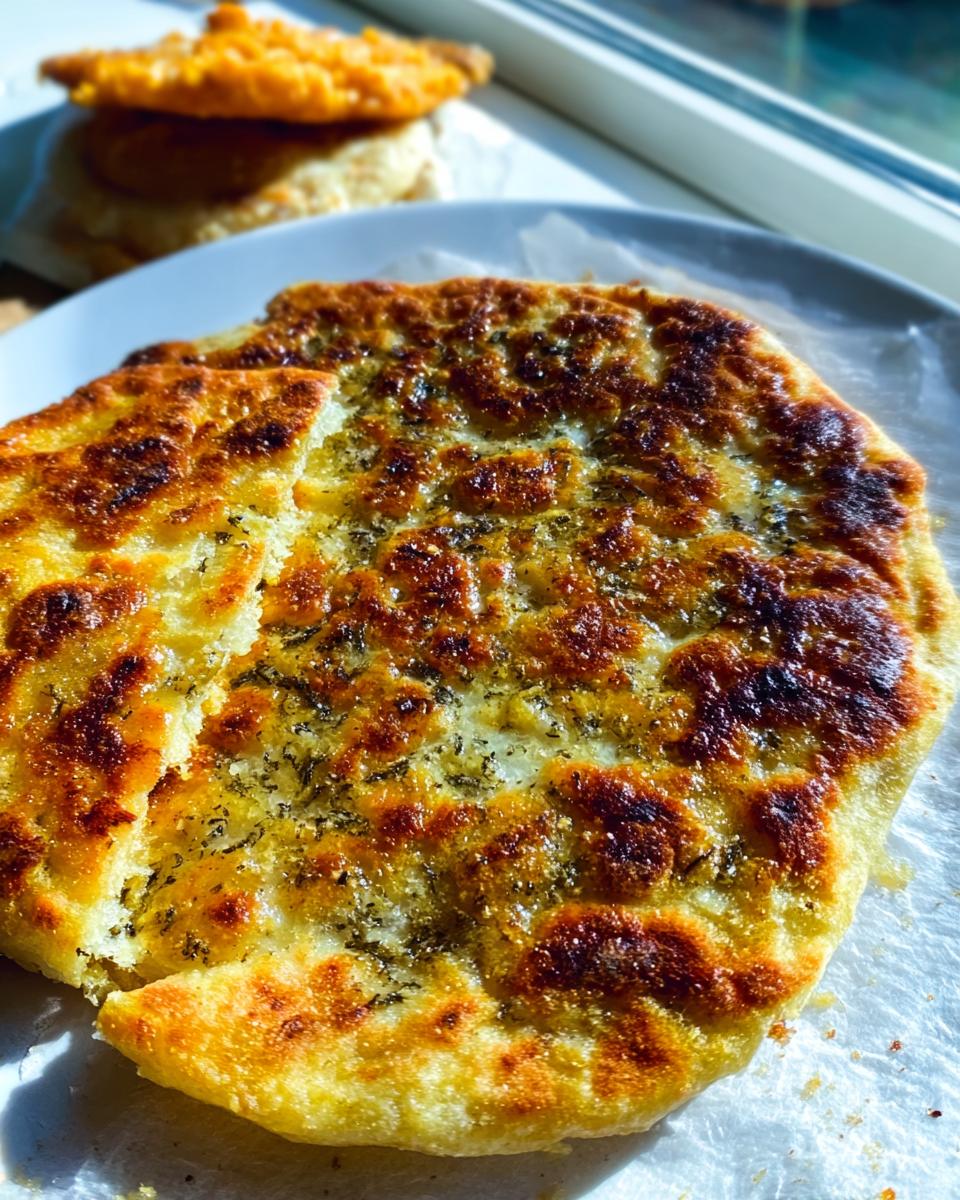
Achieving Golden Perfection on the Skillet
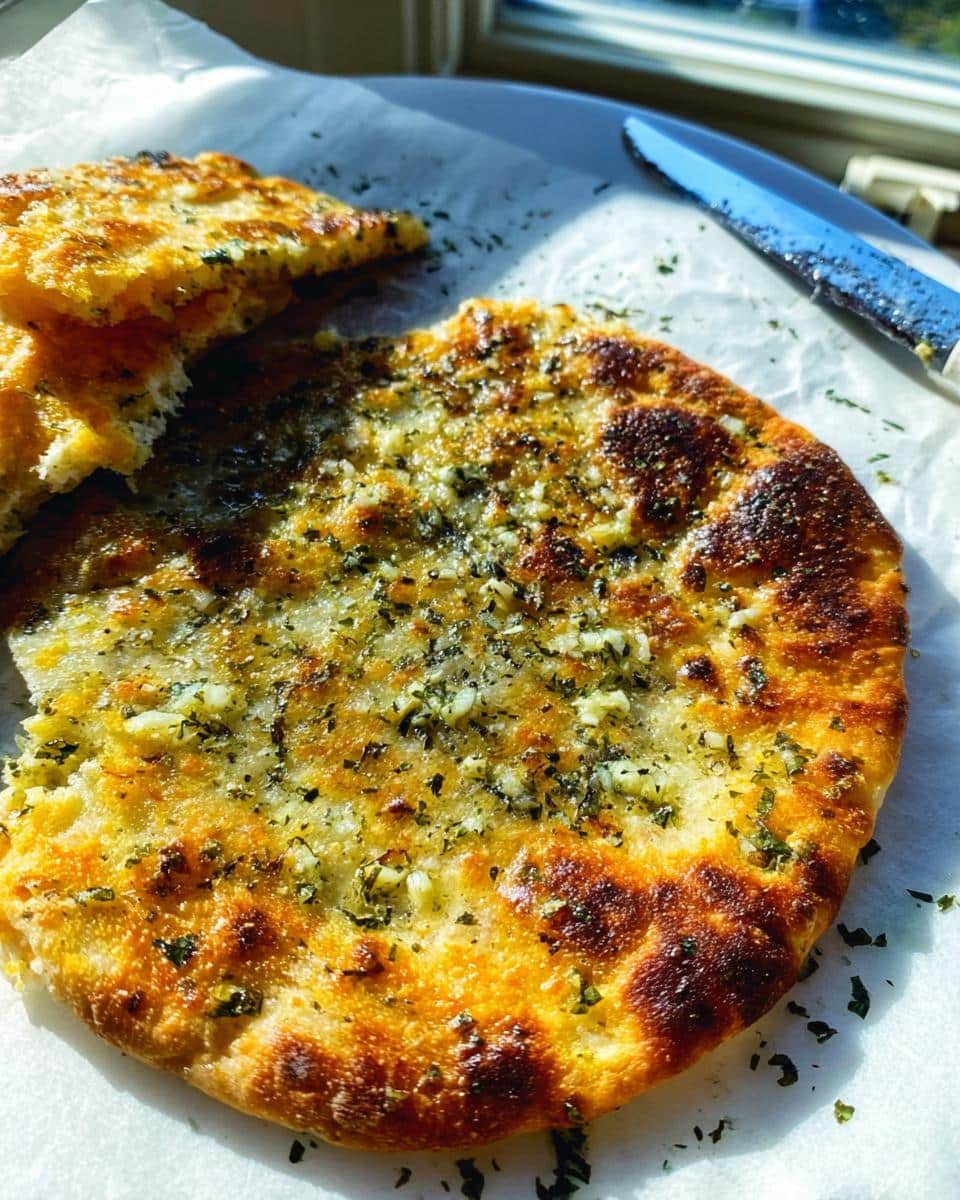
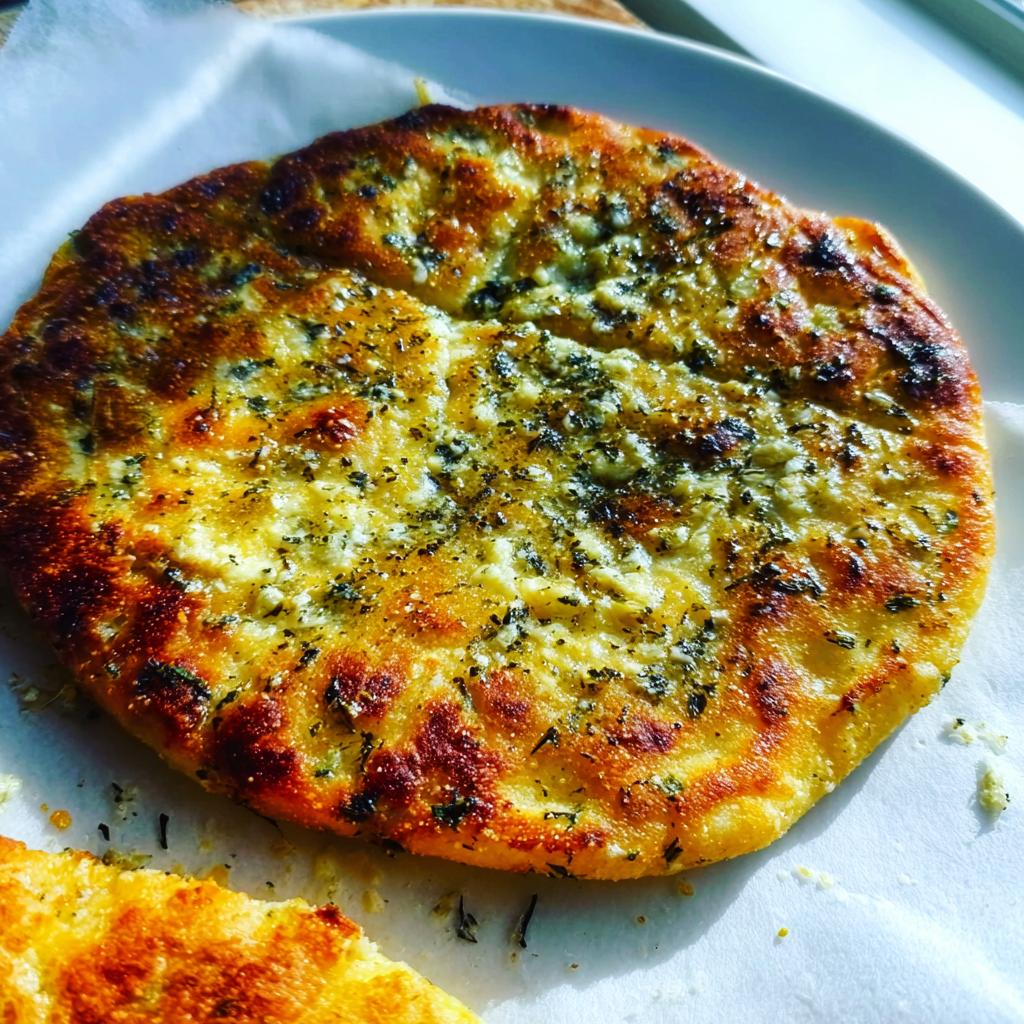
We’re looking for a good, healthy color here. Let it cook undisturbed for about three to four minutes. When you peek underneath, you want to see deep golden spots—maybe a few darker, crispy ones mixed in. That’s your cue to flip.
Flip it over and cook the second side until it matches the first. The beauty of these flatbreads is how fast they fly off the heat once they start cooking!
Finishing Touches: Buttering the Hot No-Yeast Garlic Flatbread
The oven-roasted garlic is done, the skillet is hot, and your flatbread is fresh off the heat—this is the moment we’ve been working toward! As soon as that first flatbread comes out of the frying pan, you must grab your prepared garlic butter and brush it on liberally. Don’t wait, I mean it!
The residual heat from the freshly cooked bread is what melts the butter just perfectly. It seeps right down into every little pocket and bubble created during the cooking process. This step marries the soft, slightly tangy dough with that intense, sweet roasted garlic flavor.
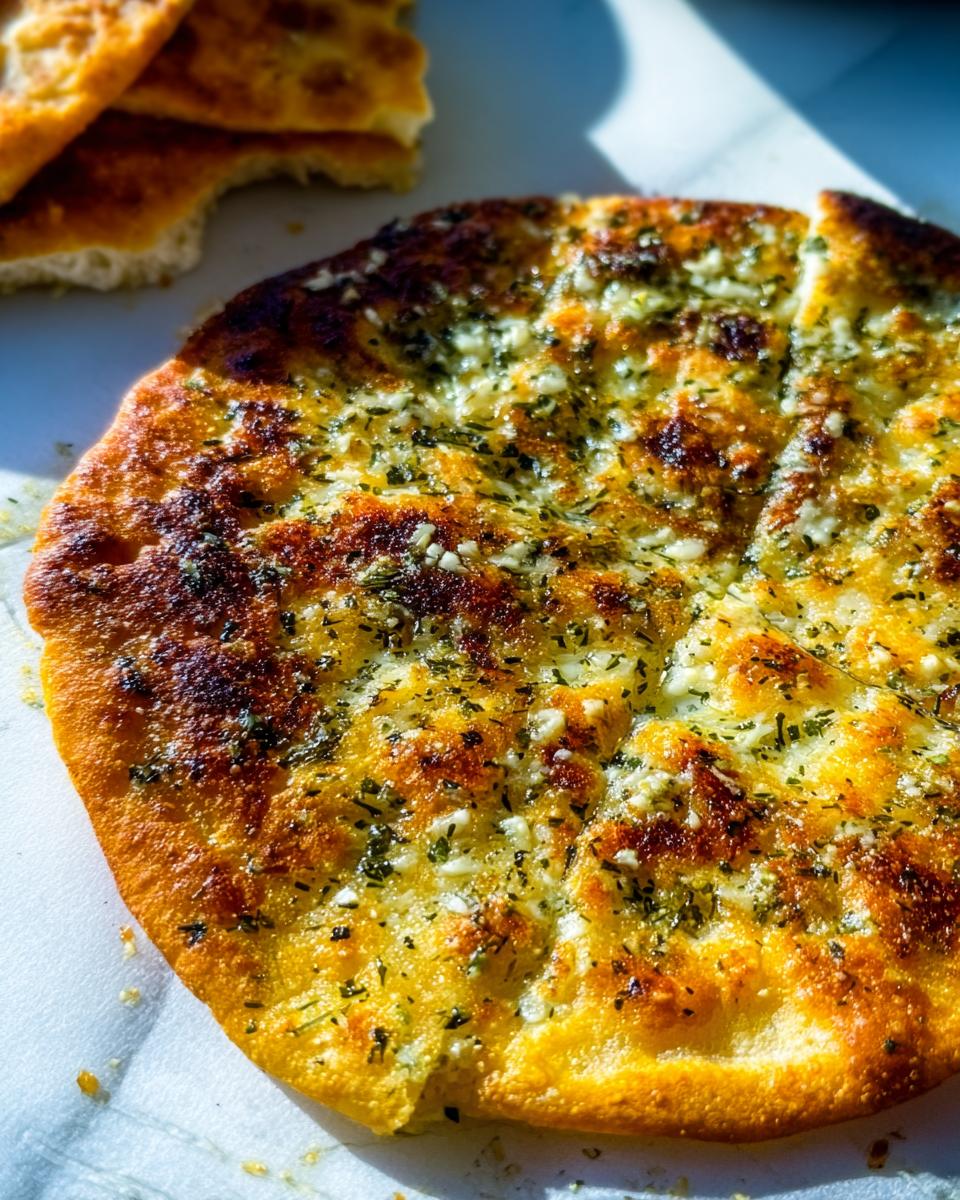
When you brush it on hot, the herbs bloom, and the garlic melts into a luscious, savory glaze. It’s the payoff for all that simple effort, and frankly, it smells divine. You’ll want to serve these immediately so everyone gets that perfect, melting bite!
Tips for Success with Homemade Bread
Making excellent Homemade Bread, especially when you’re moving fast without yeast, requires just a couple of small intuition checks. Since this recipe uses yogurt, the dough consistency can feel a little different than standard flour-and-water doughs. Don’t panic if it feels sticky initially; that’s just the texture of yogurt doing its job! It’s a simple bread recipe, but checking the feel is key to getting those great results every time.
If you find yourself struggling to handle it, remember that the goal isn’t to create a smooth, elastic dough like a sandwich loaf. We just need something cohesive enough to pat out without falling apart.
Troubleshooting Dough Consistency
If the dough is so sticky that it’s gluing itself permanently to your hands or the countertop, you can absolutely add a touch more self-rising flour. I’m talking about just a tablespoon at a time rolled into the dough. Don’t overdo it, though, because too much flour will make your final flatbread tough rather than tender. The goal is soft—soft enough that you can shape it, but not so dry that it cracks when you pat it out flat.
Conversely, if it feels stiff as soon as you mix it, you might have scoops of yogurt that were denser than others. Just put a tiny splash of water in and work it through. Quick meal ideas that pair well with this bread are available right here!
Serving Suggestions for Your Flatbread Recipes
This No-Yeast Garlic Flatbread is so flavorful; it really deserves to be featured prominently on the plate! Since we skipped the yeast, it has a beautiful rustic chew, making it perfect for dipping. Forget needing fancy sides; this is your main partner for chili, hearty stews, or any thick, savory soup you might have simmering. It’s wonderful just torn up and used to scoop up creamy dips.
For something a little richer, give it a try alongside saucy chicken dishes or roasted vegetables. If you are thinking about holidays or entertaining, they are excellent small bites you can serve with dips—check out some fun ideas here!
James Porter is Food Writer and Culinary Historian here at Top Chicken Eats. I always trace the cultural threads in these simple foods, connecting history and flavor right across your dinner table.
Frequently Asked Questions About No-Yeast Garlic Flatbread
Can I use regular all-purpose flour instead of self-rising flour in this No-Yeast Garlic Flatbread?
That’s a fair question, especially if you don’t keep self-rising flour stocked! Yes, you absolutely can substitute it, but you have to do a little work to replace what the self-rising flour already has in it. Remember, self-rising flour is just All-Purpose flour with baking powder and salt already mixed in.
For every cup of self-rising flour you need, substitute it with one cup of all-purpose flour, one-and-a-half teaspoons of baking powder, and about a quarter teaspoon of salt. Since my recipe calls for three cups, you’ll need to multiply those amounts by three. Mix those dry ingredients really well before adding your yogurt. This keeps our No-Yeast Garlic Flatbread getting the lift it needs!
How long does this Quick Bread Recipes stay fresh?
These Quick Bread Recipes, because they don’t rely on yeast, actually have a pretty good shelf life for bread! You can keep them sealed in an airtight container on the counter for about two to three days, and they’ll still be lovely. If you’re making a big batch of these Easy Baking Recipes and know you won’t eat them all right away, wrap them tightly in foil or plastic wrap and put them in the freezer.
When you want to bring them back to life, just give them a quick zap in the microwave for about 20 seconds, or ideally, warm them up in a toaster oven or even back in the dry skillet for a minute per side to crisp them up again. They reheat so fast!
Can I bake this bread instead of using a frying pan?
That is the beauty of this kind of simple bread—it’s very adaptable, and it definitely gives you Bread Without Oven options when you use the skillet. But if you prefer the oven, go right ahead! You can absolutely bake this dough.
Just treat it like a very quick pita. Roll your flattened dough out and place it on a baking sheet lined with foil or parchment paper. Bake them at about 425 degrees Fahrenheit for roughly 8 to 10 minutes. Keep an eye on them! They’ll puff up nicely. You won’t get that crispy char from the skillet, but you’ll have a wonderfully soft, tender flatbread that’s perfect for scooping up whatever you’re serving. You can review my privacy details here if you’re curious about the site here.
No-Yeast Garlic Flatbread
Ingredients
Equipment
Method
- Preheat your oven to 400 F. Cut 1/4 to 1/2 inch off the top of each garlic knob.
- Place the garlic knobs on foil with the cut side facing up. Drizzle olive oil over the garlic, focusing on the exposed area.
- Cover the garlic completely with foil and bake for 45 to 50 minutes, or until the garlic is browned and soft when pressed.
- In a bowl, combine the roasted garlic, softened butter, Italian seasoning, salt, and parsley if using. Mix until the butter is smooth and well combined. Set this garlic butter aside.
- For the flatbread, add the Greek yogurt and self-rising flour to a bowl. Mix with a spoon, then use a clean hand to mix further. Lightly knead or fold the mixture until you form a cohesive ball.
- Separate the dough into two equal balls. Transfer one ball to a lightly oiled surface and drizzle a bit more olive oil on top.
- Flatten the dough to your preferred shape and thickness. Repeat this process with the second dough ball.
- Heat a frying pan over medium heat and drizzle with a small amount of oil. Place one flatbread in the pan. Cover with a lid and cook for 3 to 4 minutes until golden brown.
- Flip the flatbread and cook the second side until it is also golden brown.
- Remove the cooked flatbread from the pan and immediately brush it generously with the prepared garlic butter. Serve hot.